
Whole-system duct and dryer vent check with before-and-after photos - you see exactly what came out of your vents
That "$99 whole-house special" is a bait ad - the real number appears once they are in your hallway, or the "clean" is a shop-vac at the register. We photograph the inside of your ducts before and after instead.
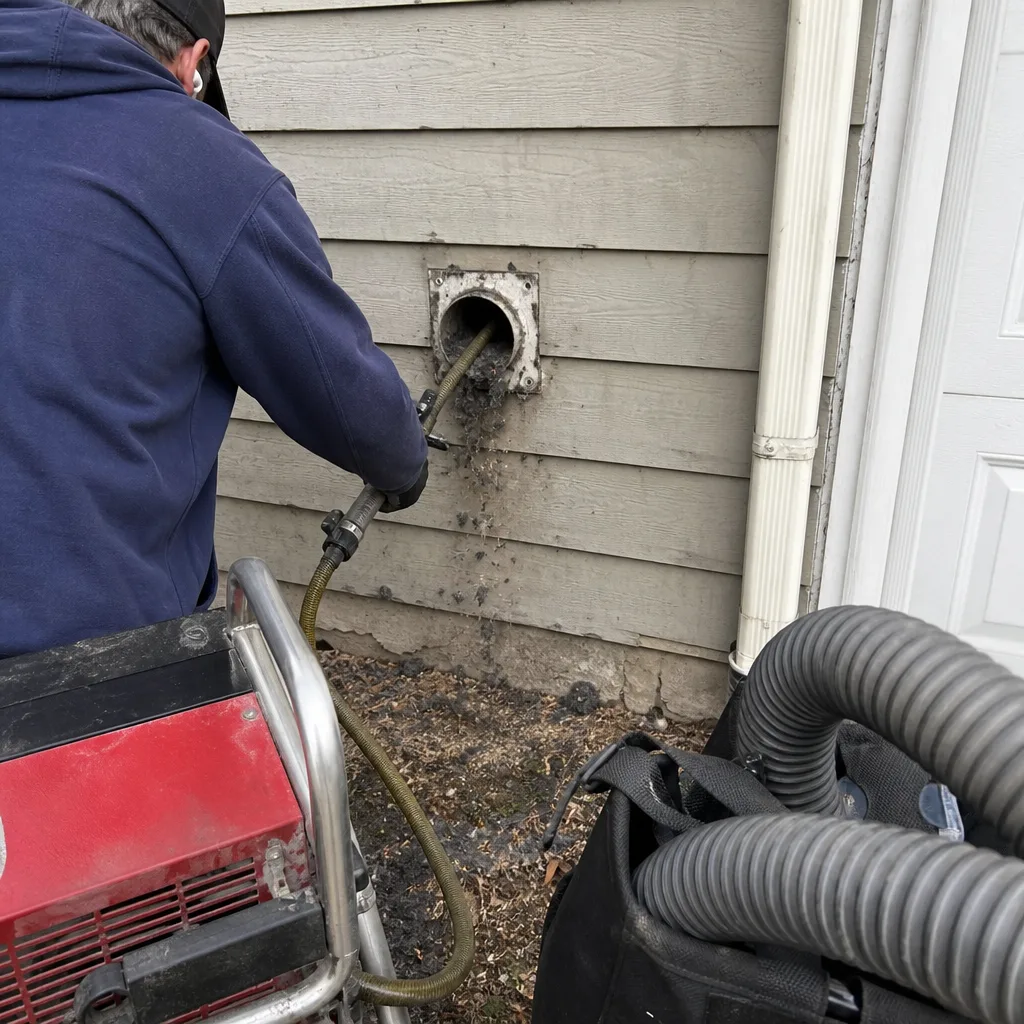 Before
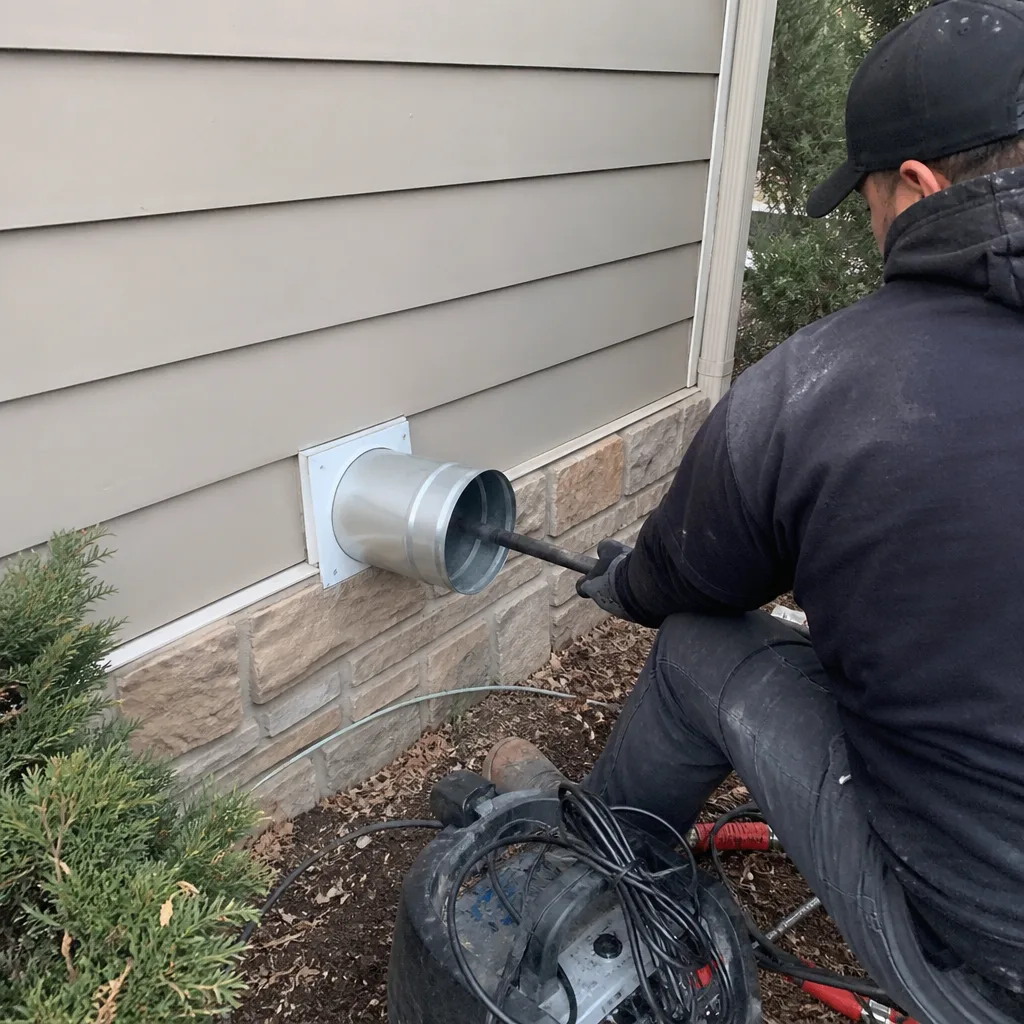 After
After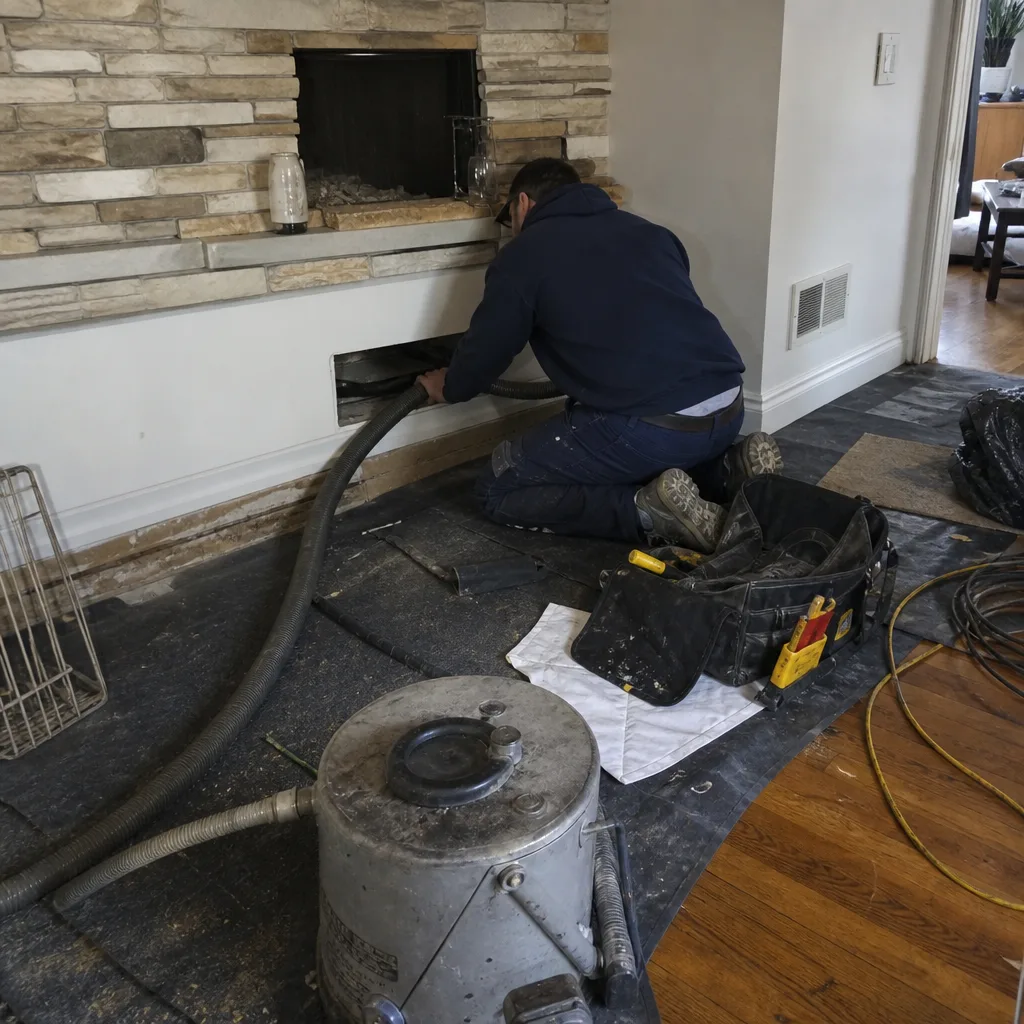 Before
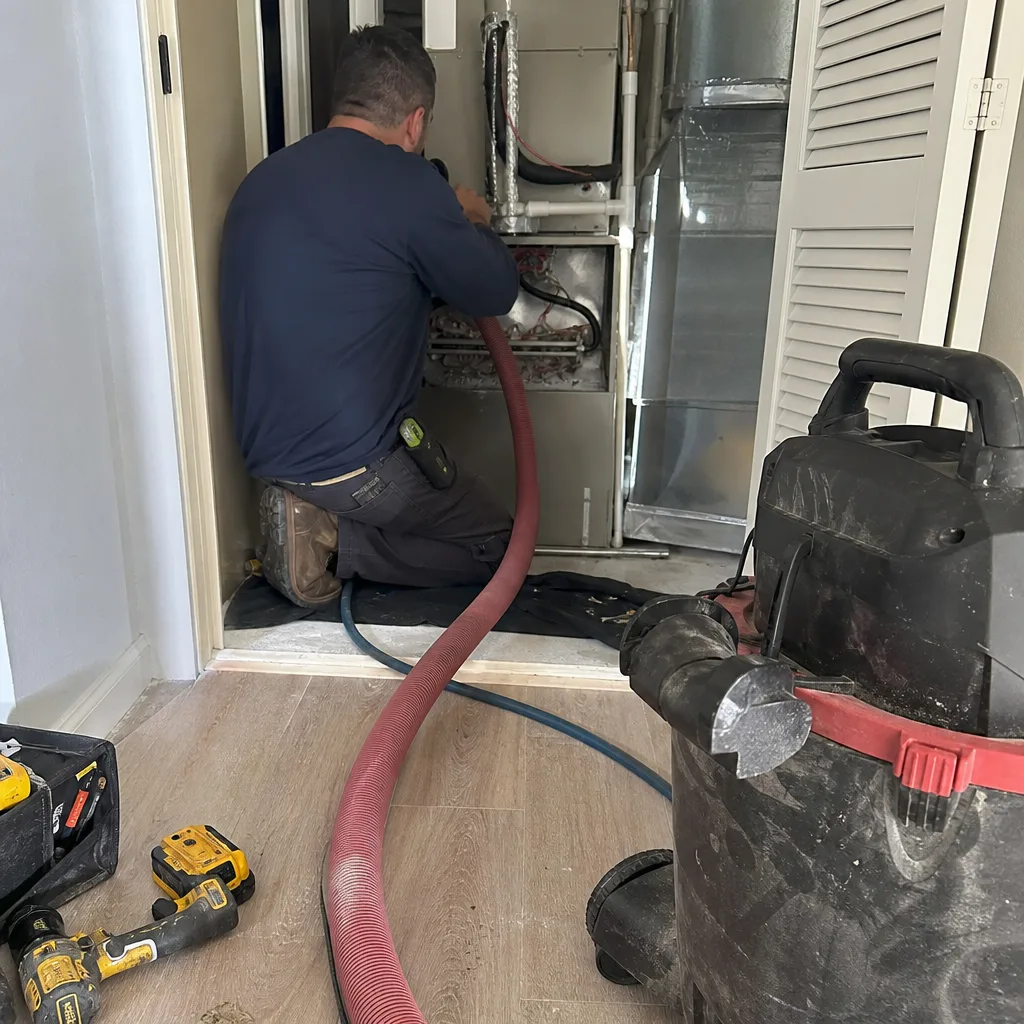 After
After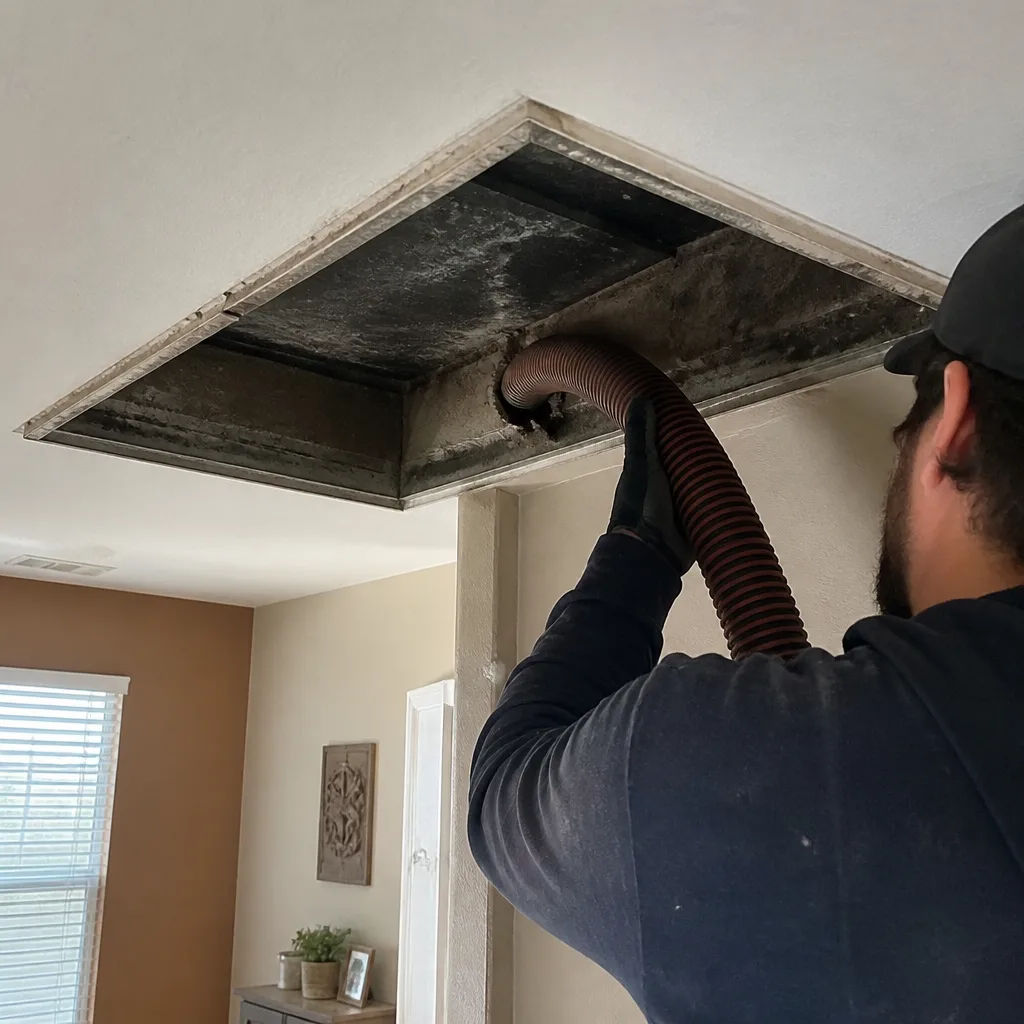 Before
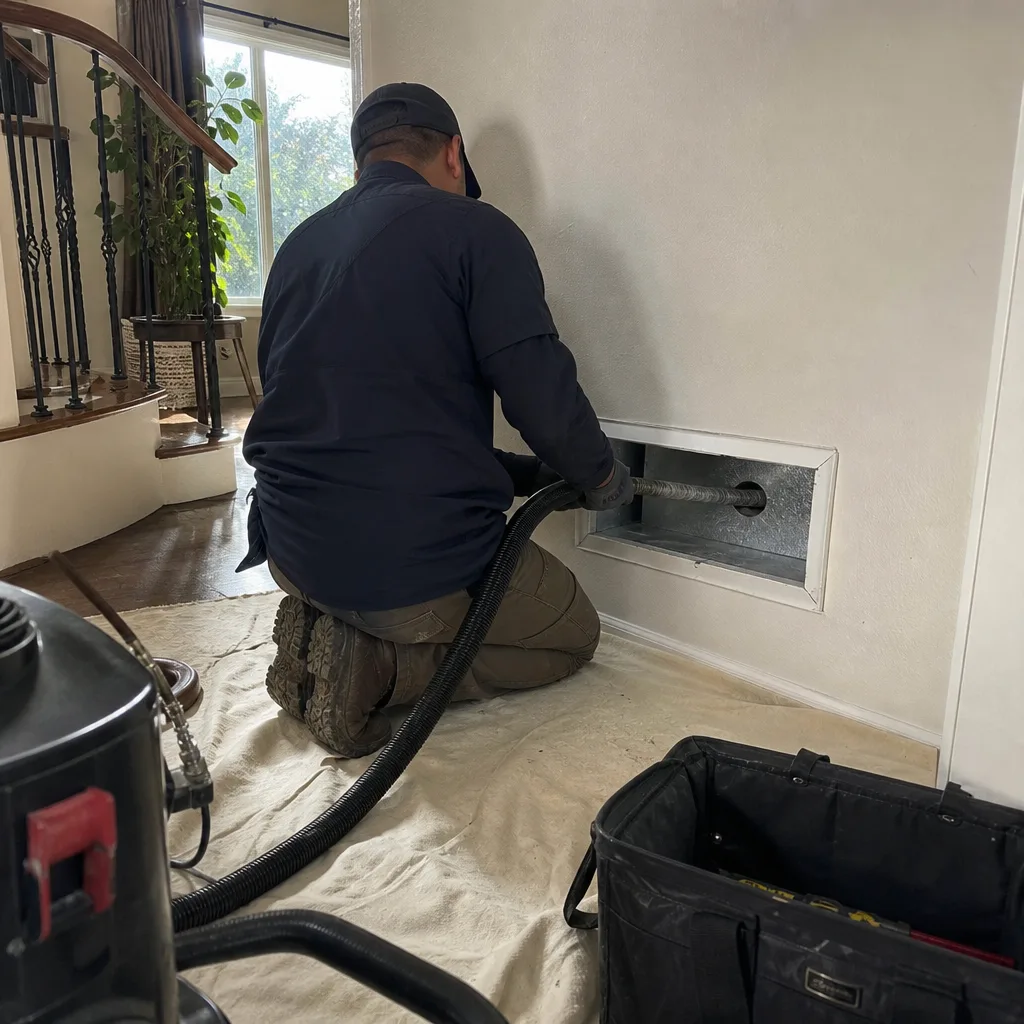 After
AfterSupply Duct Cleaning in Denver, CO
Supply duct cleaning focuses on the ductwork that carries conditioned air from your furnace or air handler outward to every room in your home. In Denver, supply duct cleaning typically costs $280 to $520 for a single-family home, depending on the number of runs and how much debris the camera finds before we start. Most jobs are completed in three to four hours, and every one leaves with a written price in hand before a single register cover comes off.
Supply ducts are the delivery side of your HVAC system. Air that has been heated or cooled by your furnace or air conditioner travels through the plenum – the main distribution box sitting directly on top of or beside your air handler – and then branches into individual supply runs that terminate at the registers you see in your floors, walls, or ceilings. When those runs accumulate debris, the conditioned air carries whatever is coating the duct walls directly into the room. That is the part most homeowners never see, and it is exactly where CleanRun’s Video Inspection goes first.
If you are trying to understand what Air Duct Cleaning in Denver covers as a full scope – return ducts, the plenum, and the main trunk line – that parent page explains the whole system. This page focuses specifically on the supply side: what builds up there, how we clean it, what it costs in Denver’s market, and what documentation you receive when we’re finished. Questions before you schedule? Call (720) 799-2292 – a live person answers, and your written price is ready before any work begins.
Why Supply Ducts Deserve Separate Attention
Return ducts pull air back to the system for conditioning. Supply ducts push it out. Most homeowners assume the two sides collect debris at the same rate, but they do not. Because supply runs are under positive pressure – meaning air is being pushed through them, not pulled – any gap, failed joint, or loose collar at an elbow becomes a place where debris is driven into the duct wall. Denver’s older neighborhoods, particularly Capitol Hill, Park Hill, and the Highlands, have a high concentration of homes built in the 1940s through 1960s where original galvanized duct sections were never sealed. In those homes, we regularly find a band of debris packed at every elbow, deposited there over decades by the static pressure of the blower forcing air around each bend.
Denver’s climate adds another layer. At roughly 5,280 feet of elevation, outdoor air here is drier than in most of the country, and homes run their heating systems hard from late October through early April. That extended heating season means blower motors run more hours per year than in lower-elevation cities, which accelerates the rate at which fine particles – drywall dust from construction, organic debris pulled in during high-wind days on the Front Range, pet dander, and in some neighborhoods, particulate matter from the sand and gravel used on icy roads – accumulate inside supply runs. By the time a homeowner in Wash Park or Stapleton notices uneven airflow between rooms, the build-up at the first elbow of the longer supply runs can measure two to three inches deep.
When You Need Supply Duct Cleaning
- Uneven heating or cooling between rooms. If one bedroom consistently runs warmer or cooler than the rest of the house even after you have had the HVAC system tuned, a partially blocked supply run is usually the first place to look. In Denver homes with forced-air systems, this tends to show up most dramatically in rooms at the far end of long runs – often an addition or upper floor.
- Visible dust settling on surfaces within a day or two of cleaning. Supply registers push air. If what is coating the interior of those runs is getting picked up and delivered to your furniture and countertops, fine gray or brown dust will accumulate faster than normal. This is distinct from general household dust – it tends to concentrate directly below or in front of supply register openings.
- Musty or stale odors from supply registers specifically. Return ducts can harbor odors too, but when the smell is noticeably stronger at supply registers than anywhere else in the system, the interior of the supply runs is the likely source. In Denver basements that experienced any moisture intrusion during snowmelt season, microbial growth on duct walls is a documented finding on our camera records.
- A home that has had recent renovation work. Drywall dust is one of the most common contaminants we photograph inside Denver supply runs. It is extremely fine, travels deep into duct runs during the construction phase, and adheres to duct walls. Any remodel that opened walls, ceilings, or floors – even with the registers taped off – warrants a post-construction supply duct inspection.
- A home purchased in the last two to three years with no documentation of prior duct cleaning. Denver’s real estate market moved fast from 2019 through 2024, and many buyers closed without a full mechanical inspection. If you bought a home in Lowry, Sloan’s Lake, or Green Valley Ranch and inherited the duct system from a previous owner, there is a reasonable chance the supply runs have never been professionally cleaned or photographed.
- Reduced airflow at registers despite a clean filter and functional HVAC equipment. When the technician has verified the filter, checked the blower, and confirmed static pressure is within spec, but specific rooms still get weak supply airflow, debris accumulation inside those specific runs is often the culprit rather than equipment failure.
BeforeAfterOur Supply Duct Cleaning Process
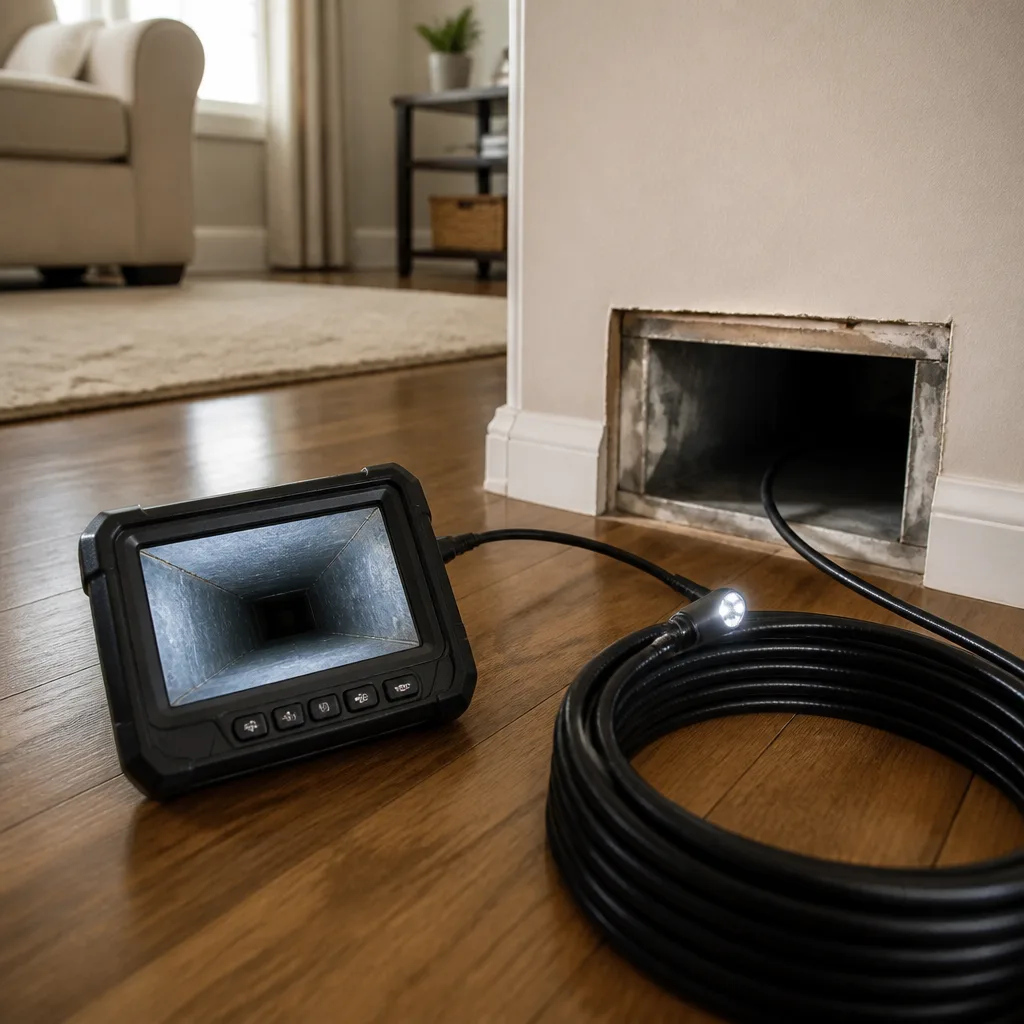
- Pre-job camera inspection and written scope. Before any equipment comes off the truck, we run a camera into each supply run from the register end and photograph what we find. If the first elbow is clear, you see that on the photo record. If there is a debris band or a disconnected joint, that gets photographed too. This is how we build the written price and scope – Haven Standard Clause 1 requires a written number before work starts, and the camera inspection is what makes that number accurate rather than estimated. Customers receive a copy of these pre-job photos as part of the standard job record.
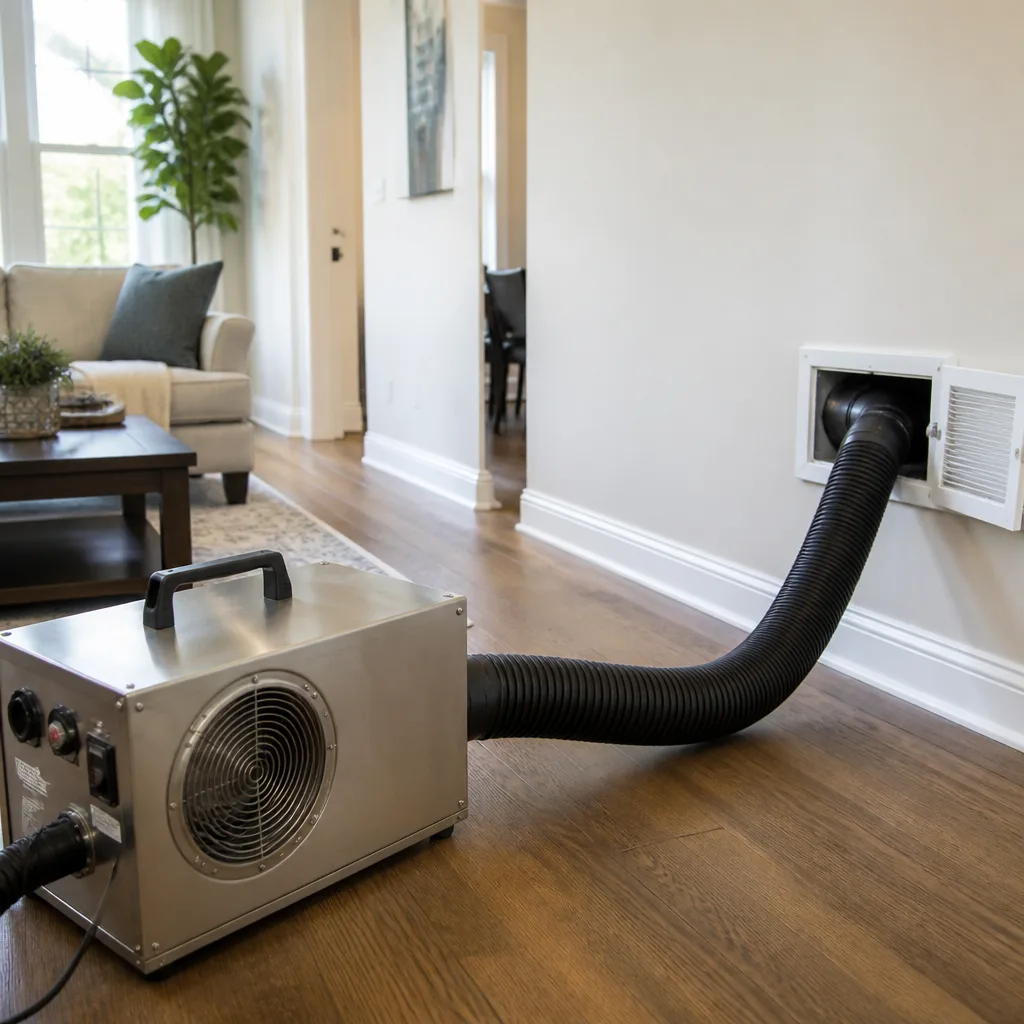
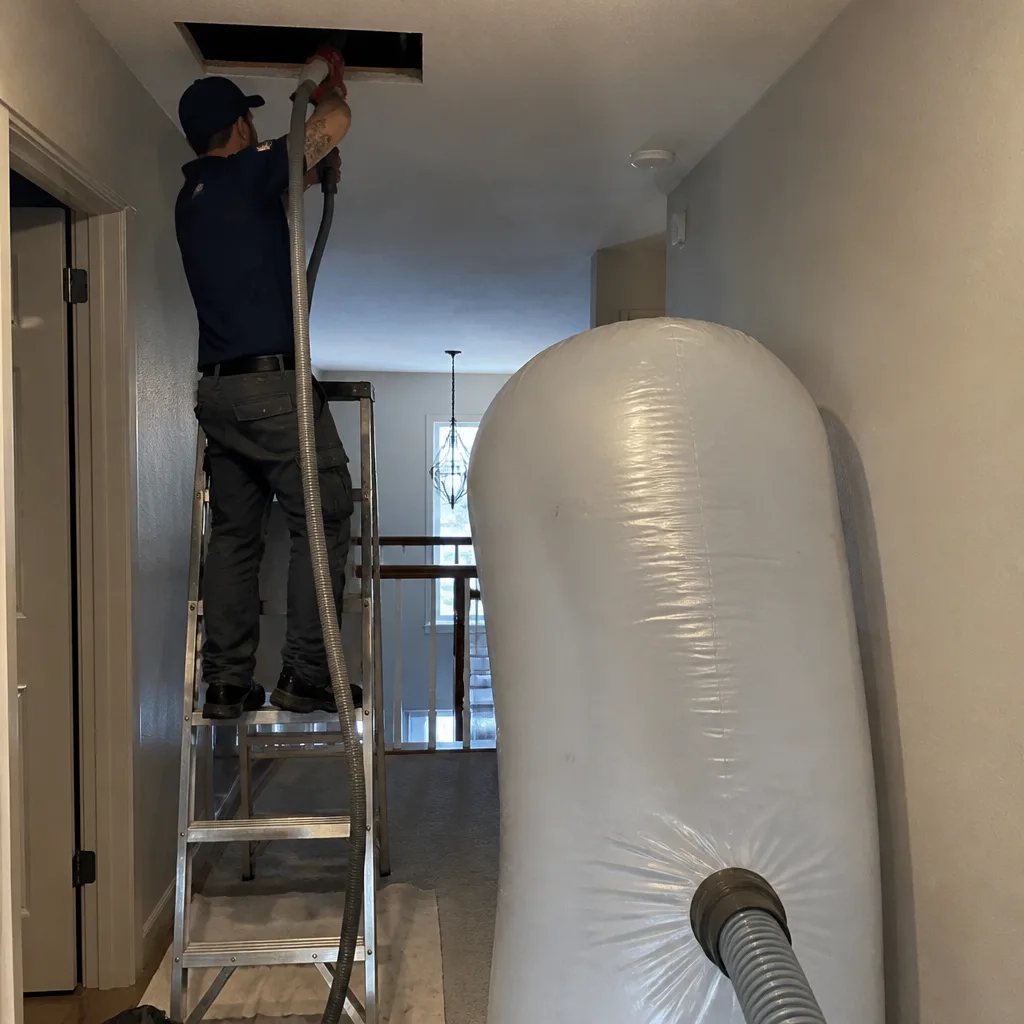
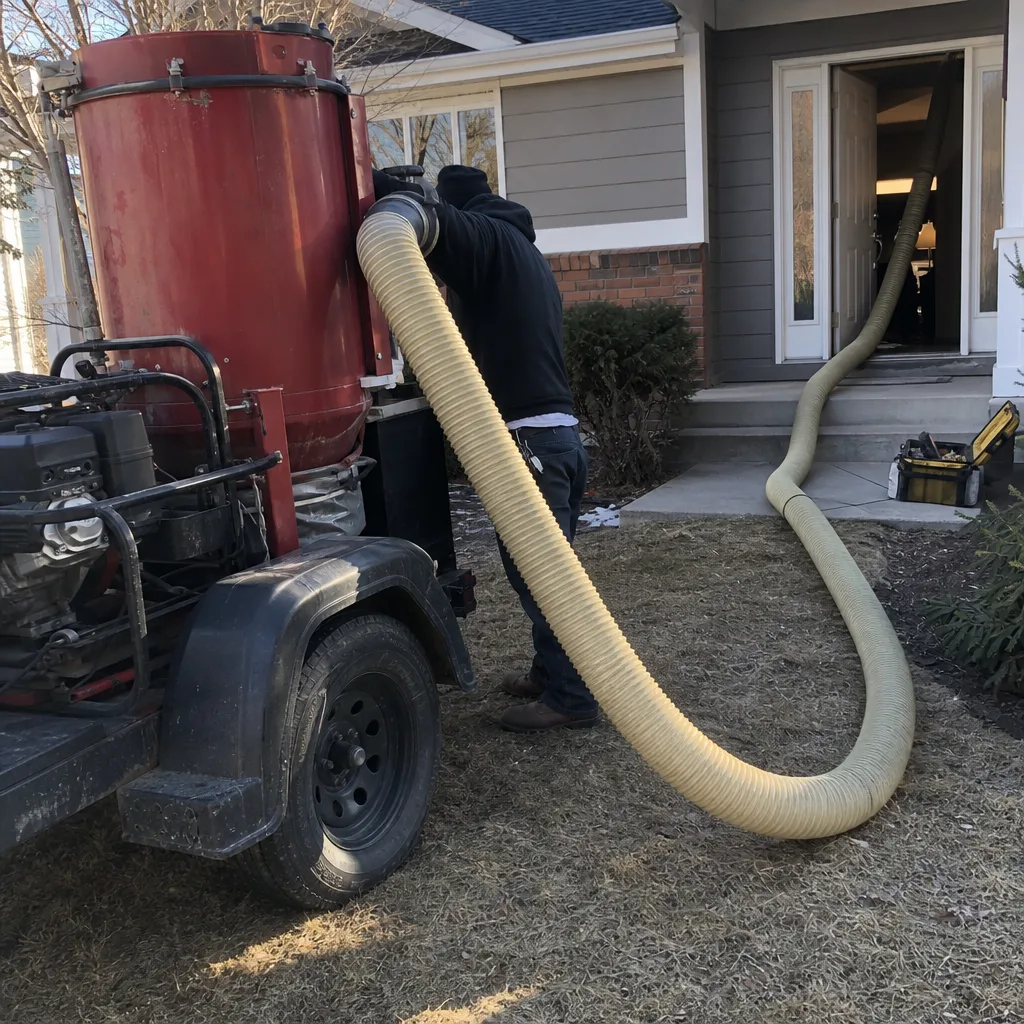
- Negative-pressure extraction setup at the main plenum. We connect professional-grade extraction equipment – Nikro units are common on our Denver jobs – to the plenum to establish negative pressure across the entire supply system. Negative pressure means the interior of the duct network is held below the pressure of the surrounding space, so when we disturb debris during cleaning, it travels toward the extraction point rather than into the room. Registers that are not being actively cleaned are sealed off so airflow is directed where we need it.
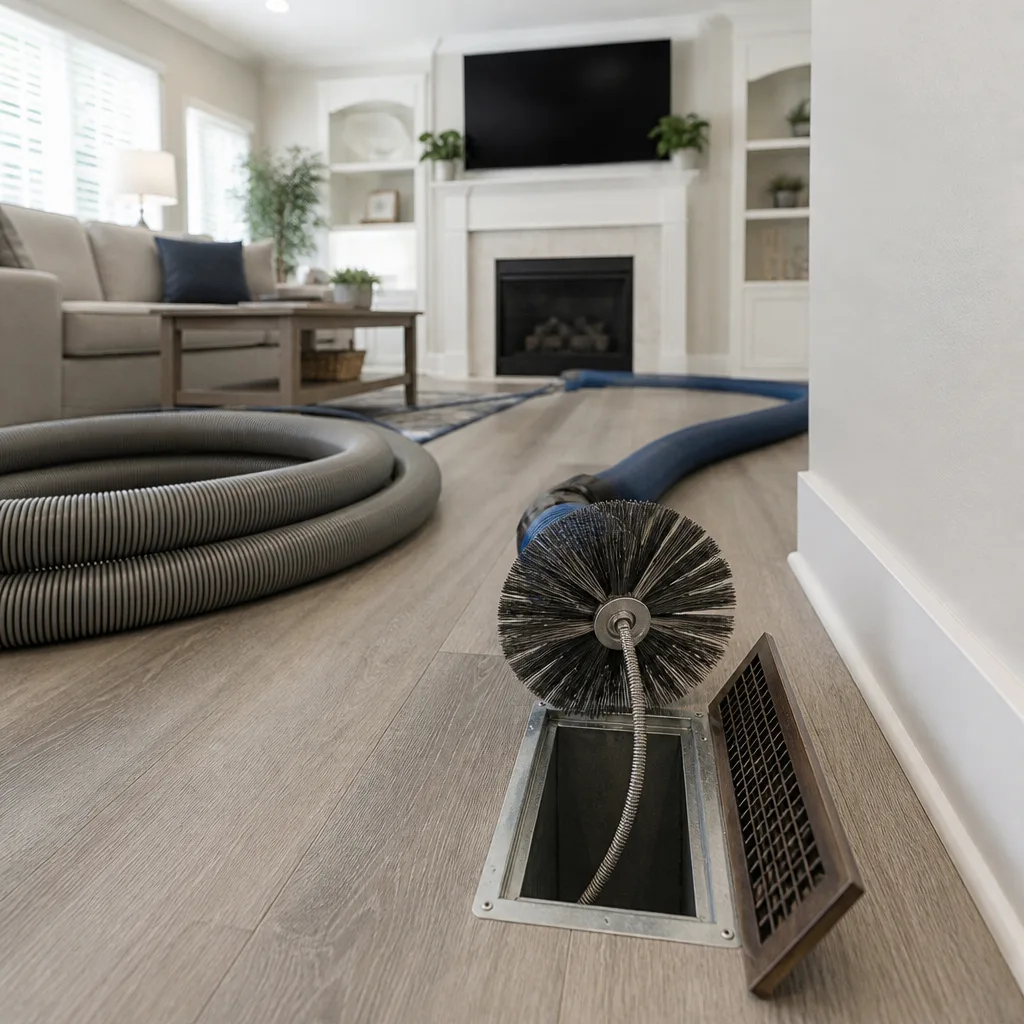
- Mechanical agitation through each supply run. Working from the register end toward the plenum, we use a Rotobrush rotary brushing system to contact and dislodge debris from duct walls. The rotating brush head is sized to the duct dimension of each run – rectangular, round, or oval – and moves at a rate that allows the bristles to contact all four walls. This is the step that differentiates documented cleaning from high-powered vacuuming at the register face, which does not reach debris at mid-run elbows.
- Point extraction at each register and elbow location. After the rotary pass, we extract at each register opening and at any access points near known elbows. Elbows are where static pressure drives debris into corners, and a straight extraction pass without point work at the bends frequently leaves that material behind. We document any run where elbow access is limited by the original construction so the customer understands what was cleaned versus what was physically accessible.
- Post-cleaning camera pass and photo documentation. We run the camera through each supply run again after cleaning. The before and after images are captured in sequence and become part of the job record delivered to the customer. If a run does not look meaningfully different between the before and after frame, we go back and clean it again. The 365-Day Done Right Promise backs this in writing on every job – not as a policy subject to manager review, but as a written commitment on the job record itself.
- Reassembly and system function check. Register covers are reinstalled, any access panels we cut for equipment connection are sealed, and we run the HVAC system briefly to verify airflow at each supply register before we leave. If we noted any damaged duct connections or failed joints during the camera inspection, those findings are written into the job record with photographs so the customer has documentation for any follow-up repair work.
Supply Duct Cleaning Pricing in Denver
Supply duct cleaning in Denver runs $280 to $520 for a typical single-family home with eight to fourteen supply registers. Below is a breakdown of what drives cost in Denver’s market specifically.
| Factor | Typical Range | Notes |
|---|---|---|
| Base cleaning, 8-10 supply runs | $280 – $380 | Single-story or two-story home, standard-access runs |
| Extended run count, 11-16 runs | $380 – $480 | Larger homes in Hilltop, Cherry Creek, or Washington Park |
| Post-construction debris load | Add $60 – $120 | Renovation drywall dust significantly increases cleaning time per run |
| Flex duct runs vs. rigid galvanized | Add $40 – $80 | Flex duct requires lower brush speed and more passes; common in 1980s-2000s Denver builds |
| Plenum cleaning included | Included in above ranges | The plenum is the origin point of all supply runs – cleaning stops there are standard |
| Photo documentation and job record | Included – no separate charge | Before and after camera images of every run, delivered with every job |
Every price is delivered in writing before any work begins. Haven Standard Clause 1 makes this a condition of every job – there is no scenario where a CleanRun technician begins work without a signed written price on the job record. If you have a written estimate from another company, bring it. We will put our own number next to it in writing at no charge – that is our Free Second Opinion offer, available on any written estimate from any competitor.
The $79 coupon cleaning model, which is common in Denver’s duct cleaning market, typically involves a shop-vac-level suction at the register face and no camera documentation. The price is real; the cleaning is not. There is no before photo to show you what was there and no after photo to show you it is gone. CleanRun’s Air Duct Cleaning services reflect actual equipment, actual documentation, and actual work on every run – not a per-register fee that balloons after the technician is already in your home.
FAQs – Supply Duct Cleaning Denver
How is supply duct cleaning different from return duct cleaning?
Supply duct cleaning addresses the runs that carry conditioned air from your HVAC system to each room, while return duct cleaning addresses the separate system of ducts that pulls room air back to the air handler for reconditioning. They are different physical pathways, and debris accumulates differently in each one. Supply runs are under positive pressure, which drives particulate into elbows and joints. Return runs draw air in, so debris tends to accumulate near the return grilles and at any duct connections that have even minor gaps. A full Air Duct Cleaning in Denver service covers both sides; supply-only cleaning is appropriate when a camera inspection confirms the return side is clean or was addressed recently. We photograph both before quoting so the written price reflects what is actually needed – not a standard package applied to every home regardless of condition.
How much does supply duct cleaning cost in Denver?
Supply duct cleaning in Denver typically costs between $280 and $520 for a single-family home, depending on the number of supply runs, the duct material (rigid galvanized versus flex duct), and whether post-construction debris is present. The written price is in your hands before any work starts – call (720) 799-2292 and we will schedule the camera inspection and deliver your number at no charge before you commit to anything.
How often should supply ducts be cleaned in Denver?
For most Denver homes, supply duct cleaning every four to six years is a reasonable baseline – but the camera determines the actual schedule, not a calendar. Denver’s extended heating season and Front Range dust conditions mean some homes accumulate debris faster than average. Homes with pets, recent renovation work, or older unsealed galvanized duct systems in neighborhoods like Sunnyside or Cole typically show meaningful build-up in three to four years. Homes with newer sealed duct systems and no pets may look clean at six years. We photograph the inside of every run before we price the job, so you can see the actual condition rather than taking an interval on faith.
Can dirty supply ducts cause health problems?
What is documented inside dirty supply ducts – fine particulate, organic debris, and in some cases microbial growth on duct walls – is carried directly into living spaces by the air your HVAC system delivers to every room. CleanRun does not make medical claims about air quality outcomes, because those claims require clinical studies we are not positioned to conduct. What we can tell you is that the camera photos from Denver homes regularly document debris loads that a reasonable homeowner would not want circulating through their living space. If you have occupants with respiratory sensitivities, consult your physician about what environmental factors to address – and ask us to send you the pre-job camera photos so you have documented evidence of actual duct conditions to discuss. Call (720) 799-2292 to schedule a no-obligation camera inspection.
What You Receive When the Job Is Done
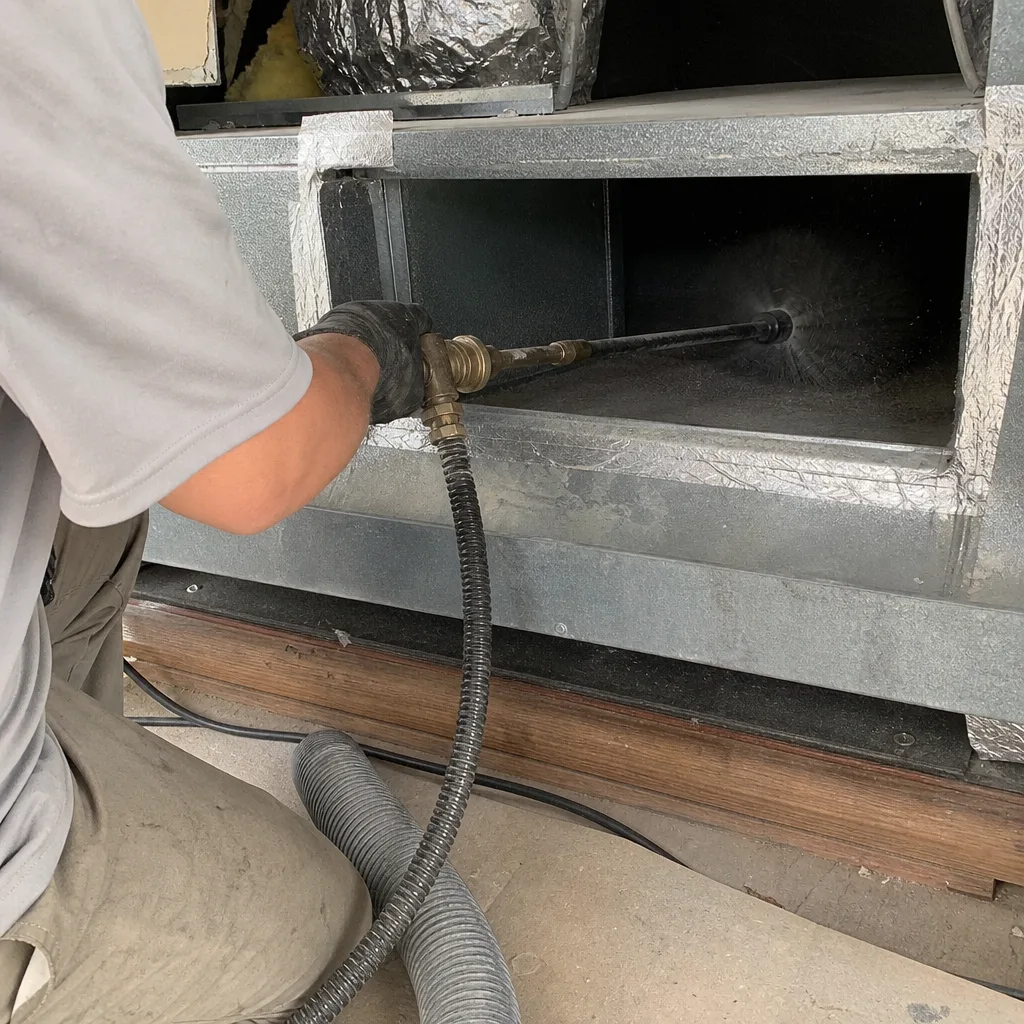
Every supply duct cleaning job at CleanRun closes with a documented job record delivered to the customer. That record includes before and after camera photographs of every supply run cleaned, the written scope of work as agreed before the job started, and the written 365-Day Done Right Promise. If anything is not right – if a run does not look different between the before and after frame, or if a problem surfaces within a year that traces back to work we did – the written commitment on that job record is what governs. Not a phone call to a manager, not a policy that changes with the season.
Tomas Reyes built CleanRun around the idea that a homeowner should be able to look at a photograph and confirm the work was done, not take a technician’s word for it. Since 2013, across more than 52,000 Denver-area homes, the job record has been the standard – not an upgrade, not an add-on, just the way every job closes.
Background-checked, uniformed technicians operating under the H.A.V.E.N. Standard show up identified by name before they arrive. Haven Standard Clause 3 covers crew verification – you know who is coming into your home before they pull into your driveway. Equipment used on supply duct cleaning jobs includes Rotobrush rotary brushing systems and Nikro extraction units – professional-grade tools you can look up independently before agreeing to a price.
Schedule Your Supply Duct Cleaning in Denver
If you are in Denver – whether that is Capitol Hill, Wash Park, Stapleton, Lowry, the Highlands, or anywhere else in the metro – the process is the same: camera inspection first, written price before work starts, documented photo record when we leave. No guessing, no surprise totals, no vacuum noise passed off as cleaning.
Call (720) 799-2292 to schedule. A live person answers every call, and your written estimate is ready before any work begins. If you have a quote from another company, bring it – we will put our number next to it in writing at no charge. The CleanRun home page has the full picture of what we do and how we do it if you want to read further before calling.
Written by Tomas Reyes, Owner at CleanRun Air Duct Cleaning Denver, serving Denver since 2013.