
Last updated September 23, 2026
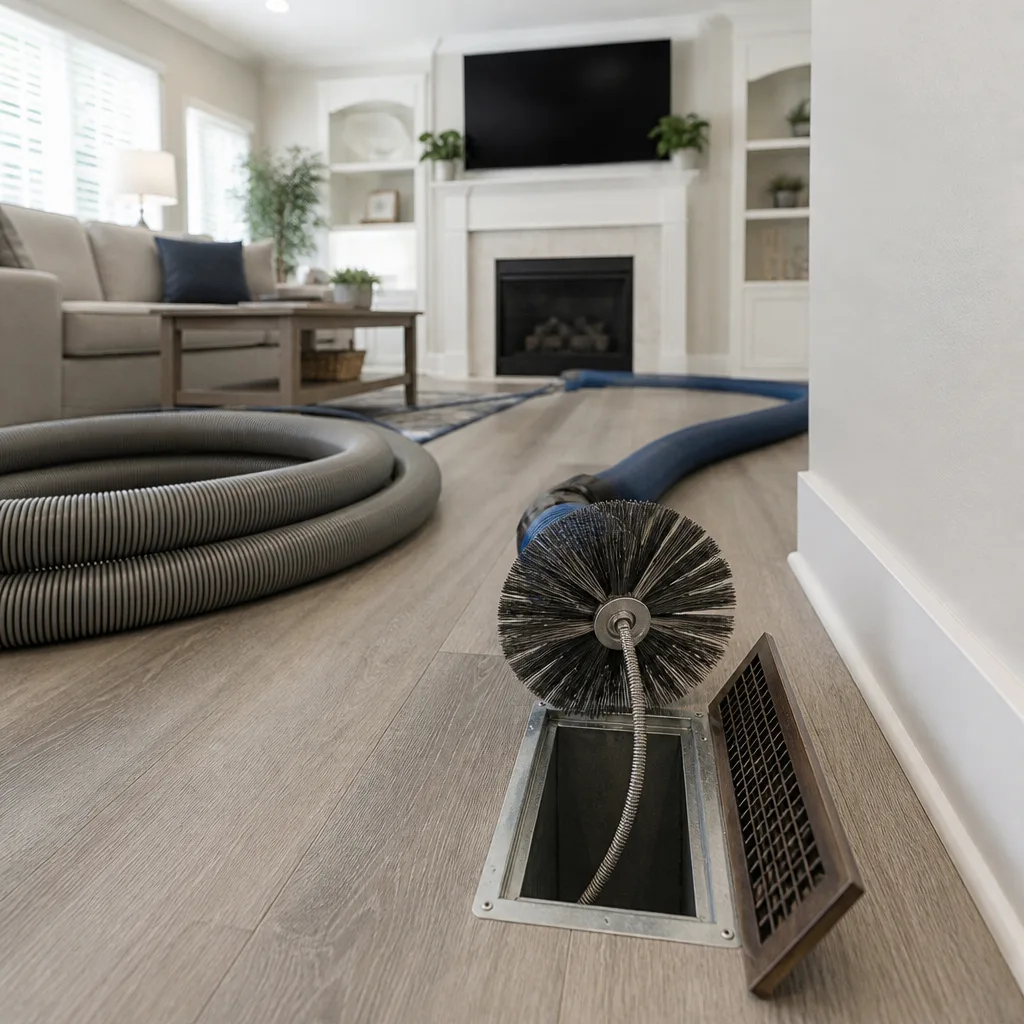
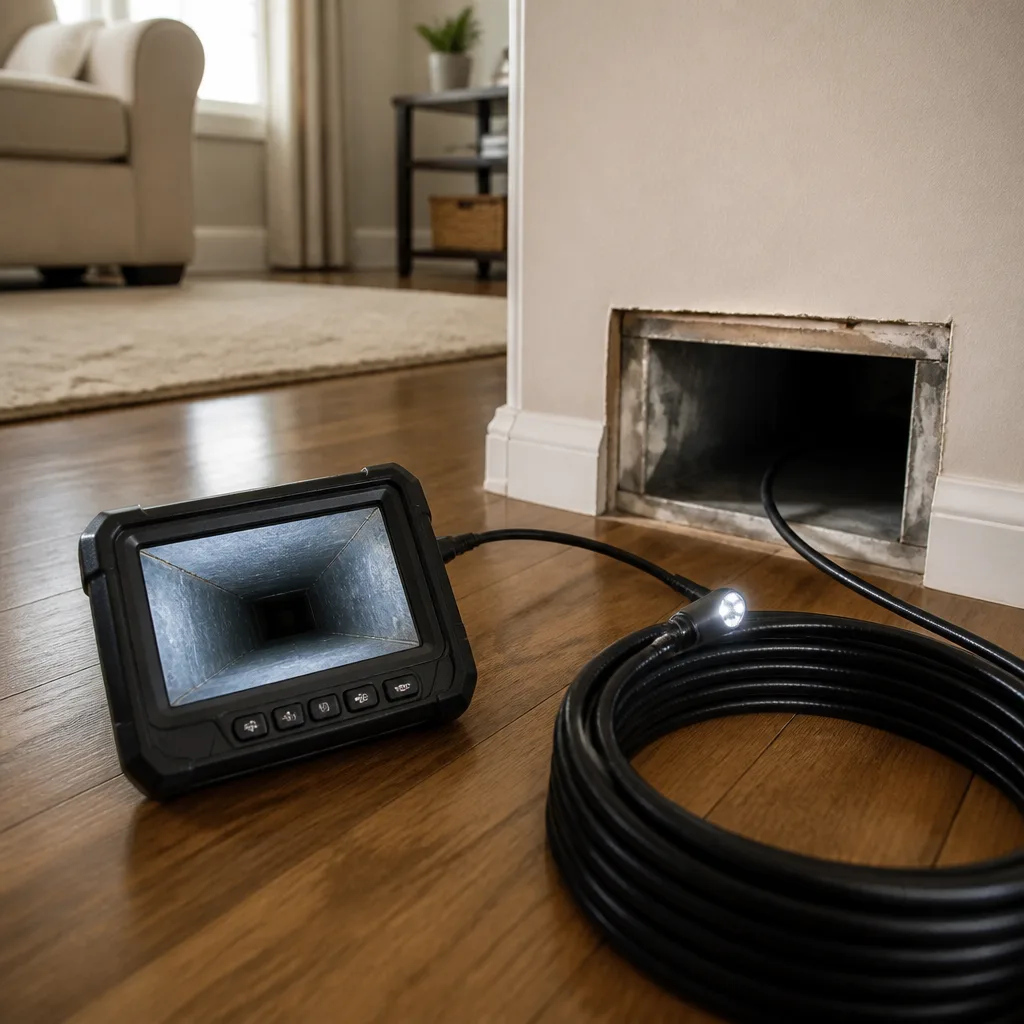
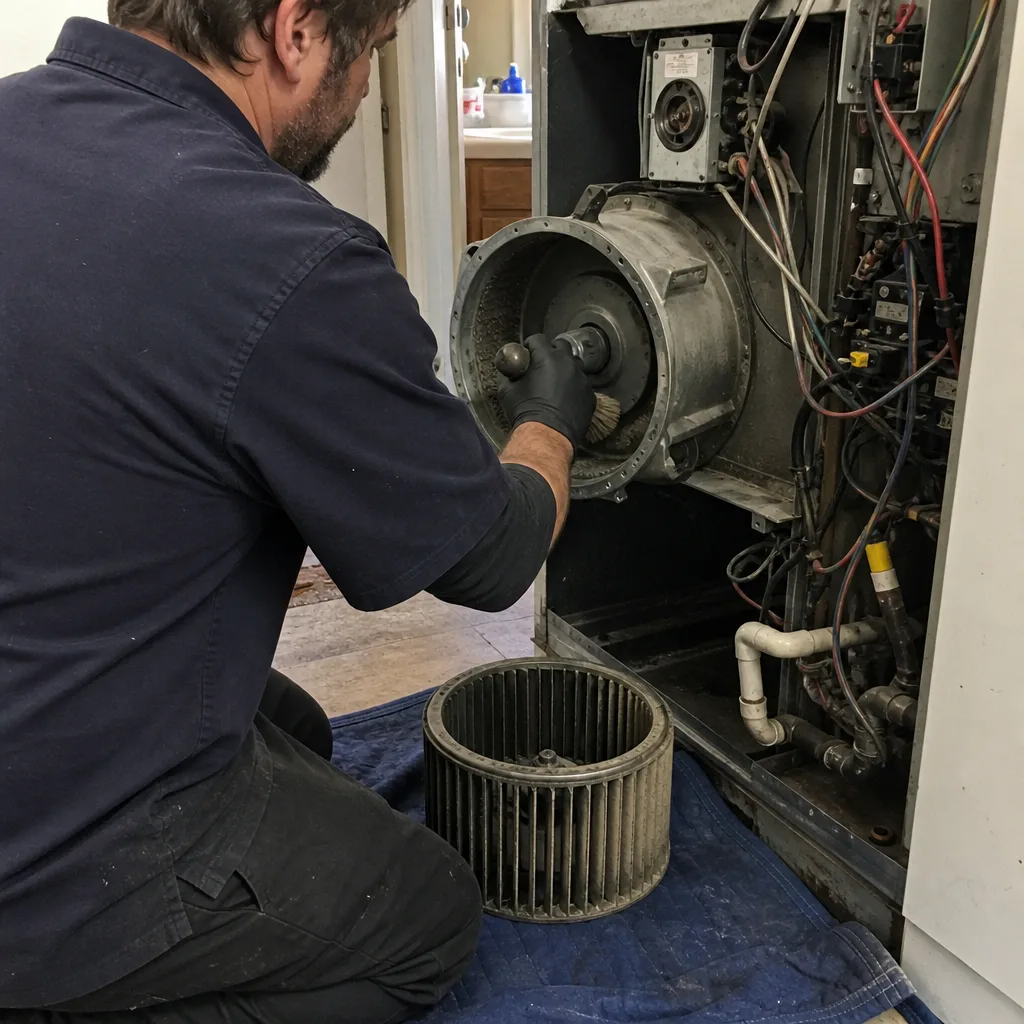
Whole-system duct and dryer vent check with before-and-after photos - you see exactly what came out of your vents
That "$99 whole-house special" is a bait ad - the real number appears once they are in your hallway, or the "clean" is a shop-vac at the register. We photograph the inside of your ducts before and after instead.
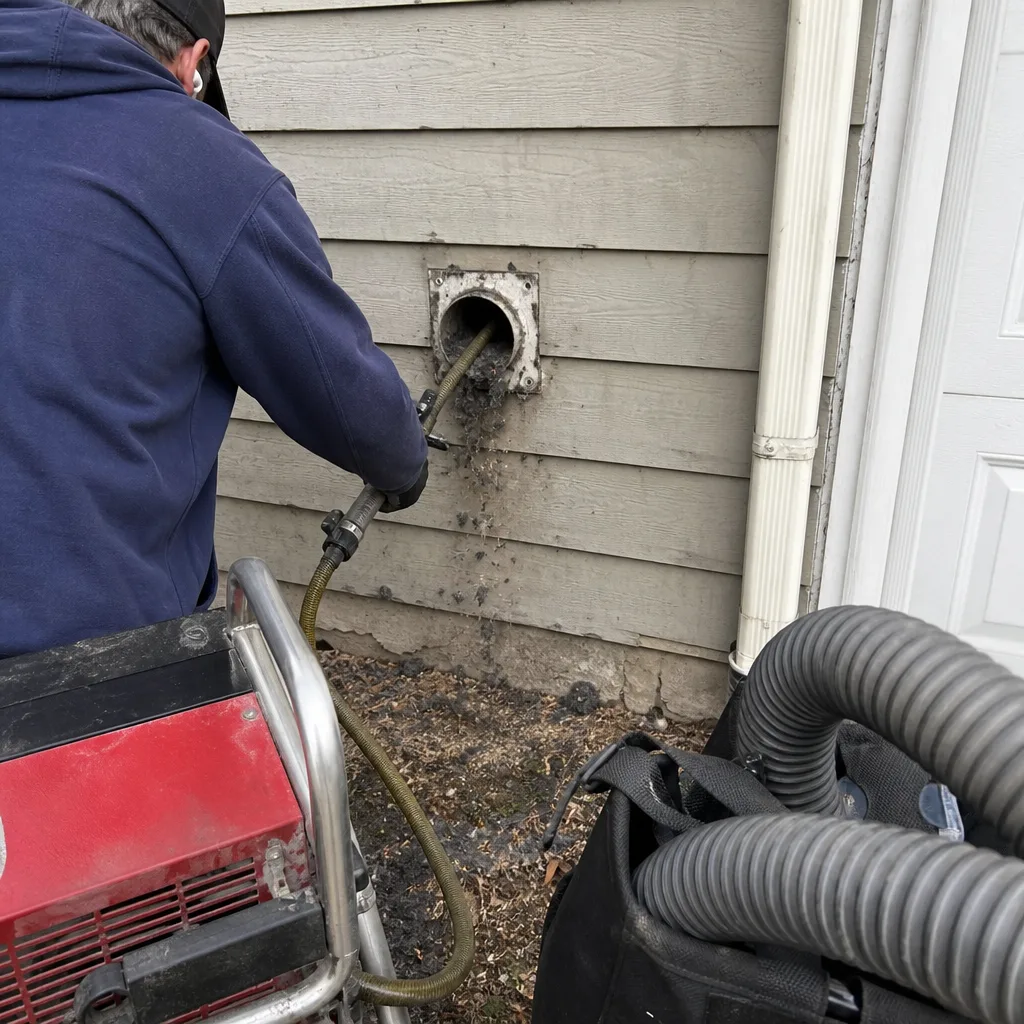 Before
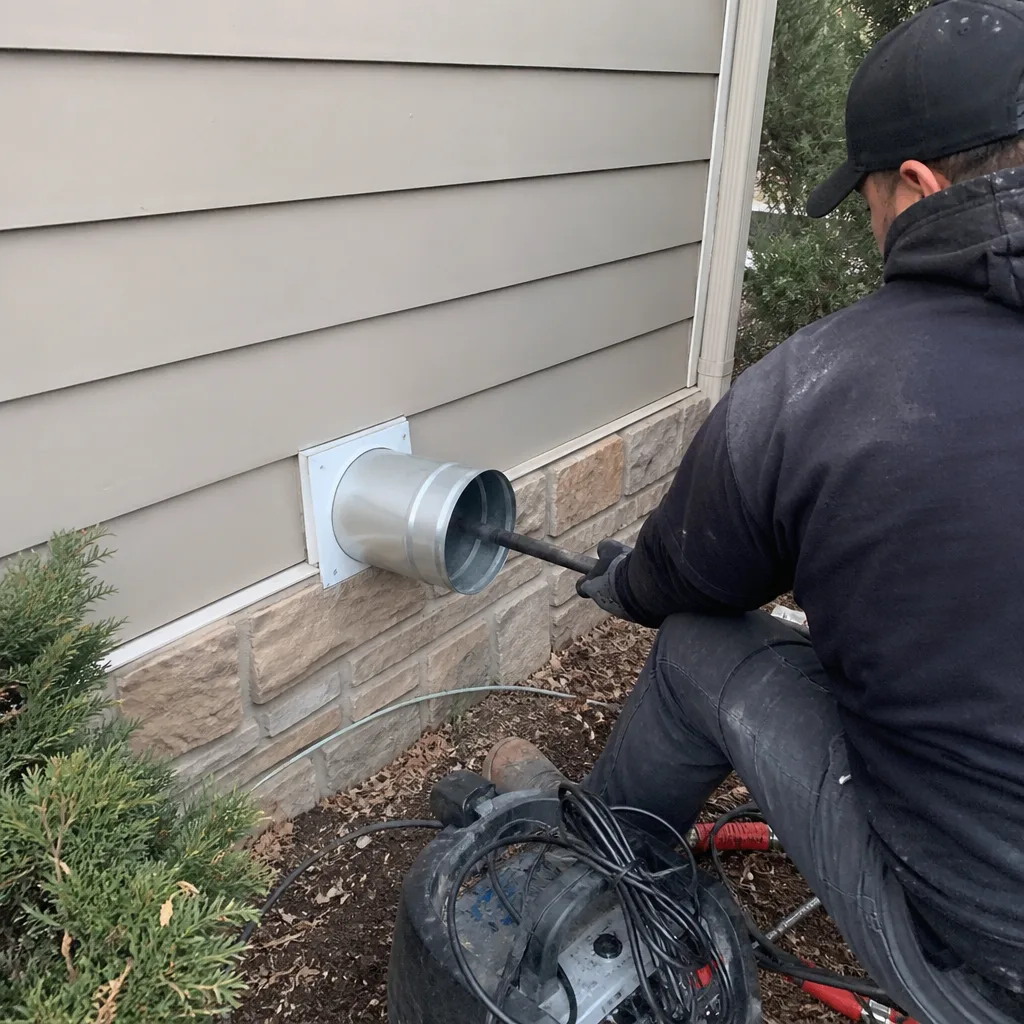 After
After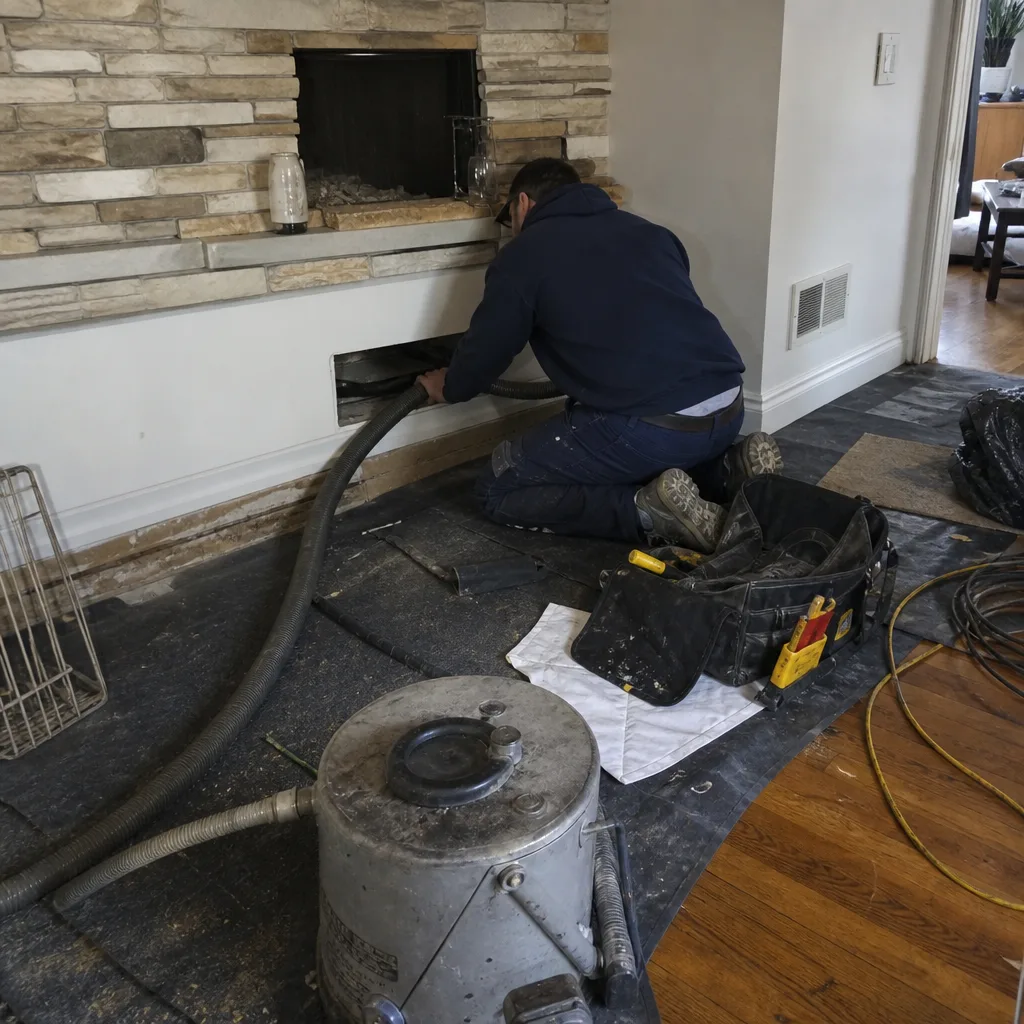 Before
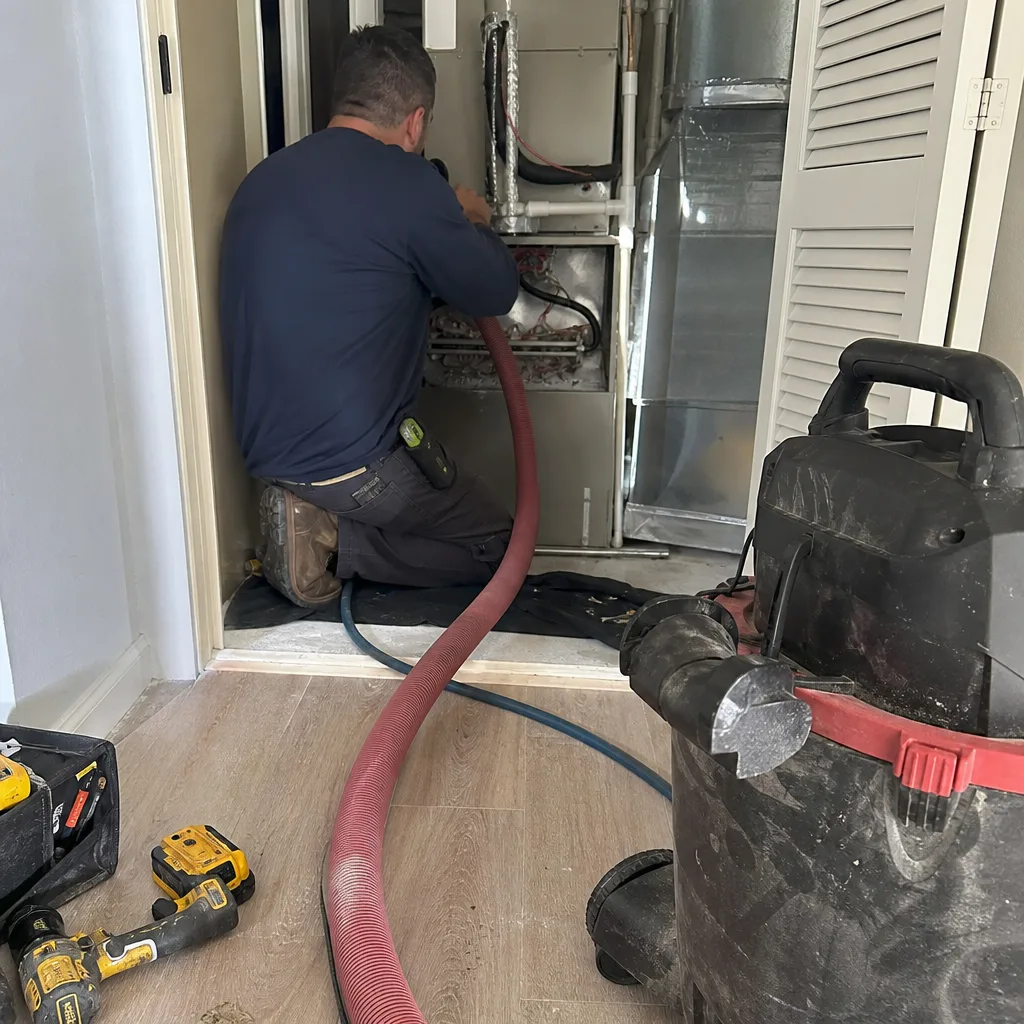 After
After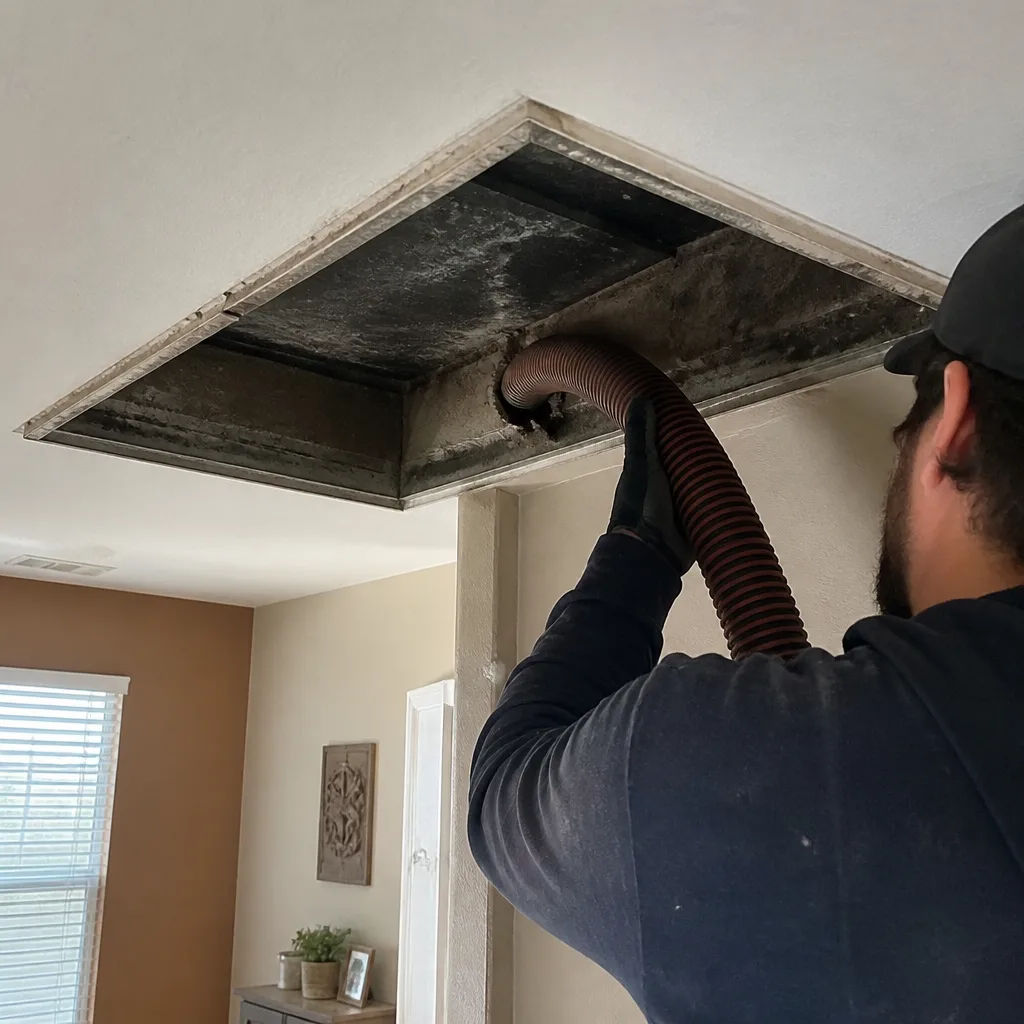 Before
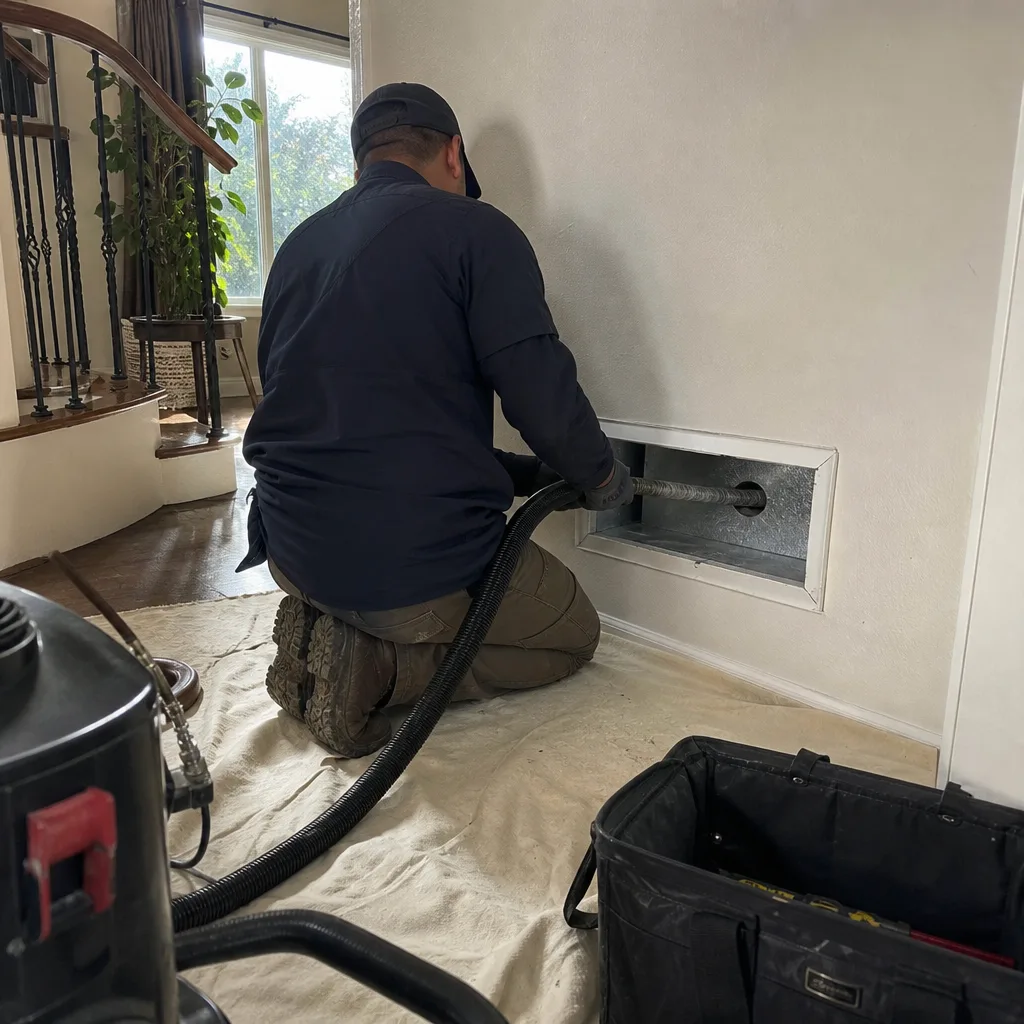 After
AfterAir Duct Cleaning Permits, Codes & Inspections in CO: What You Need to Know
A technician who finds a cracked plenum, applies mastic, and leaves without pulling a mechanical permit may have just created a code violation in your home. This distinction - between cleaning and repair - is one most duct cleaning companies in Denver never mention to customers. In this The Complete Guide to Air Duct Cleaning in Denver, we’ll walk through exactly where Colorado law draws the line, which repairs trigger permit requirements in Denver jurisdictions, and how to protect yourself from unpermitted work that could complicate a future home sale or insurance claim. We’ve been documenting duct conditions in Denver homes since 2013, and the gap between what homeowners think they bought and what was actually delivered is wider than most people realize.
Quick Answer
Air duct cleaning itself - the removal of debris from existing ductwork using brushes and negative-pressure extraction - requires no permit anywhere in Colorado. However, duct repairs, sealing, modifications, or any work that alters the mechanical system’s design or airflow capacity typically require a mechanical permit and inspection under the International Mechanical Code, which Colorado has adopted statewide. In Denver specifically, mastic sealing of disconnected joints, flex duct replacement, boot relining, and plenum repairs all cross this line.
Table of Contents
- Does Air Duct Cleaning Itself Require a Permit in Colorado?
- How Colorado’s IMC Adoption Affects Your Project
- Which Duct Repairs Trigger a Permit Requirement in Denver
- What Homeowners Can Do Themselves vs. What Requires a Licensed Contractor
- How to Verify Permits and Request Inspection Records in Denver
- Encapsulant Coatings: EPA Guidance Beyond Building Codes
- The Real Risks of Unpermitted Duct Repair Work
- How CleanRun Handles the Cleaning-to-Repair Boundary
BeforeAfterDoes Air Duct Cleaning Itself Require a Permit in Colorado?
No. The mechanical codes adopted across Colorado - including the 2021 International Mechanical Code with Colorado amendments - do not classify air duct cleaning as construction work requiring a permit. Cleaning is defined as maintenance: the removal of accumulated debris, dust, and particulate from existing duct runs, registers, and the plenum (the central distribution box where conditioned air splits to individual rooms) using brushes, compressed air, or negative-pressure extraction systems.
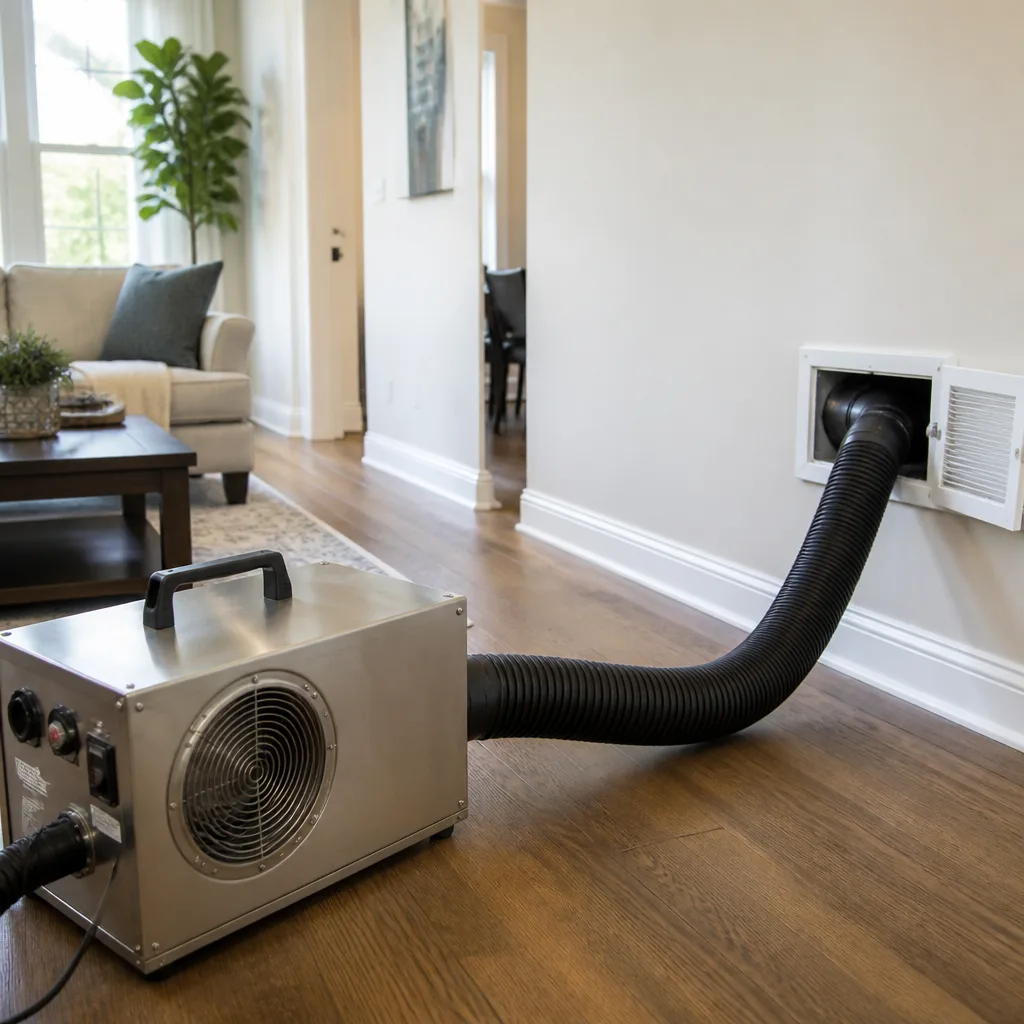
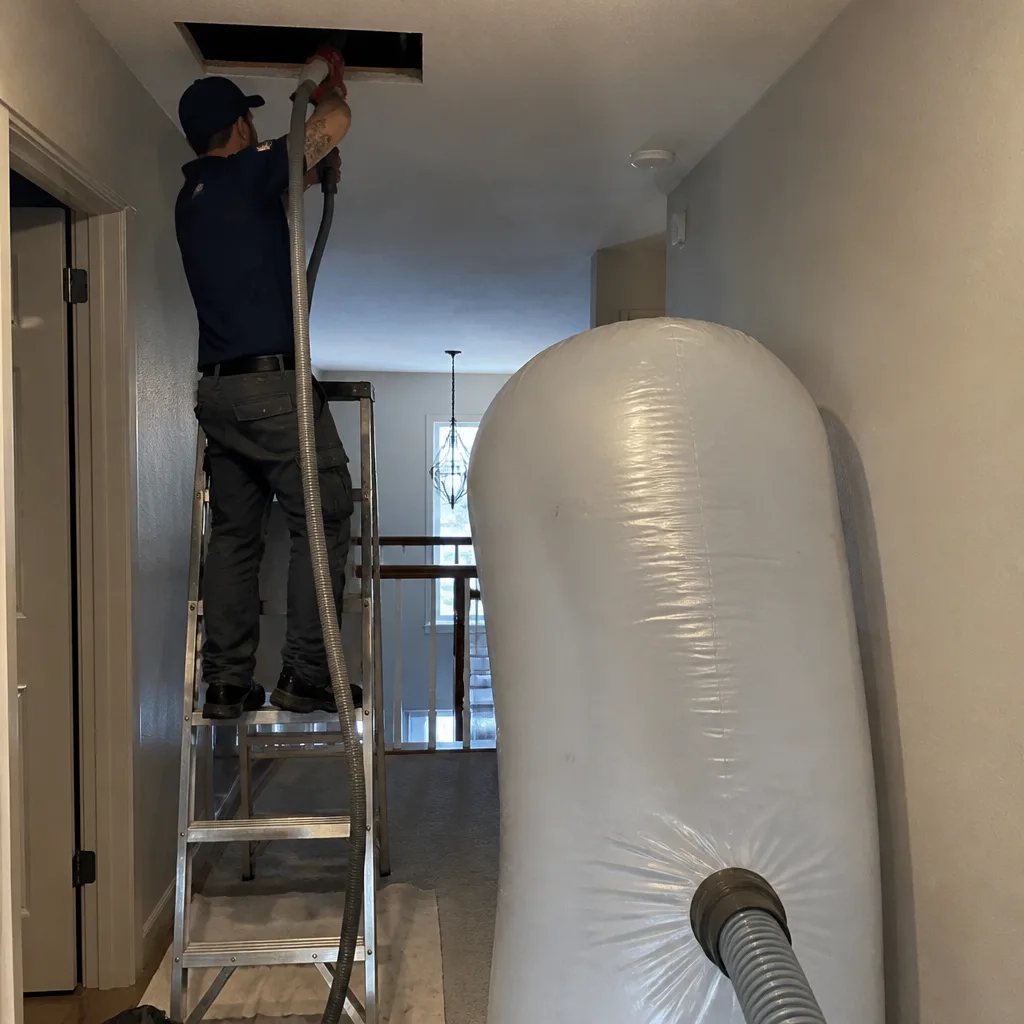
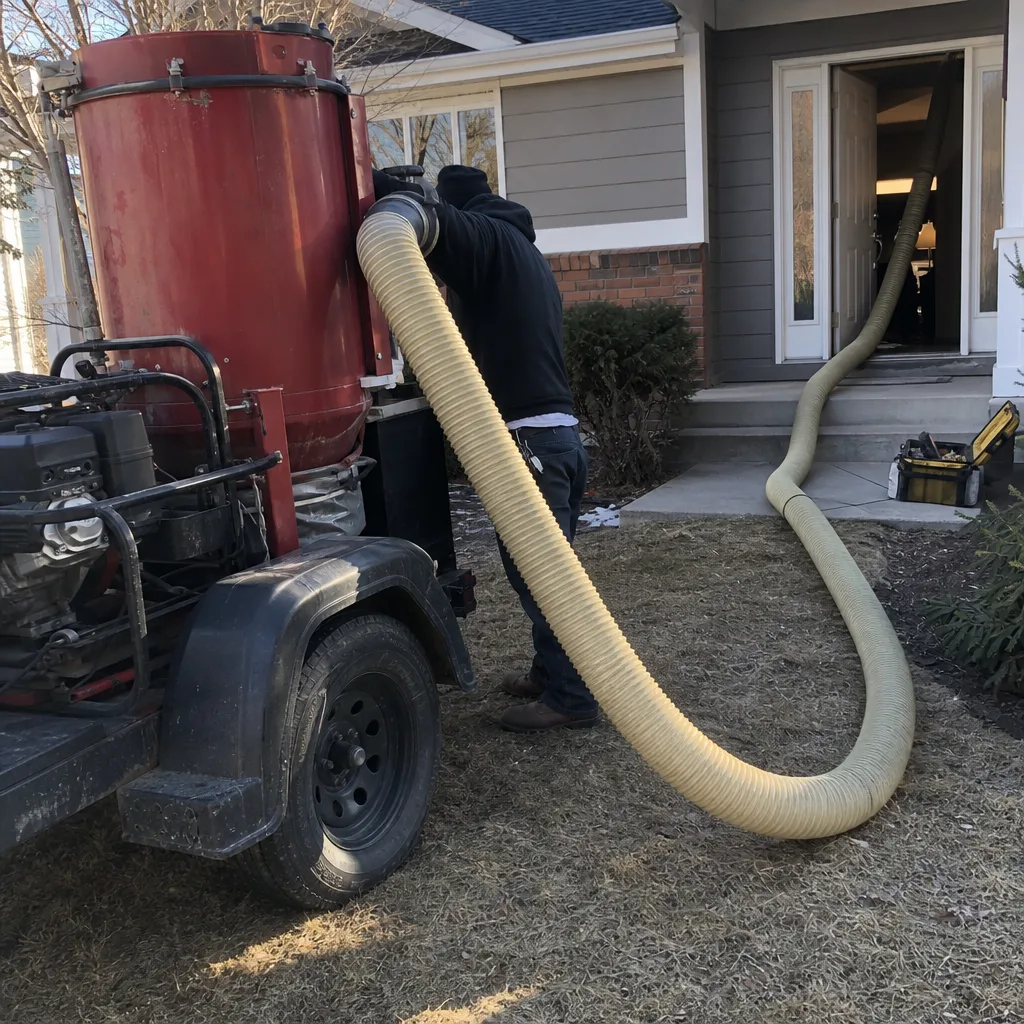
We’ve completed over 52,000 residential Air Duct Cleaning jobs since 2013, and not one required a building permit. The equipment matters for documentation but not for permitting. Our crews use Rotobrush mechanical brush systems, Nikro HEPA-filtered negative air machines, and Abatement Technologies containment tools - all standard trade equipment that operates within existing ductwork without altering its structure, capacity, or materials.
Where companies create confusion is in the scope creep that follows cleaning. A technician finds a disconnected flex duct at a boot connection. Instead of noting it and stopping, they seal it with mastic or replace a section. That single action - altering the system’s sealed integrity or replacing a component - converts maintenance into mechanical work under Denver’s interpretation of the IMC.
The Colorado Department of Labor and Employment’s Division of Professions and Occupations, which oversees mechanical licensing, does not regulate cleaning as a licensed activity. Anyone can legally operate duct cleaning equipment in Colorado. Mechanical repair and modification, however, require a Colorado State Plumbing or Mechanical Contractor license, and permit-eligible work must be performed by or under the direct supervision of a licensed contractor.
For Denver homeowners, this means your first question to any duct cleaning company should not be “are you licensed?” - cleaning doesn’t require it - but rather “what happens if you find damage, and who pulls the permit if repair is needed?” Most companies have no answer prepared.
How Colorado’s IMC Adoption Affects Your Project
Colorado operates under a patchwork of code adoption that surprises many homeowners who assume statewide uniformity. The state has adopted the 2021 International Mechanical Code as its baseline, but individual jurisdictions amend enforcement, fee structures, and inspection protocols. Denver, Aurora, Lakewood, and Boulder each maintain separate Community Planning and Development offices with distinct permit portals and inspector assignments.
Denver’s amendments to the IMC are particularly relevant for ductwork. The city requires mechanical permits for:
- Any modification to supply or return ductwork that changes system capacity, routing, or static pressure
- Replacement of flex duct longer than 10 linear feet
- Sealing of disconnected joints using mastic, tape, or aerosol sealant when the disconnection was not part of original construction
- Installation of duct liner or repair of existing liner where fire-resistance ratings may be affected
- Any work within a plenum that serves as a return air pathway in a multi-family dwelling
Denver’s altitude - 5,280 feet - creates additional considerations that inspectors evaluate. The thinner air affects HVAC system design calculations, particularly for return air sizing and static pressure. A repair that seems minor at sea level, like reducing a return duct diameter, can push a Denver system outside design parameters. Inspectors know this. We’ve seen permit rejections in Capitol Hill and Park Hill homes where a contractor replaced flex duct with a smaller diameter without recalculating for altitude-adjusted CFM requirements.
The permit fee structure in Denver as of 2024 runs approximately $150-$400 for residential mechanical permits depending on project valuation, with inspection scheduling through the city’s Development Services portal. Same-day inspection requests are available for an additional fee, though standard scheduling typically runs 2-5 business days. These timelines matter if you’re coordinating cleaning and repair work - a reality in many older Denver neighborhoods where original ductwork has degraded.
Colorado’s IMC adoption also means that work performed without required permits can be flagged during real estate transactions. Denver’s seller disclosure requirements do not explicitly ask about duct permits, but the general mechanical systems disclosure and any visible permit history in city records create liability. We’ve been called to homes in Wash Park and Highlands where unpermitted duct modifications from prior owners complicated sales or required retroactive permitting at 2-3x the original cost.
Which Duct Repairs Trigger a Permit Requirement in Denver
This is where most homeowners get surprised. The cleaning itself was permit-free. Then the technician points out a cracked plenum, a disconnected boot, or degraded flex duct, and suddenly the project crosses into regulated territory. For Air Duct Cleaning Warning Signs: A Denver Homeowner’s Reference Guide, here’s the specific breakdown of what triggers permitting in Denver jurisdictions, based on our experience working alongside mechanical contractors and reviewing city inspection records since 2013.
Mastic Sealing of Disconnected Joints
Applying mastic - the thick, paste-like sealant used at duct joints - to a connection that has separated due to age, vibration, or improper original installation constitutes repair work under Denver’s IMC interpretation. The distinction matters: sealing joints during original installation is construction; re-sealing them after failure is repair. Both require permits, but the cleaning context creates a gray zone that unscrupulous operators exploit.
We’ve documented this repeatedly in Denver’s post-war ranch homes, particularly in neighborhoods like Glendale and Englewood where original ductwork dates to the 1950s-1970s. The metal-to-flex connections at boots degrade from thermal cycling. A technician finds a 2-inch gap blowing conditioned air into the crawl space, applies mastic, and moves on. No permit. No inspection. The homeowner paid for cleaning and received an unpermitted mechanical repair.
Flex Duct Replacement
Replacing any section of insulated flex duct - the ribbed, plastic-sleeved tubing common in residential branch runs - requires a mechanical permit in Denver if the replacement exceeds 10 linear feet or alters the original routing. Shorter patches using mechanical connectors may fall under maintenance in some interpretations, but Denver inspectors have increasingly required permits for any flex replacement that involves cutting and reattaching to collars or boots.
The material specification also matters. Original flex duct in Denver homes often lacks the current fire-resistance ratings. Replacement with modern R-6 or R-8 insulated flex must meet ASTM C518 and UL 181 standards, which inspectors verify. We’ve seen crews install non-rated flex from hardware stores, creating both a code violation and a fire safety issue.
Boot Relining and Repair
Supply boots - the metal transitions between ductwork and floor or wall registers - corrode in Denver’s climate, particularly in homes with evaporative cooling history where moisture accumulation accelerates rust. Relining a boot with a metal sleeve or applying internal sealants constitutes repair work requiring permits if the boot’s original dimensions or airflow characteristics change.
Some “duct cleaning” companies offer boot relining as an add-on service without disclosing the permitting requirement. The work is performed from the register side, invisible to the homeowner, and no documentation exists. In a 2022 job in Berkeley, we photographed a boot where a previous company’s relining had reduced the effective opening by 30%, strangling airflow to a bedroom - the homeowner had paid for improved air quality and received a code-violating airflow restriction.
Plenum Repairs
The plenum, typically a large sheet metal box at the air handler, is the most common site of discovered damage during cleaning. Cracks from thermal expansion, corrosion from condensate leaks, or damage from filter neglect can all compromise the plenum’s sealed integrity. Any repair - welding, patching with sheet metal and screws, or application of internal sealants - requires a mechanical permit in Denver.
Plenum repairs are particularly consequential because the plenum serves as the pressure boundary between conditioned and unconditioned air. An unpermitted, uninspected repair can create pressure imbalances that affect combustion appliance venting, a safety issue Denver inspectors take seriously given the city’s history of carbon monoxide incidents in older housing stock.
Table: Cleaning vs. Repair - Permit Requirements in Denver
| Activity | Classification | Permit Required in Denver? | License Required? |
|---|---|---|---|
| Debris removal from existing ductwork | Maintenance / Cleaning | No | No |
| Register and grille cleaning | Maintenance / Cleaning | No | No |
| Negative-pressure extraction with HEPA filtration | Maintenance / Cleaning | No | No |
| Mastic sealing of disconnected joints | Mechanical Repair | Yes | Yes - Colorado State Mechanical License |
| Flex duct replacement (>10 ft) | Mechanical Repair | Yes | Yes - Colorado State Mechanical License |
| Boot relining or replacement | Mechanical Repair | Yes | Yes - Colorado State Mechanical License |
| Plenum patching or sealing | Mechanical Repair | Yes | Yes - Colorado State Mechanical License |
| Aerosol duct sealing (sealant injection) | Mechanical Modification | Yes | Yes - Colorado State Mechanical License |
What Homeowners Can Do Themselves vs. What Requires a Licensed Contractor
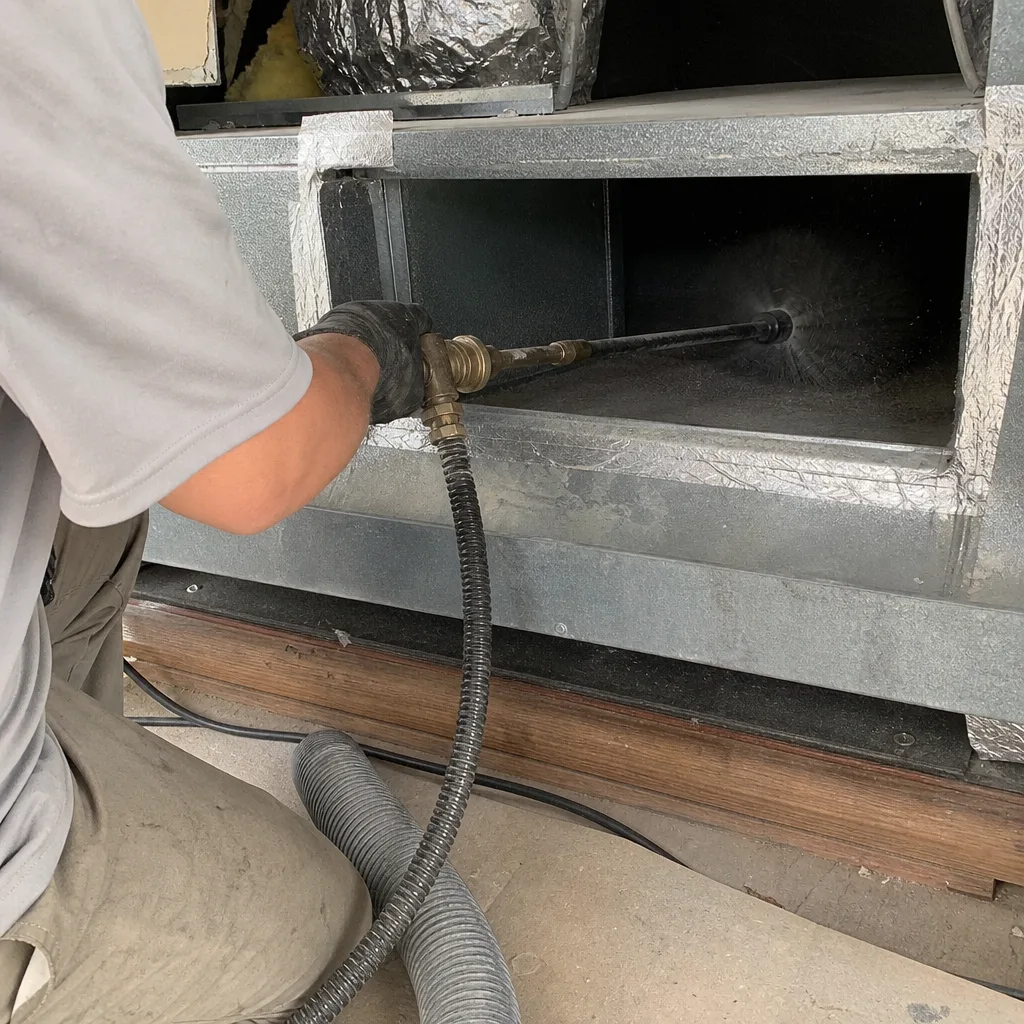
Colorado law draws a clear line between homeowner maintenance and regulated mechanical work, though the practical boundary confuses many Denver residents. Understanding this distinction protects you from both code violations and voided equipment warranties.
What Homeowners Can Legally Perform
Under Colorado’s homeowner exemption to contractor licensing, a property owner can perform maintenance on their own single-family residence without a mechanical license. This includes:
- Filter replacement and basic filter rack maintenance
- Register and grille removal for cleaning
- Visible debris removal from accessible duct openings using household tools
- Application of foil tape (not mastic) to minor, accessible joint separations where no structural repair is needed
- Cleaning of condensate drain lines
The exemption applies only to the owner’s primary residence or a single rental property they directly manage. It does not extend to work performed by a “friend who knows HVAC” or a handyman without proper licensing. Denver inspectors have red-tagged work performed by unlicensed individuals claiming the homeowner exemption when the homeowner was not physically present or actively participating.
What Requires a Licensed Mechanical Contractor
Any work that alters the system’s design, capacity, or sealed integrity requires a Colorado State Plumbing or Mechanical Contractor license. This includes all the repair activities listed in the prior section, plus:
- Any work involving refrigerant lines or the refrigeration circuit
- Modification of gas-fired furnace venting or combustion air supply
- Installation of UV-C sanitizing devices within ductwork (electrical and mechanical permits may both apply)
- Whole-house humidifier or dehumidifier integration with duct systems
- Zone damper installation or modification
The licensing requirement exists for reasons beyond bureaucratic control. Colorado’s mechanical code incorporates safety provisions for combustion, electrical, and pressure systems that untrained individuals routinely violate. In Denver’s older neighborhoods - Five Points, Whittier, Westwood - we’ve found unpermitted, unlicensed modifications that created active carbon monoxide risks or electrical hazards hidden behind ductwork.
Homeowner’s insurance adds another layer. Most policies contain exclusions for damage caused by unlicensed mechanical work. A fire originating from improperly installed flex duct or a flooded basement from a failed condensate modification may not be covered if the work was performed without proper licensing and permitting. We’ve reviewed claim denials where the insurer’s investigator pulled Denver permit records and found none for the relevant work.
How to Verify Permits and Request Inspection Records in Denver
Denver’s permit records are public and increasingly accessible online, though the system has quirks that frustrate many homeowners. Here’s the specific process for verifying whether duct repair work was properly permitted and inspected.
Step 1: Identify the Permit Number
Any legitimate mechanical contractor should provide a permit number before work begins, not after. Haven Standard Clause 1 at CleanRun requires written documentation of all project elements before work starts; for repair work we coordinate with licensed mechanical partners, the permit number appears on that written scope. If a company cannot or will not provide a permit number, that is a signal to pause the project.
Step 2: Search Denver’s Online Portal
Denver Community Planning and Development maintains the Denver Development Services portal where permit status can be searched by address, permit number, or contractor license. The system shows:
- Permit application date and approved scope
- Inspection scheduling and results
- Final approval status and any correction notices
- Licensed contractor of record
Search by property address rather than permit number if you suspect work was performed without disclosure. Unpermitted work will not appear, which is itself information.
Step 3: Request Physical Records
For permits issued before approximately 2015, or for detailed inspection notes, submit a public records request to Denver Community Planning and Development at 201 W. Colfax Ave., Dept. 205, Denver, CO 80202. There is typically a small fee for physical record reproduction. Include the property address, approximate date range, and any known contractor information.
Step 4: Verify the Inspector’s Final Approval
A permit is not complete until final inspection approval. We’ve encountered situations where contractors pulled permits - satisfying the homeowner’s initial verification - but never called for final inspection, leaving the permit open and the work technically unapproved. In Denver, open permits can block future permit applications for the same property and may be flagged in title searches.
For properties in Denver’s historic districts or designated landmark structures, additional review by Landmark Preservation may apply to any work visible from the exterior, including new vent terminations or equipment pad modifications. This adds 2-4 weeks to permit timelines and is a common source of project delays in neighborhoods like Curtis Park and Baker.
Encapsulant Coatings: EPA Guidance Beyond Building Codes
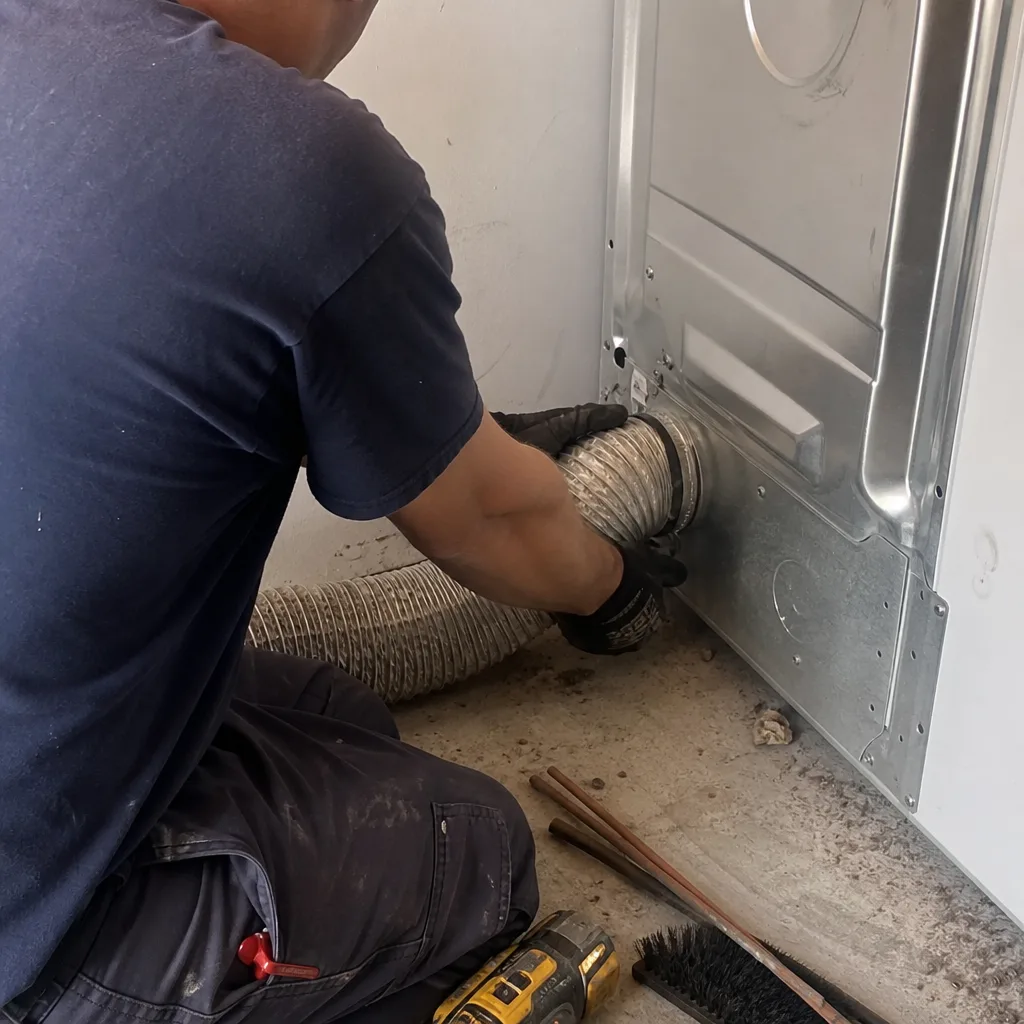
A growing segment of the duct cleaning industry promotes internal encapsulant coatings - spray-applied sealants that form a barrier over duct surfaces - as a solution for degraded ductwork or post-cleaning “protection.” This practice exists in a regulatory gap that Colorado homeowners should understand.
The EPA has not established specific regulations for encapsulant products used in HVAC ductwork, but the agency has issued guidance under the Federal Insecticide, Fungicide, and Rodenticide Act (FIFRA) and the Toxic Substances Control Act (TSCA). Products marketed with antimicrobial claims must be EPA-registered for that use. Many encapsulants promoted by duct cleaning companies lack this registration, making their antimicrobial claims legally unsubstantiated.
More critically for Colorado homeowners, encapsulant application alters the duct surface in ways that building codes do not directly address but that affect system performance. The coating adds thickness, can reduce effective duct diameter, and may degrade under thermal cycling in Denver’s climate - where furnaces cycle heavily during winter temperature swings and evaporative coolers introduce moisture in summer months. We’ve photographed encapsulant failures in Denver homes where the coating peeled, creating debris that restricted airflow worse than the original condition.
Denver’s mechanical inspectors evaluate encapsulant work case-by-case. If the application is part of a permitted repair project, inspectors may require manufacturer documentation of temperature ratings, fire resistance (ASTM E84), and VOC emissions. CleanRun does not apply encapsulant coatings; our assessment is that the unregulated product landscape, combined with performance risks in Denver’s climate, makes this a poor value proposition for homeowners. When duct surfaces are degraded to the point where encapsulants are proposed, replacement of the affected section - properly permitted and inspected - is the defensible approach.
For homeowners considering encapsulant treatments, we recommend requesting: EPA registration number for any antimicrobial claims, ASTM E84 fire resistance test results, and written confirmation that the application will be included in any required mechanical permit scope. The absence of any of these documents is a reason to decline the service.
The Real Risks of Unpermitted Duct Repair Work
The consequences of unpermitted duct repair extend beyond abstract code compliance. Denver homeowners face specific, material risks that we’ve documented across hundreds of properties.
Real estate transaction complications. Denver’s hot housing market means frequent transactions, and buyer inspections increasingly include permit history reviews. Unpermitted mechanical work can trigger re-inspection requirements, delay closings, or reduce offers. In 2023, we consulted on a Cherry Creek home sale where unpermitted duct modifications from a 2019 “cleaning” job required $4,200 in retroactive permitting and correction work before the buyer’s lender would close.
Insurance coverage gaps. As noted above, unlicensed and unpermitted work commonly voids coverage for related damage. Denver’s hail and freeze-thaw cycles create plenty of HVAC-related claims; insurers scrutinize permit history when claims involve mechanical systems.
Energy efficiency program disqualification. Xcel Energy’s residential rebate programs in Colorado, including duct sealing incentives, require work performed by licensed contractors with permit documentation. Unpermitted work cannot be retroactively qualified for rebates that often run $300-$800 for properly documented duct sealing projects.
Safety hazards from undetected errors. Without inspection, common errors persist: reversed zone dampers, combustion air depletion from pressure imbalances, condensate drainage into crawl spaces. Our crews have found each of these in Denver homes where prior “cleaning” included unpermitted repairs that the homeowner assumed were routine.
Warranty and guarantee voidance. Equipment manufacturers - Carrier, Trane, Lennox, and others - commonly void warranties if damage results from unpermitted modifications. A furnace heat exchanger failure traced to airflow restriction from unpermitted ductwork may leave the homeowner with full replacement cost despite a 20-year parts warranty.
How CleanRun Handles the Cleaning-to-Repair Boundary
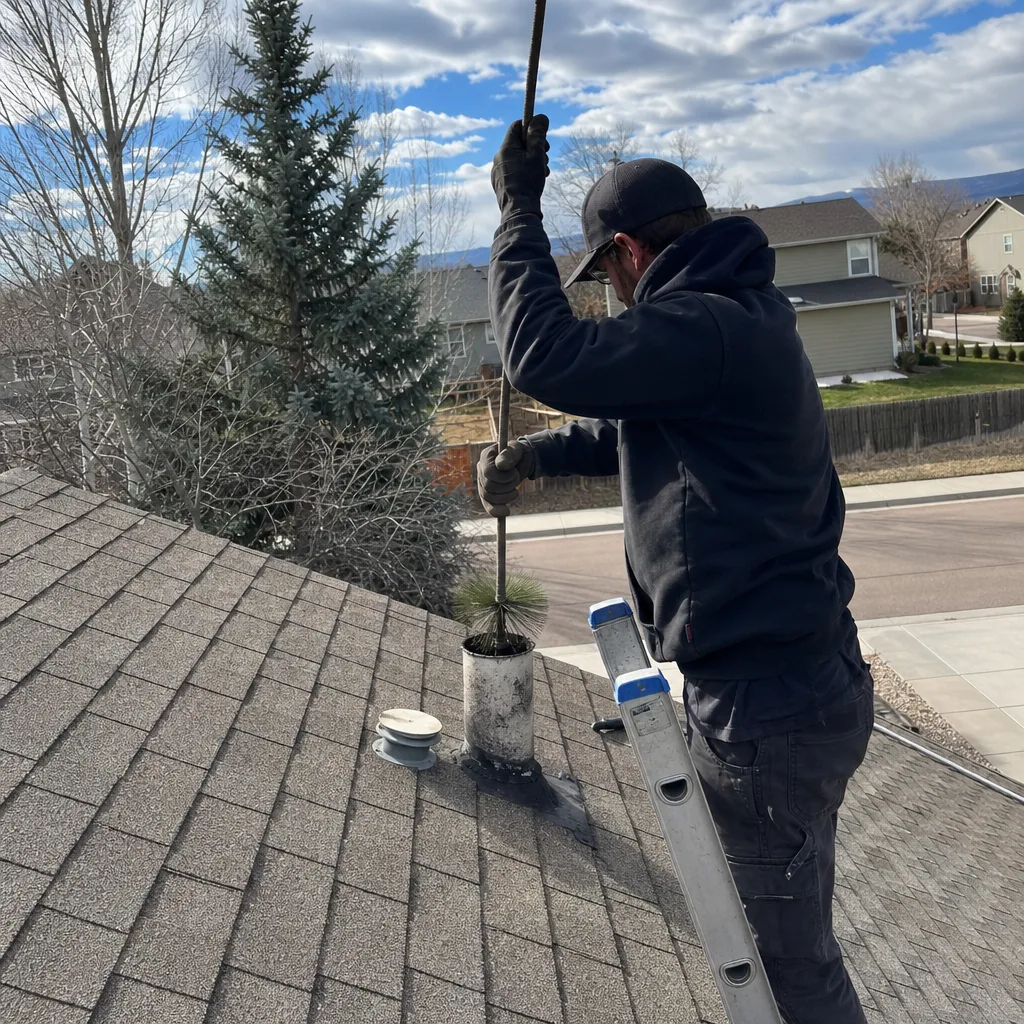
Our approach at CleanRun Air Duct Cleaning Denver is built on the documentation gap we’ve observed since 2013. Every job begins with a written scope and price under Haven Standard Clause 1, and every duct run is photographed before and after cleaning as part of our standard deliverable. When our technicians find damage that crosses into repair territory, we stop and document.
The photo record serves multiple purposes. It shows the homeowner exactly what was found - a cracked plenum seam, a disconnected boot, degraded flex duct - with location markers and measurements. It creates a dated record if the homeowner chooses to pursue repair separately. And it protects both parties: the homeowner cannot be told “we already fixed that” by a subsequent contractor, and CleanRun cannot be accused of causing pre-existing damage.
For repair work, we coordinate with licensed Colorado mechanical contractors who pull permits and schedule inspections. The homeowner receives the permit number before work begins, and inspection results are added to the job record. This is not subcontracting in the conventional sense - the mechanical contractor is a separate engagement that we facilitate, with transparent pricing and no markup concealment.
Our equipment roster - Rotobrush, Nikro, Abatement Technologies, Honeywell, Aprilaire, and Guardsman - is documented on every job record so customers can verify what was used. The 365-Day Done Right Promise applies to our cleaning work; mechanical repairs carry their own warranty through the licensed contractor of record, with terms provided in writing.
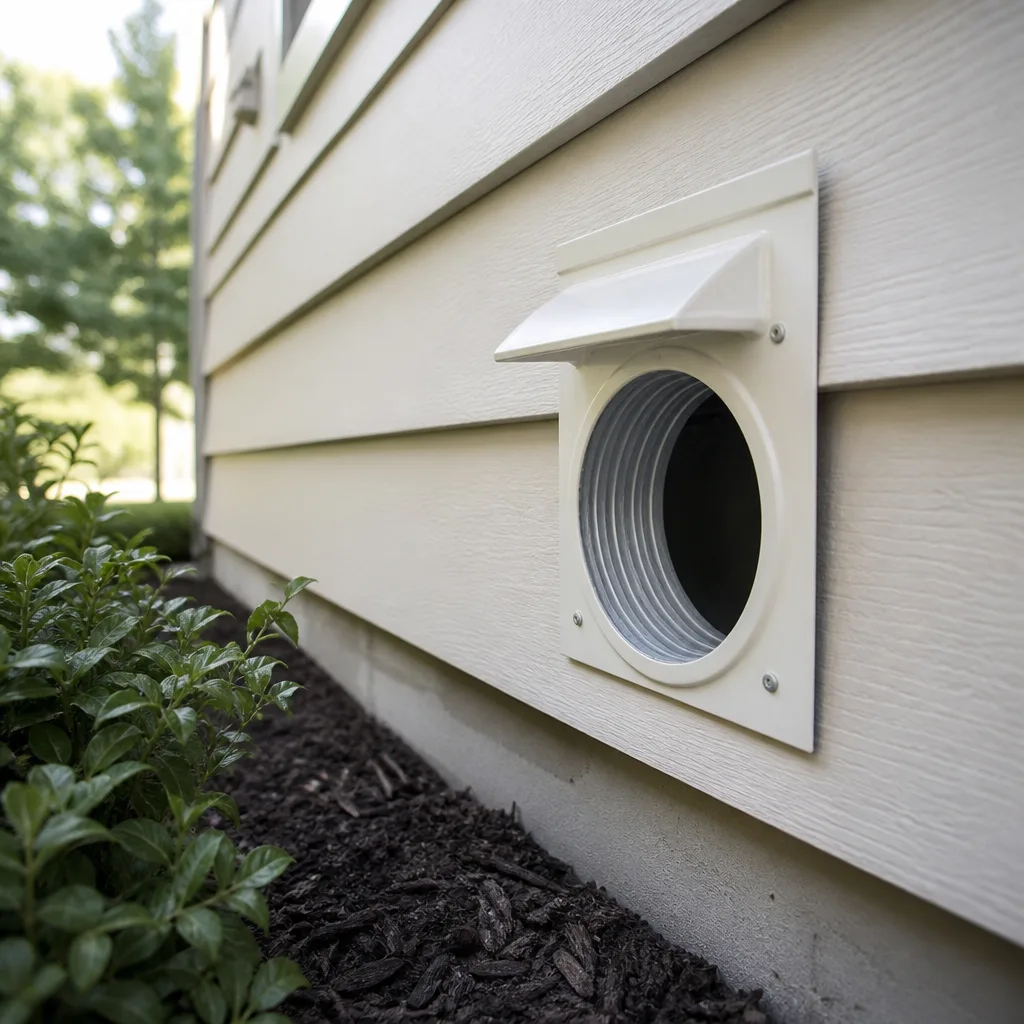
For Air Duct Cleaning in Denver, this means you receive a complete, documented service with no ambiguity about where cleaning ended and repair began. For properties where Dryer Vent Cleaning in Denver or HVAC Cleaning in Denver reveals additional needs, the same documentation standards apply.
Common Mistakes to Avoid
- Assuming “licensed and insured” covers everything. A duct cleaning company’s general liability insurance does not protect you if they perform unpermitted mechanical repairs. Ask specifically about mechanical contractor licensing for any repair work, not just business licensing for cleaning.
- Accepting verbal assurance that a permit “isn’t needed for this.” Denver inspectors have discretion, but the contractor’s verbal opinion is not binding. Request written confirmation or, better, the permit number itself before work proceeds.
- Paying for “duct sealing” without clarifying the method. Aerosol sealant injection, mastic application, and tape wrapping fall into different regulatory categories. The $800 “whole house seal” may be unpermitted mechanical modification or routine maintenance depending on technique - the price tag doesn’t tell you which.
- Neglecting to check permit status after project completion. Final inspection approval is the only status that matters. A pulled permit without final approval creates the same title and insurance issues as no permit at all.
- Allowing scope creep during a scheduled cleaning. The technician finds damage and “just fixes it real quick” without stopping for discussion and documentation. This is how most unpermitted repair work occurs - convenience masking violation.
- Failing to document pre-existing conditions. Without photos of what existed before the technician arrived, you cannot prove that discovered damage was pre-existing rather than caused during service. Our Documented Photo Record on Every Visit exists partly for this protection.
- Ignoring Denver’s altitude in repair evaluations. A repair appropriate for sea-level construction may be inadequate or dangerous at 5,280 feet. This is particularly relevant for combustion air supply and return sizing modifications.
When to Call a Professional
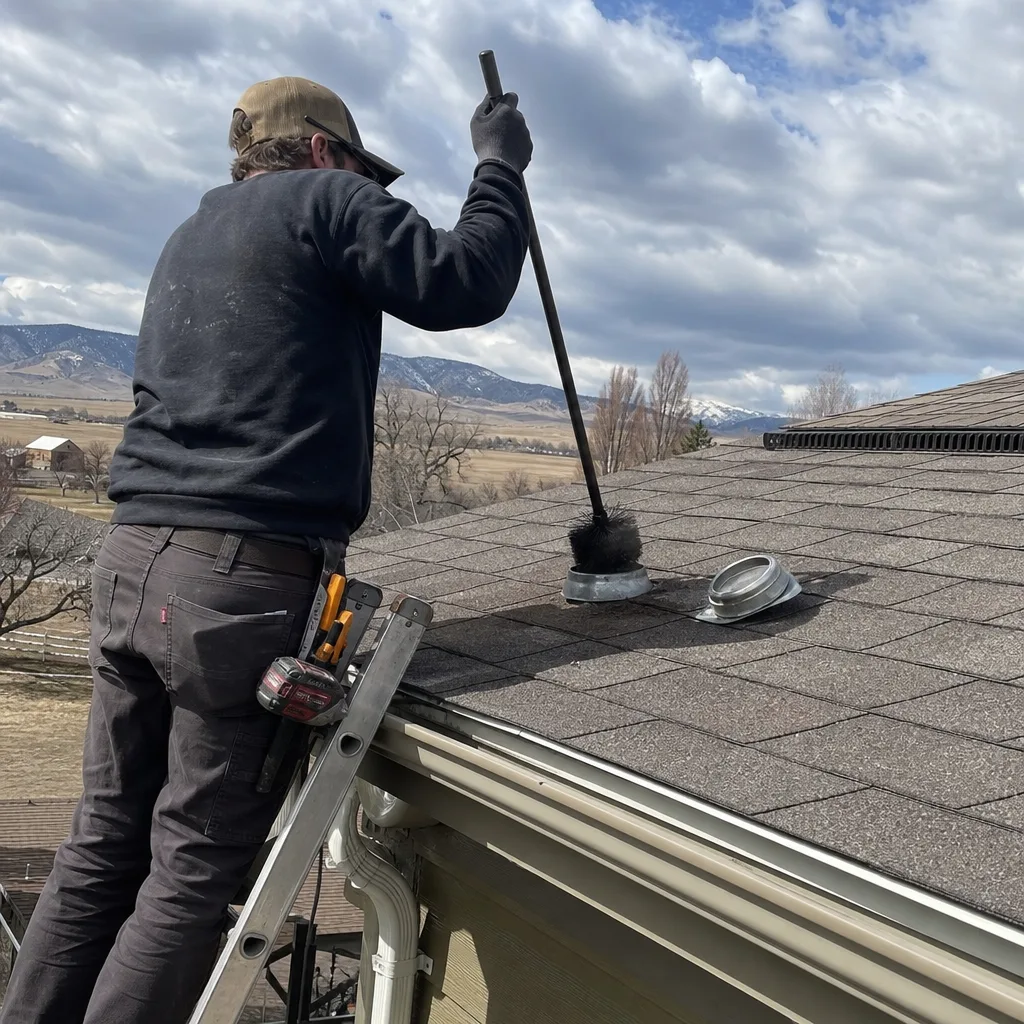
Call a licensed mechanical contractor - not just a duct cleaning company - when you discover or suspect duct damage that involves disconnection, corrosion, structural compromise, or airflow reduction. The cleaning company that finds the damage is not automatically qualified to repair it, and their willingness to “just take care of it” may create liability rather than solve it.
Call before work begins if any company proposes sealing, replacement, or modification during what was sold as a cleaning. The moment the scope changes, permit requirements may activate, and you need documentation of that transition.
CleanRun Air Duct Cleaning Denver offers free estimates in Denver - call (720) 799-2292. Our written scope will specify exactly what is included, what equipment will be used, and what happens if repair needs are discovered. If repair work is indicated, we’ll explain the permitting requirement and can coordinate with licensed mechanical contractors who document every step. The Free Second Opinion on Any Written Estimate applies here as well: bring a competitor’s quote that includes repair work, and we’ll review the permit and licensing elements at no charge.
Frequently Asked Questions
No. Air duct cleaning - the removal of debris from existing ductwork - is classified as maintenance and requires no permit in Denver or anywhere in Colorado. Only repairs, modifications, or replacements that alter the system’s structure or capacity require mechanical permits. If a company tells you a permit is needed for basic cleaning, that is incorrect and should prompt additional questions about their understanding of the work.
Permitted repair typically costs 15-30% more upfront due to permit fees, inspection scheduling, and the licensed contractor requirement. In Denver, expect $400-$900 for minor permitted repairs (boot replacement, short flex duct sections) versus $250-$600 for the same work unpermitted. However, unpermitted work carries the risks outlined above: transaction complications, insurance gaps, and potential retroactive permitting at multiples of the original cost. The documented, permitted approach is the lower total cost of ownership for homeowners who will own the property more than two years or may sell within ten.
Search Denver’s Development Services portal by your property address. Permits issued from approximately 2015 forward appear in the online system. For older work, submit a public records request to Community Planning and Development with your address and any approximate date range. If no records exist for work you know was performed, assume it was unpermitted and consider having a licensed mechanical contractor evaluate the current condition.
Yes, Colorado’s homeowner exemption allows property owners to pull permits for their own primary residence. However, you must still perform the work yourself or hire a licensed contractor - the permit does not authorize unlicensed third parties to perform regulated work. Denver requires homeowners who pull their own permits to pass the same inspections and meet the same code standards as licensed contractors. Many homeowners find the technical requirements for duct pressure testing and combustion safety verification beyond their capability.
Document everything: photos of the work, the invoice scope description, and any communications. Contact Denver Community Planning and Development to discuss whether retroactive permitting is required or advisable - this depends on the work’s visibility, safety implications, and your future plans for the property. For work that creates active safety hazards (combustion air interference, condensate misrouting), prioritize correction over permitting; a licensed mechanical contractor can address both simultaneously. CleanRun provides Free Second Opinion reviews of prior work documentation at no charge.
Not directly by building code, but EPA registration requirements apply to antimicrobial claims, and Denver inspectors may evaluate encapsulant work as part of permitted repair projects. The unregulated status of encapsulant products means wide variation in quality and performance. We do not apply encapsulants and recommend requesting EPA registration numbers, fire resistance ratings, and written confirmation of permit inclusion before agreeing to any coating application.
The Bottom Line
Air duct cleaning in Colorado is straightforward and permit-free. The complications arise when cleaning reveals or transitions into repair work - a common occurrence in Denver’s aging housing stock. The key protections for homeowners are: written scope documentation before any work begins, clear identification of where cleaning ends and repair starts, permit verification for any repair activity, and a documented record of what was found and what was done. These are not bureaucratic niceties; they are the difference between a service you can verify and a liability you may discover years later. At CleanRun, we’ve built our practice around this documentation standard since 2013 because the alternative - trust without evidence - is how homeowners get harmed in an industry already damaged by coupon-price deception.
Written by Tomas Reyes, Owner at CleanRun Air Duct Cleaning Denver, serving Denver since 2013.