
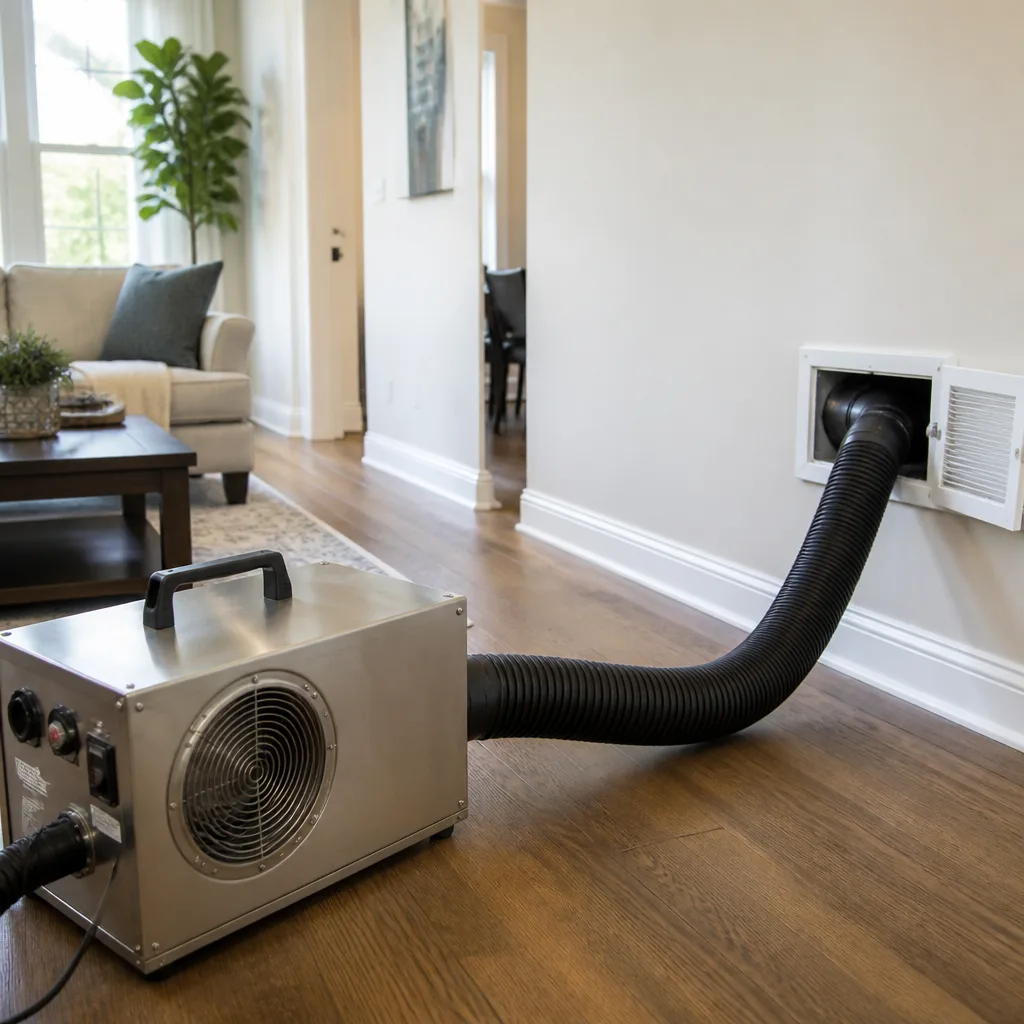
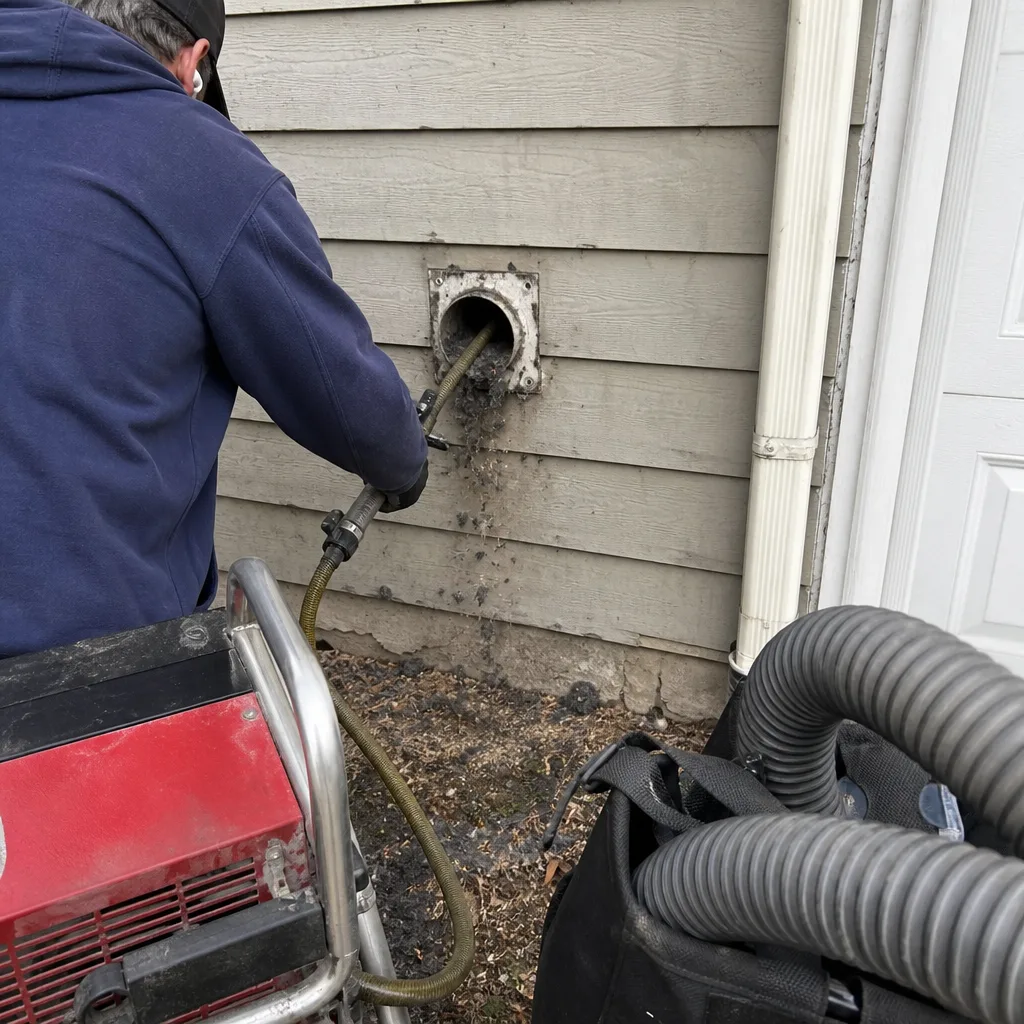
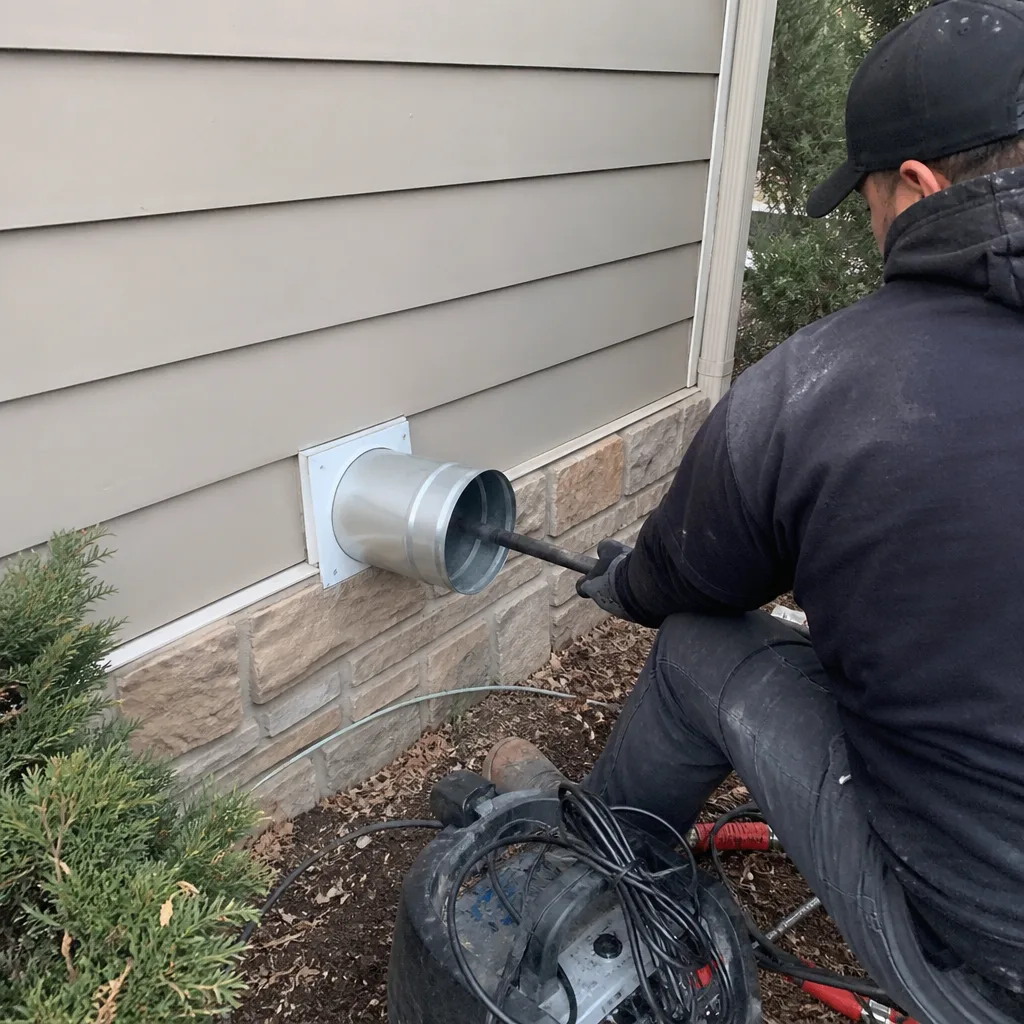
Whole-system duct and dryer vent check with before-and-after photos - you see exactly what came out of your vents
That "$99 whole-house special" is a bait ad - the real number appears once they are in your hallway, or the "clean" is a shop-vac at the register. We photograph the inside of your ducts before and after instead.
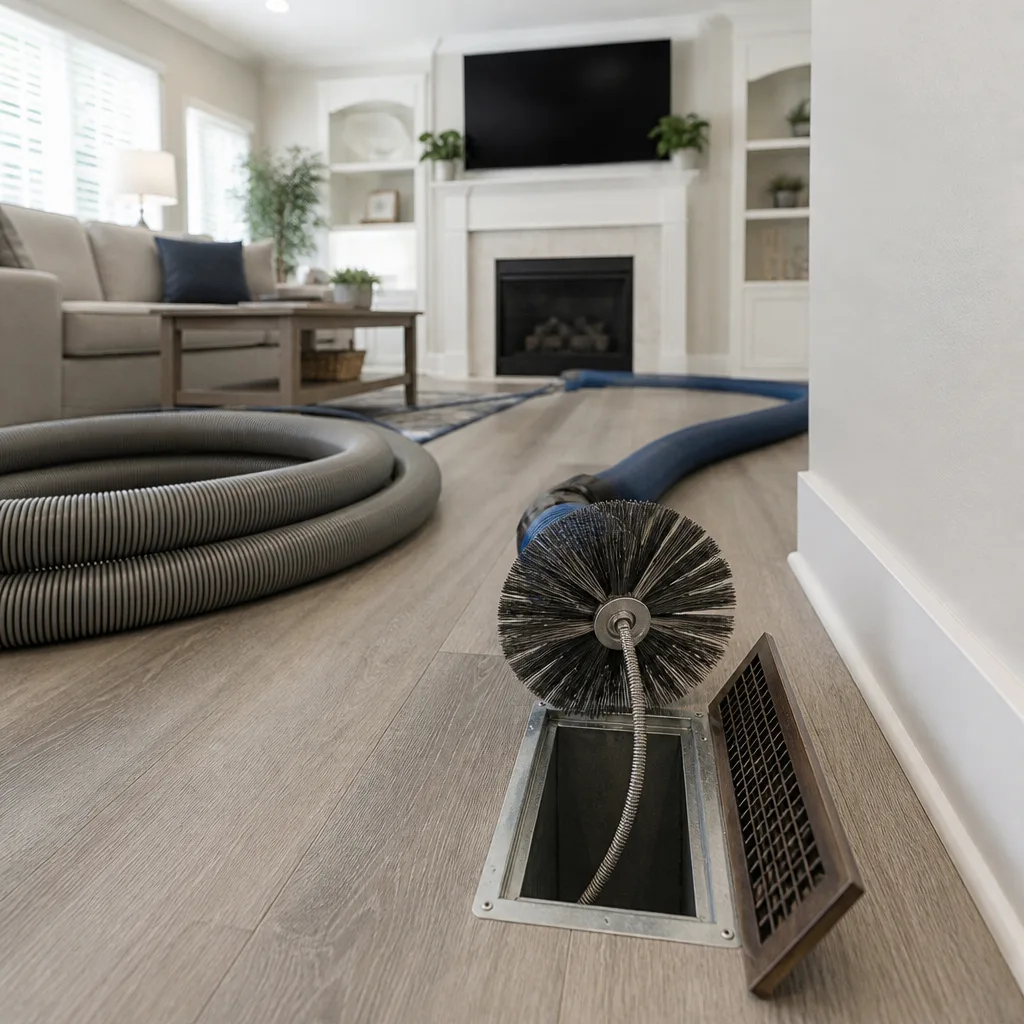
 Before
 After
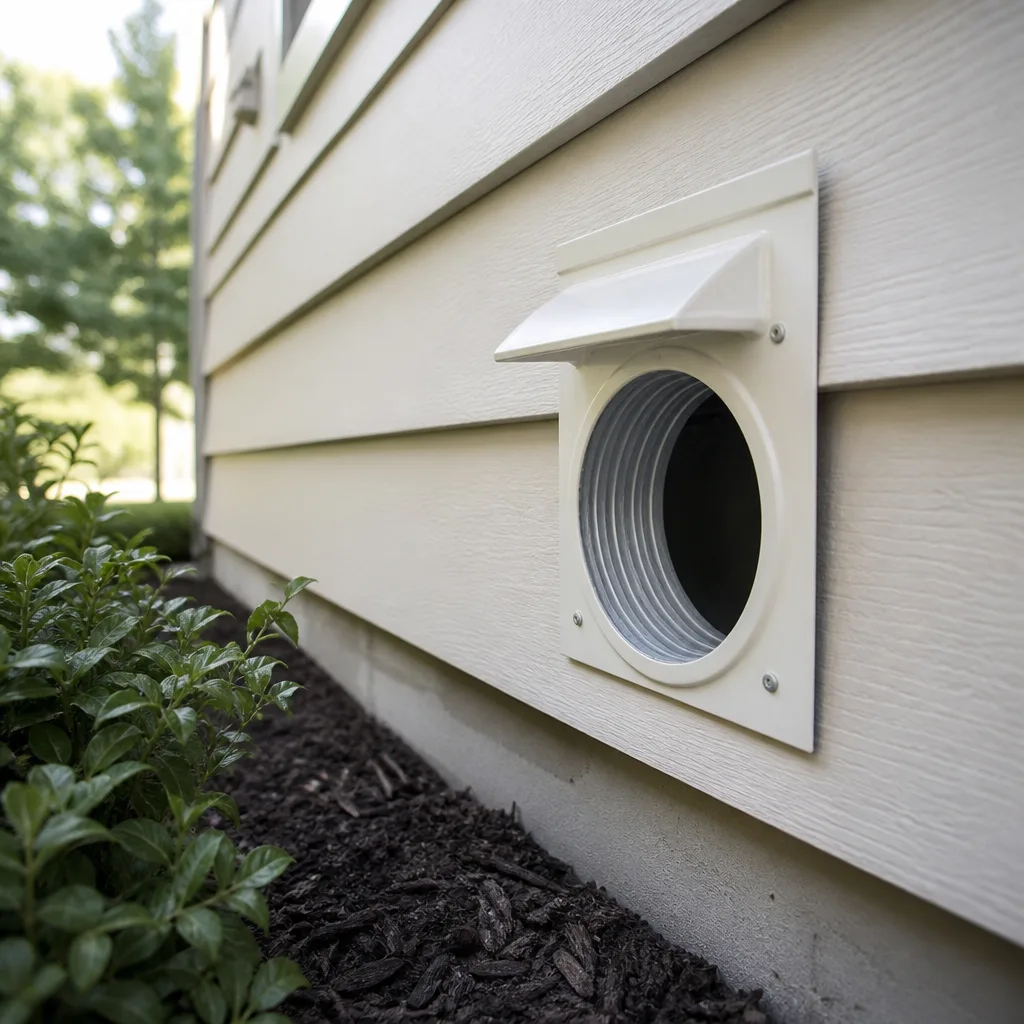
After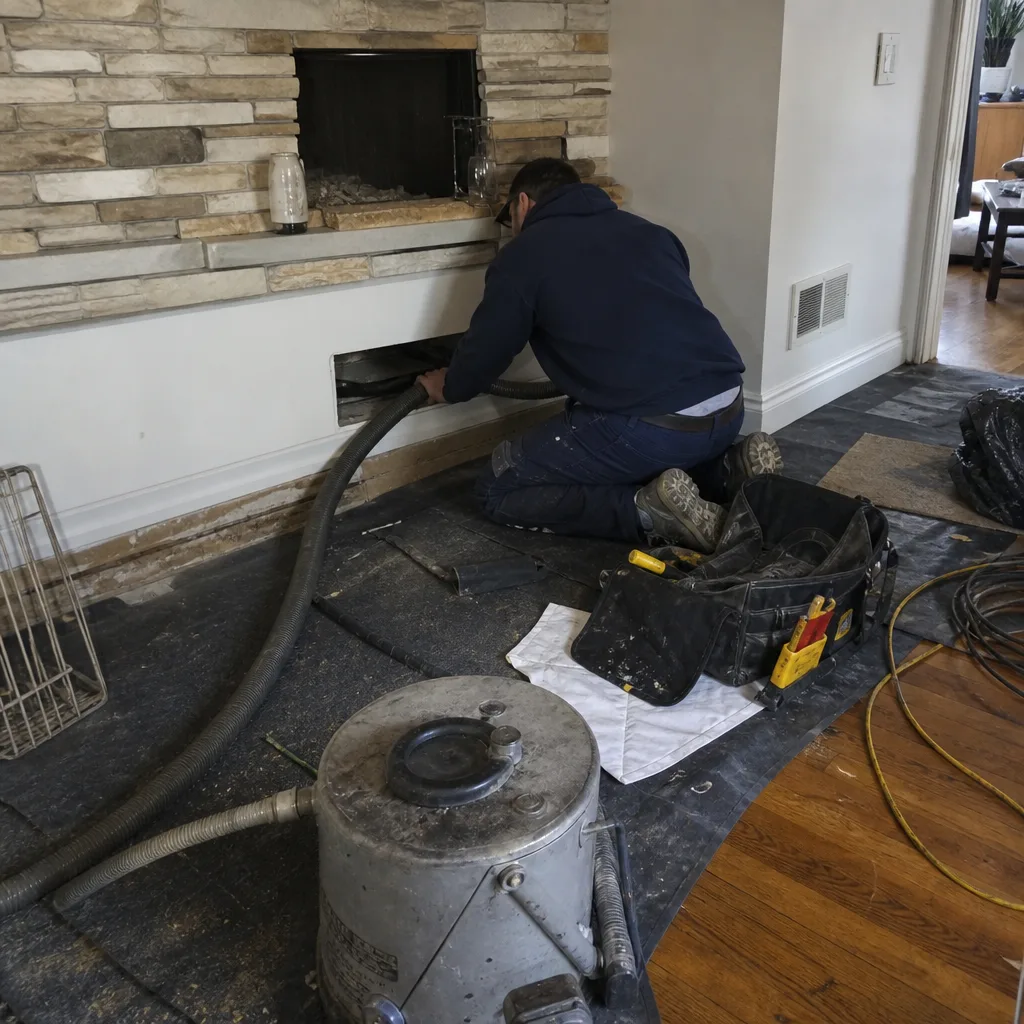 Before
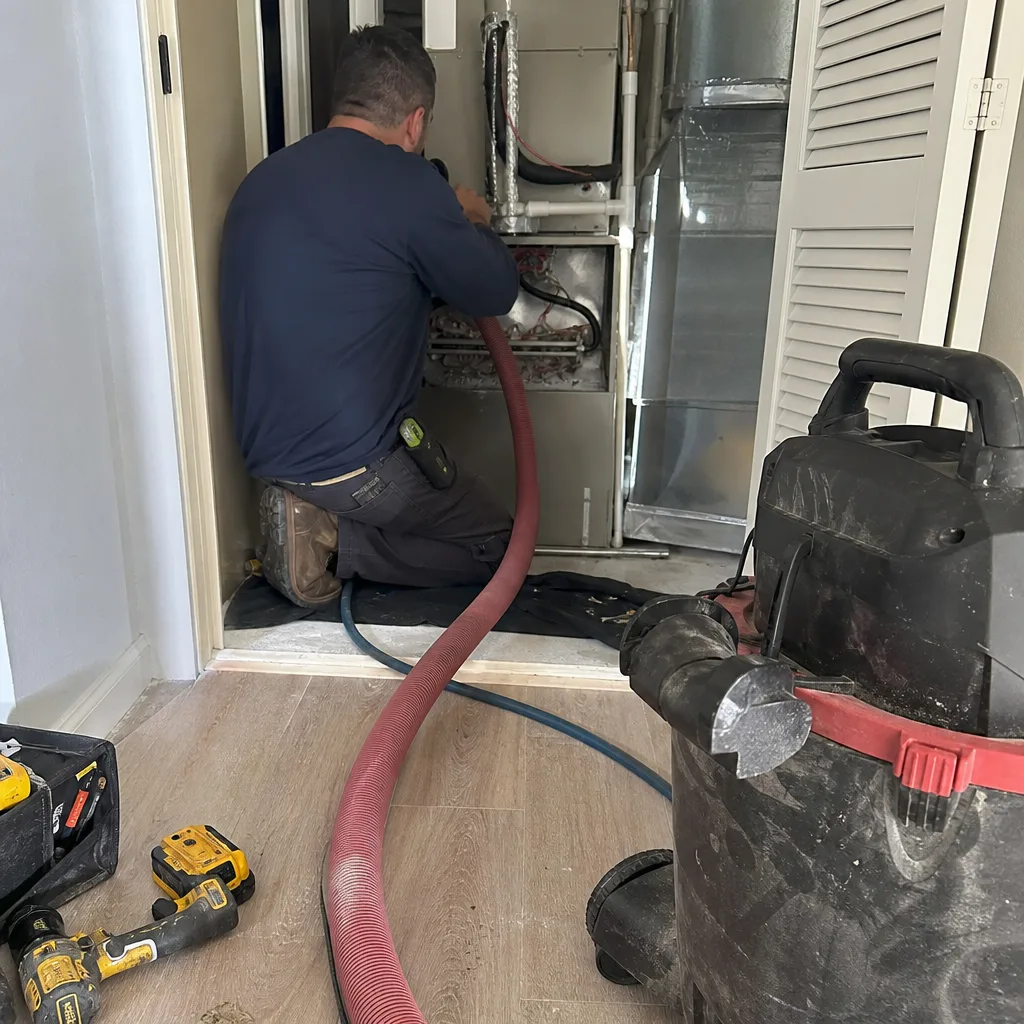 After
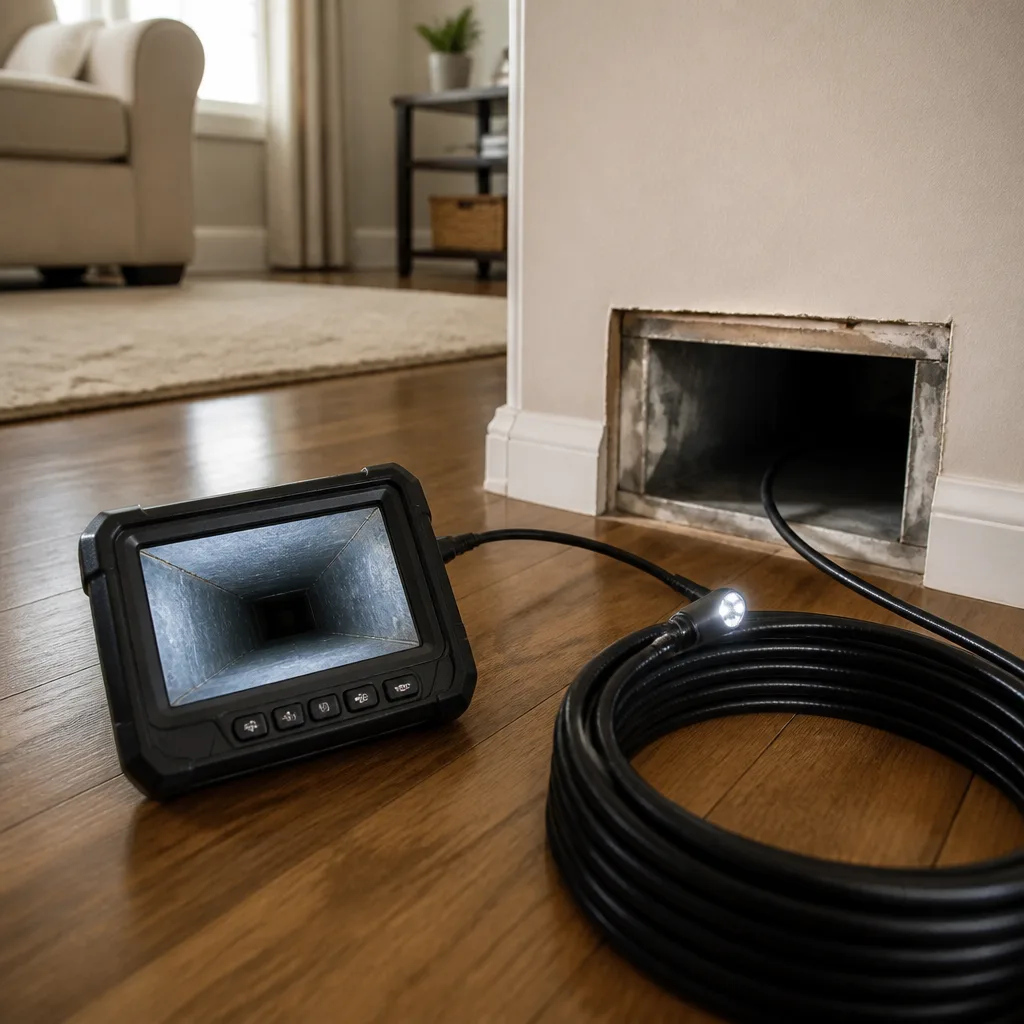
After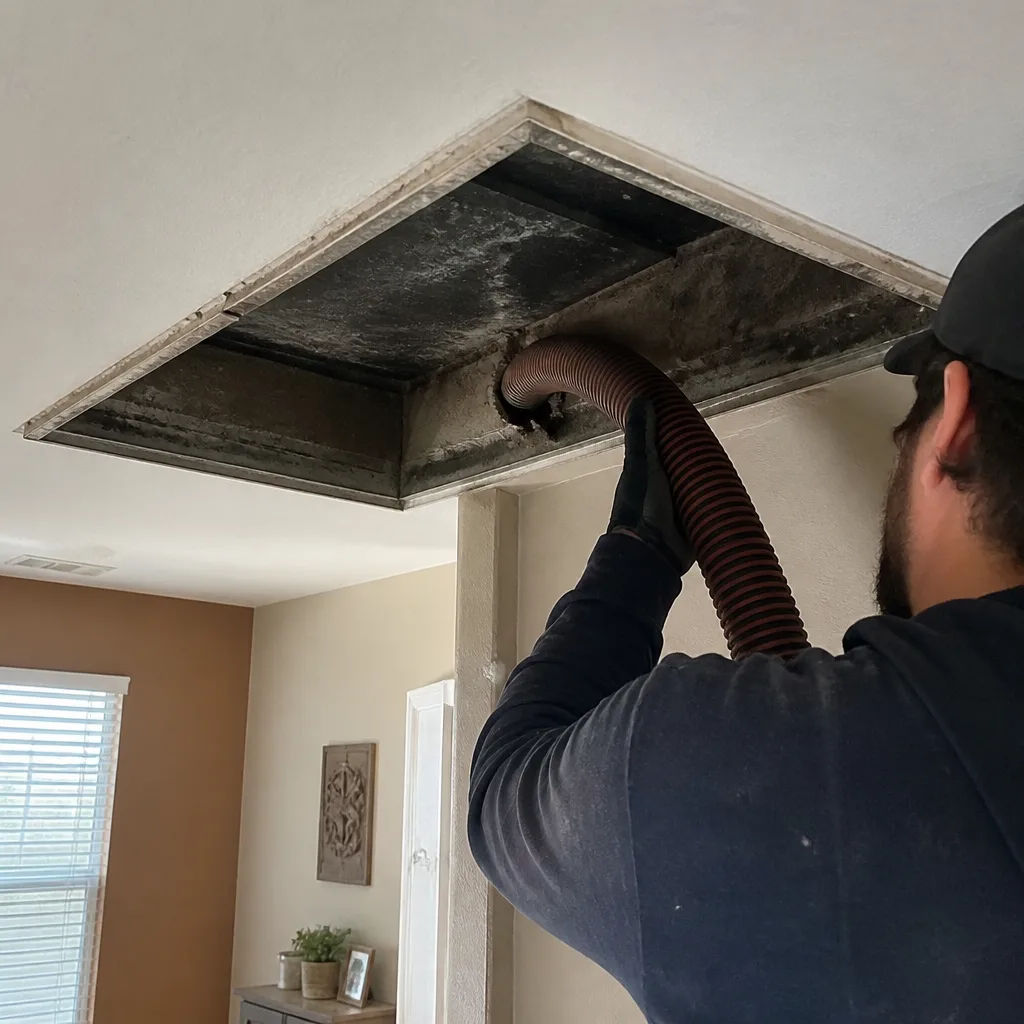 Before
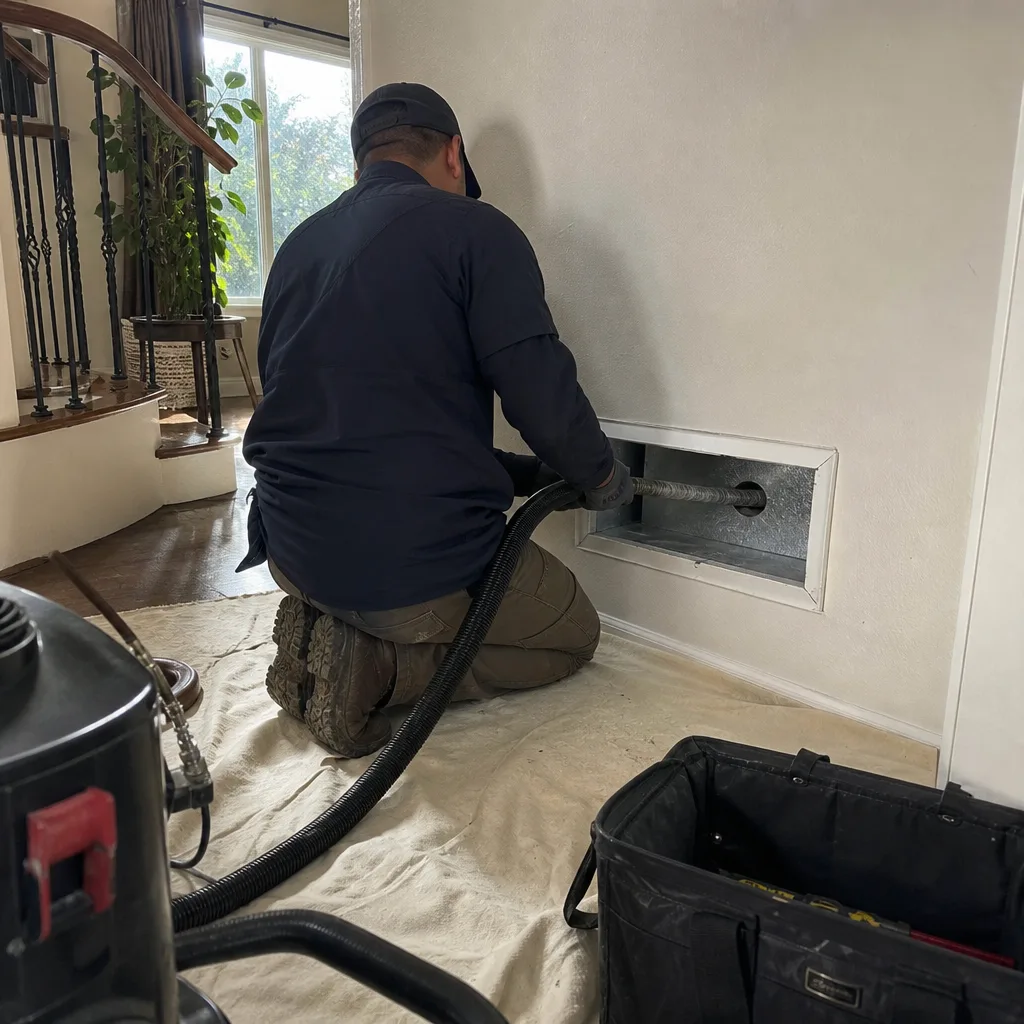 After
AfterHow Much Does Duct Repair & Sealing Cost in Denver?
Duct repair and sealing in Denver typically costs between $350 and $1,200 for a standard single-family home, with most jobs landing in the $450-$800 range. Aerosol-based duct sealing (Aeroseal is the most common system in this market) runs higher – usually $1,200-$2,500 depending on duct volume and leakage percentage. At CleanRun, every price is written before work starts, so the number you see here is the kind of number you’ll see on paper before a single panel comes off.
Duct Repair & Sealing Cost Breakdown (2026)
Denver’s altitude, wide temperature swings, and high percentage of homes built between 1965 and 1995 all push duct repair into specific cost patterns. Older ranch-style homes in neighborhoods like Harvey Park and Virginia Village almost always have original sheet metal runs with failed mastic joints. Newer builds in Stapleton (now Central Park) and Sunnyside often show flex duct damage from installation shortcuts. The numbers below reflect what we actually price in this market – not national averages.
| Service | Typical Denver Price Range | Notes |
|---|---|---|
| Mastic sealant application (per section) | $75 – $150 | Applied at joints, connections, and elbows with documented before/after photos |
| Foil tape sealing (per section) | $40 – $90 | Industry-grade, not hardware-store duct tape; used on accessible straight runs |
| Flex duct replacement (per 6-foot section) | $120 – $220 | Includes removal, R-6 or R-8 flex, and re-connection at both ends |
| Sheet metal duct patch (per location) | $95 – $180 | For punctures, corrosion damage, or disconnected rigid runs |
| Plenum repair or re-sealing | $200 – $450 | The plenum is the central distribution box attached to the air handler; leaks here affect every room |
| Duct boot sealing (per register) | $35 – $75 | Sealing where the duct meets the register opening in the floor, wall, or ceiling |
| Full manual sealing – single-story home (1,200-1,800 sq ft) | $350 – $600 | Comprehensive sealing of all accessible joints and connections |
| Full manual sealing – two-story home (2,000-3,200 sq ft) | $550 – $950 | Includes supply and return branches, trunk lines, and boot connections |
| Aeroseal duct sealing (full system) | $1,200 – $2,500 | Pressurized aerosol particles seal leaks from the inside out; includes pre- and post-test leakage report |
| Duct leakage diagnostic test (blower door / duct blaster) | $150 – $350 | Quantifies leakage before any repair; often credited toward repair cost |
| Emergency duct repair (same-day / weekend) | Add $75 – $150 | CleanRun answers live 24/7; weekend calls carry a flat after-hours addition |
What Drives the Final Number
Access is the single biggest variable. A detached, accessible duct run in a full basement – common in Wash Park and Congress Park bungalows – takes maybe 20 minutes per section. The same repair inside a finished ceiling in a Park Hill split-level can take three times as long and require cutting and patching drywall, which is a separate cost entirely. Attic duct repairs in Denver’s summer heat also carry a time premium, because our technicians work in 120-degree attic air while maintaining safe, careful work – that’s not a complaint, it’s a cost driver worth knowing about before you get a quote.
Leakage severity matters too. A duct system losing 15% of conditioned air at a handful of joints is a straightforward afternoon job. A system that a duct blaster test shows losing 35% or more – which we see regularly in homes built before 1985 in neighborhoods like Montbello and Westwood – typically needs both manual sealing at major breach points and Aeroseal treatment to reach the inaccessible sections.
Material choice has a real price gap. Mastic sealant (a paste-like compound brushed onto joints and allowed to cure) is the gold standard for sheet metal duct systems – it’s durable, flexible across temperature cycles, and approved under Colorado’s energy code. Foil tape rated to UL 181 is appropriate for some applications. Standard gray duct tape, which we still find holding duct sections together in older Denver homes, has no place in a properly sealed system – it fails within a few heating seasons at altitude.
What Affects Duct Repair & Sealing Pricing in Denver
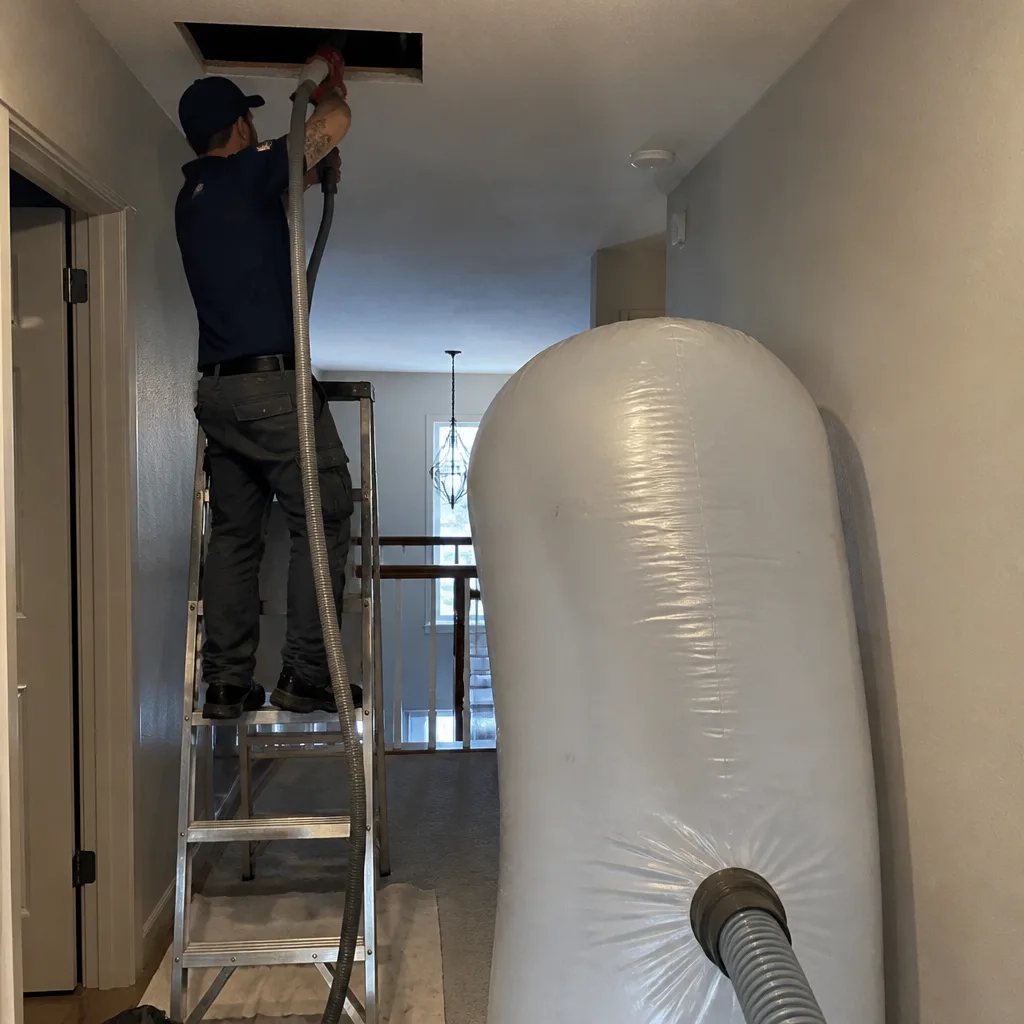
- Home age and original duct construction: Homes built before 1980 – a large share of Denver’s housing stock in neighborhoods like Barnum, Athmar Park, and Globeville – often used duct construction methods that don’t meet current energy standards. Joints were sometimes left unsealed entirely, relying on adjacent building materials to contain airflow. These systems typically need more material and more labor hours than a 2005 home in Highlands Ranch.
- Duct location and accessibility: Exposed ductwork in an unfinished basement costs the least to repair per linear foot. Ducts tucked into finished soffits, inside concrete slab systems (rare but present in some 1960s Denver ranches), or run through cathedral ceilings require access work before any sealing begins. That access work is a legitimate cost – and it should appear as a line item on any written estimate.
- Leakage percentage confirmed by diagnostic testing: A duct blaster test quantifies exactly how much air the system is losing. At CleanRun, that number is documented before and after every sealing job as part of the photo and data record. Homes showing leakage above 25% of system airflow generally require more material and more labor time, which moves the final price toward the top of the ranges above.
- System size and duct volume: Denver’s high-altitude climate means HVAC systems here are often sized larger than in lower-elevation markets to overcome heating demands. A 4-ton system serving a 2,800-square-foot home in Highlands has significantly more duct volume than a 2-ton system in a Capitol Hill row house. More duct volume means more sealing material, more labor, and a higher price – which is why quotes based on square footage alone don’t tell the whole story.
- Flex duct vs. sheet metal construction: Many Denver homes built between 1990 and 2010 used flexible ductwork throughout. Flex duct is cheaper to install but collapses, kinks, and tears more easily than rigid sheet metal. When flex duct needs replacement rather than just sealing, material costs go up. We typically see the most flex duct damage in homes in Green Valley Ranch and Stapleton where installation crews ran overly long, unsupported sections.
- Combination of repair methods required: Some systems need a mix of manual sealing at accessible breach points plus Aeroseal treatment for inaccessible sections deep in walls or under slabs. Combined-method jobs sit at the higher end of the cost range but often deliver the best verified outcome – because the post-treatment leakage test proves what actually changed, not what we hoped would change.
BeforeAfterDenver-Specific Factors That Don’t Show Up in National Price Guides
Colorado’s energy code – adopted by Denver under the 2021 IECC (International Energy Conservation Code) – requires that duct systems in new construction and major renovations meet specific leakage thresholds, measured and verified. That code exists because building scientists have documented how much energy Denver homes waste through duct leakage. The Front Range’s 300+ annual heating and cooling degree days put sustained pressure on duct joints that flat-climate markets don’t see at the same rate.
Altitude also affects airflow calculation. At 5,280 feet, air is roughly 17% less dense than at sea level. A duct system that leaks conditioned air at altitude is losing more of its effective thermal capacity per cubic foot than the same system at sea level would. That’s partly why Denver energy auditors report higher-than-average system efficiency losses from duct leakage compared to national benchmarks.
And then there’s the wildfire smoke factor. Since 2018, Denver has seen multiple prolonged air quality events where fine particulate matter infiltrates homes through every gap in the building envelope – including duct leaks. A duct system pulling 120-degree attic air through unsealed joints during a smoke event is delivering unfiltered particulates directly to every register in the house. We mention this not to alarm, but because it’s a concrete, documentable reason why duct sealing has moved from an energy-efficiency option to a genuine air quality measure for many Denver homeowners.
Manual Sealing vs. Aeroseal: Which One Does Your Denver Home Need?
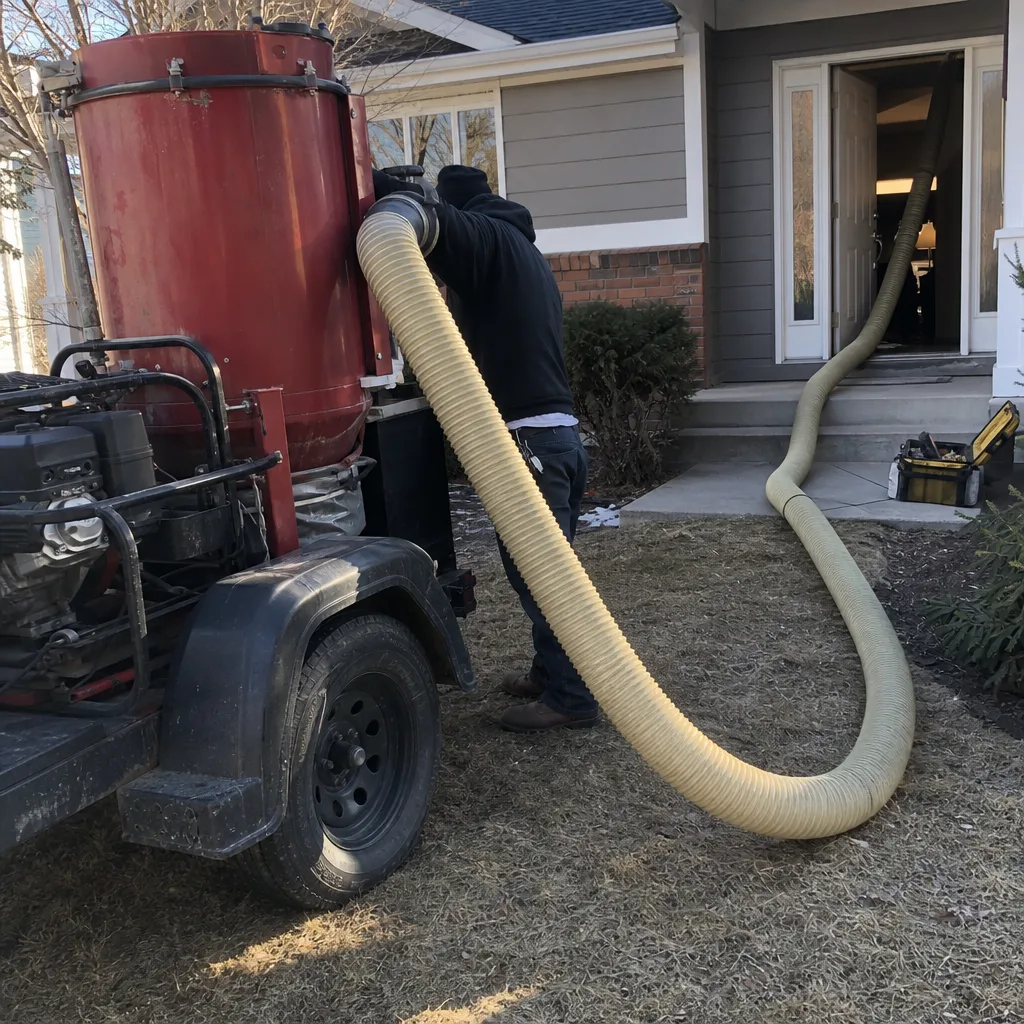
Manual Sealing
Manual sealing – mastic, foil tape, and sheet metal work applied by hand – is the right choice when the leaks are in accessible locations and the system doesn’t have widespread, hidden leakage throughout inaccessible runs. For a home where a camera inspection and diagnostic test show leakage concentrated at the air handler plenum, a few duct elbow connections, and the boot seals at registers, manual sealing gets the job done completely and at a lower cost than Aeroseal.
Our Duct Repair & Sealing in Denver service includes a documented camera inspection of duct runs before any sealing work begins, so the technician can identify exactly where the leaks are and quote the right method for the specific problem – not a default package.
Aeroseal
Aeroseal pumps a water-based aerosol sealant into the pressurized duct system. Particles travel with the airflow and accumulate at leak points, sealing gaps up to 5/8 of an inch from the inside. It’s the right tool when leakage is distributed through inaccessible sections – inside finished walls, under slab, or through small pinhole failures across dozens of joints throughout an older system.
Aeroseal jobs include a printed pre- and post-treatment leakage report. That report is a hard number: before treatment, your system was losing X cubic feet per minute at 25 Pascals of pressure; after treatment, it’s losing Y. That’s verifiable data, not a technician’s assurance that the job went well.
At $1,200-$2,500 for a full residential system, Aeroseal costs more upfront than manual sealing. For systems with significant hidden leakage, though, the documented leakage reduction typically translates to measurable savings on Xcel Energy bills – Denver’s dominant utility – within one or two heating seasons.
How to Save on Duct Repair & Sealing in Denver
Start with a diagnostic test, not a repair quote. It sounds counterintuitive to pay $150-$350 for a duct blaster test before agreeing to repairs, but it produces a real leakage number that tells you whether you have a $500 problem or a $2,000 problem. Skipping the test and guessing at repairs is how homeowners end up paying for sealing work that doesn’t move the needle because it targeted accessible joints while the real leakage was happening somewhere else entirely.
Get a written estimate with line items before agreeing to anything. This isn’t just good advice – at CleanRun it’s Haven Standard Clause 1. A written price is delivered before any work starts, on every job, without exception. If another company gives you a verbal range or says they’ll know more once they “open it up,” that’s not a quote, it’s an open-ended commitment. Bring that company’s written estimate to CleanRun and we’ll put our number next to it in writing, at no cost, as part of our free second-opinion service.
Combine duct repair with duct cleaning when both are needed. If your ducts haven’t been cleaned in more than four years – or if you’ve recently had renovation work that pushed debris into the system – combining cleaning and sealing on the same visit saves mobilization costs and means the camera inspection serves double duty. Sealing over debris-coated joints also produces better mastic adhesion, so the repair lasts longer.
Ask whether manual sealing will achieve an acceptable leakage rate before committing to Aeroseal. Aeroseal is the right tool for the right job, but not every job needs it. A technician who recommends Aeroseal without a pre-test leakage number to justify it is recommending a $1,200-$2,500 upgrade without evidence that it’s the most efficient solution for your specific system.
Check Xcel Energy rebates. Xcel Energy’s energy efficiency programs have historically offered rebates for qualifying duct sealing work performed by credentialed contractors in the Denver metro. Program terms change annually, so confirm current availability directly with Xcel – but it’s worth the 10-minute check before you schedule work, since rebates can offset $200-$500 of project cost on qualifying systems.
For a written estimate specific to your home, call (720) 799-2292. Every estimate is free, every price is written before work starts, and there’s no obligation attached to the number you receive.
What the Job Looks Like on the Day
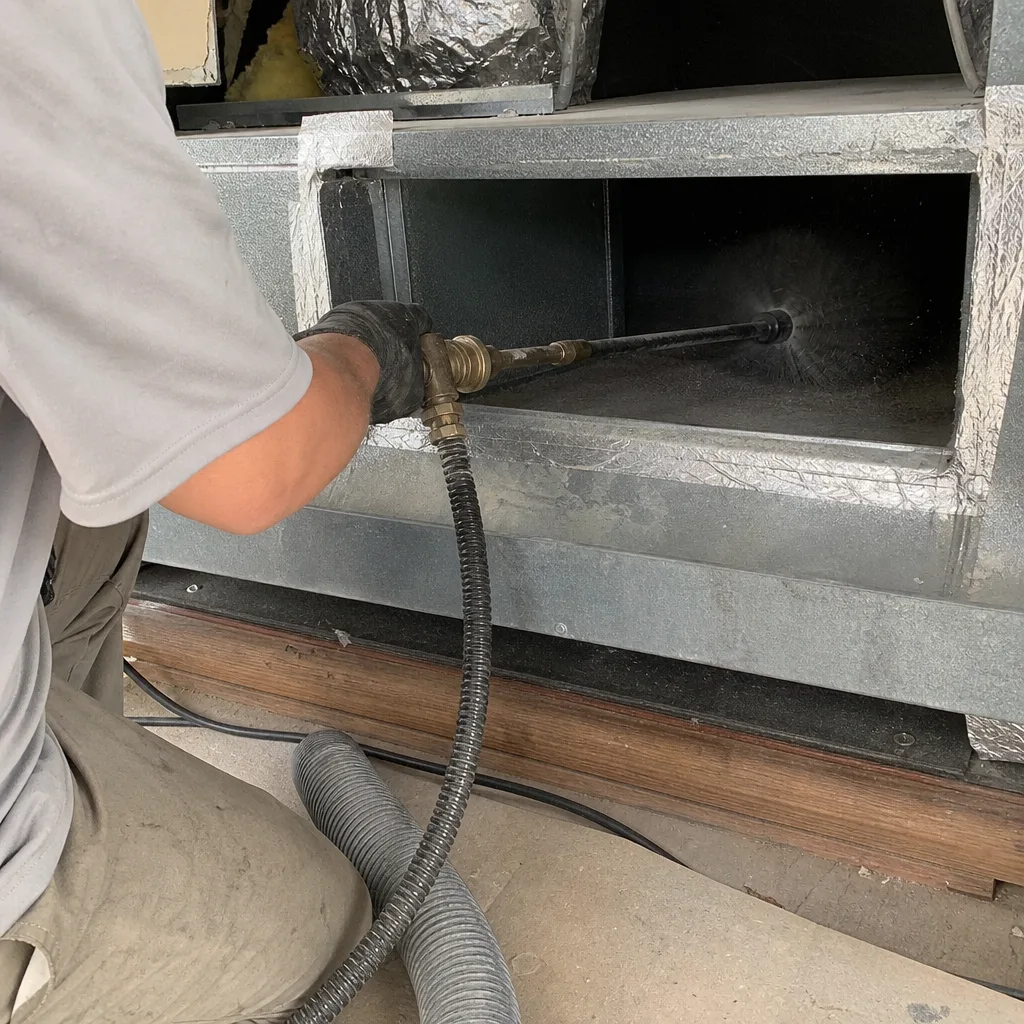
Understanding what you’re paying for makes it easier to evaluate whether a quote is fair. Here’s what our Duct Repair & Sealing services visit from CleanRun actually includes.
The technician arrives identified by name – Haven Standard Clause 3 covers background-checked, uniformed crews – and begins with a camera inspection of accessible duct runs. That inspection is photographed: every run documented before any tools come out. If a diagnostic test was included in the scope, it’s performed at this stage to establish the baseline leakage number.
Repair work begins at the most severe breach points first – disconnected sections, failed plenum seams, collapsed flex duct – before moving to joint sealing. Mastic is applied with a brush to all joints and connections within the accessible system; it’s allowed to skin over before the system is re-pressurized. Duct boot seals at registers are checked and sealed where needed.
When the sealing work is complete, a post-repair camera pass documents the sealed joints. If a duct blaster test was part of the job, a post-treatment test produces the verified leakage number. The technician delivers the documented photo record – before and after, every run – as a standard deliverable before leaving the home. The written scope, the written price, and the 365-Day Done Right Promise are all in writing before the truck leaves the driveway.
Equipment used on CleanRun jobs includes Rotobrush systems for camera inspection, Nikro negative-pressure equipment where combined cleaning and repair work is scoped, and Abatement Technologies air filtration units when airborne debris is a factor during repair work. Those are trade names customers can look up independently – which is exactly the point.
FAQs – Duct Repair & Sealing Cost in Denver
How much does duct sealing cost for a typical Denver home?
Most single-family homes in Denver pay between $450 and $800 for manual duct sealing using mastic and foil tape on accessible sections. Homes with significant hidden leakage, or those where a duct blaster test confirms leakage above 25% of system airflow, often benefit from Aeroseal treatment, which runs $1,200-$2,500 for a full residential system. The wide range reflects genuine differences in system size, duct location, and leakage severity – which is why every CleanRun estimate starts with a camera inspection and, when warranted, a diagnostic test. Call (720) 799-2292 for a written price specific to your home – estimates are free and no work starts until you’ve approved the number in writing.
Is duct repair worth it in Denver’s climate?
Yes, with documented evidence to back it up. Denver homes with duct systems losing 20-30% of conditioned airflow are effectively conditioning their attics or crawlspaces rather than their living areas. At Xcel Energy’s current residential rates, that leakage translates to measurable monthly losses on heating bills across Denver’s average 166 heating days per year. Post-sealing duct blaster tests routinely show 30-50% reductions in system leakage – a hard number, not an estimate. Beyond energy cost, sealed duct systems reduce the pathways through which attic air (and during smoke events, fine particulate matter) enters the living space.
What’s the difference between duct sealing and duct cleaning – and do I need both?
Duct cleaning removes debris – dust, construction particulates, biological material – from inside duct runs using negative-pressure extraction equipment. Duct sealing addresses structural failures: disconnected sections, failed joint mastic, torn flex duct, unsealed boot connections. They solve different problems. Many Denver homes benefit from both, particularly homes that haven’t been cleaned since purchase, homes that have had renovation work, or homes where an inspection shows debris accumulation alongside joint failures. Combining both services on one visit is the most cost-efficient approach and produces a single comprehensive documented photo record covering the whole system. Visit our home page to see the full range of services we offer.
Can I seal my own ducts with hardware-store products?
The gray fabric duct tape sold in hardware stores is not appropriate for duct sealing – it fails within a few heating seasons, and it does not meet the UL 181 standard required under Colorado’s energy code for permanent duct connections. Mastic sealant is available to consumers, but applying it effectively to joints inside unconditioned spaces, at altitude, across a full duct system requires access to every connection and the ability to photograph results before and after. DIY application on visible, accessible joints in an unfinished basement is a reasonable approach for minor touch-up sealing. Anything involving attic ductwork, plenum connections, or slab-adjacent runs is better handled by someone with the camera equipment to confirm the result. Call (720) 799-2292 if you want a second opinion on whether your situation warrants professional sealing or if a few accessible joints are the only real problem.
How long does duct sealing last?
Professionally applied mastic sealant on sheet metal duct systems lasts 15-20 years under normal conditions, and longer in protected interior locations. Aeroseal’s manufacturer documentation supports a 10-year performance expectation under standard residential use, though real-world results in similar climate zones have shown longer effective service life in independently published building science studies. Flex duct sections that were damaged before repair – kinked, crushed, or torn – may need re-inspection sooner than the sealing itself, since the duct material itself degrades. The CleanRun 365-Day Done Right Promise covers the work for one full year in writing, and the documented photo record gives you a baseline to compare against at future inspections.
Do Denver homes need permits for duct repair?
Simple sealing work – mastic application, tape replacement, minor flex duct repair – does not typically require a permit in Denver. Duct replacement, rerouting, or work that modifies the geometry of the system as part of a larger HVAC project may trigger a permit requirement under Denver Community Planning and Development’s mechanical permit rules. If the scope of work on your home includes anything beyond sealing existing connections, we’ll flag it in the written estimate. A contractor who tells you a permit isn’t needed without reviewing the full scope of work is making a guess – which is a different thing from knowing.
Key Takeaways
- Duct sealing in Denver costs $350-$1,200 for manual methods; $1,200-$2,500 for Aeroseal on a full residential system.
- Access difficulty, leakage percentage confirmed by testing, and system size are the three biggest cost drivers.
- Denver’s altitude, heating degree days, and wildfire smoke seasons make duct sealing a higher-stakes service than in flat-climate markets.
- A duct blaster diagnostic test ($150-$350) before committing to repairs is the most reliable way to scope the right solution for the actual problem.
- Aeroseal produces a printed pre- and post-treatment leakage report – a hard number that manual sealing alone doesn’t generate.
- Every CleanRun job includes a written price before work starts, a documented photo record of every duct run before and after, and the 365-Day Done Right Promise in writing.
- Xcel Energy rebates for qualifying duct sealing work may be available – confirm current program terms directly before scheduling.
Get a Written Estimate for Your Denver Home
If you’re trying to figure out whether your duct system needs repair, sealing, or both – and what that work should actually cost in this market – the fastest answer is a written estimate based on what’s actually in your home. CleanRun Air Duct Cleaning Denver serves the full metro, from Wheat Ridge and Arvada in the northwest to Aurora and Centennial in the southeast, and every estimate starts with a camera inspection and ends with a number on paper before any work is discussed.
Call (720) 799-2292. A live person answers every call. Estimates are free, the price you’re quoted is the price on the work order, and the 365-Day Done Right Promise is in writing on every job.
Written by Tomas Reyes, Owner at CleanRun Air Duct Cleaning Denver, serving Denver, CO since 2013.
Pricing reflects the Denver market as of 2026. CleanRun Air Duct Cleaning Denver offers free estimates – call (720) 799-2292.
What Our Customers Say
"They found a disconnected duct in the crawl space that had been dumping conditioned air under the house for years. Photographed it, quoted the repair, fixed it."
- Devon A."The dryer vent was almost completely blocked with lint. They showed me the photograph and I understood immediately why the dryer had been running twice."
- Lucia M."Flat price agreed up front, no per-vent add-ons at the end. That was the whole reason I did not call the coupon company."
- Suzanne B.