
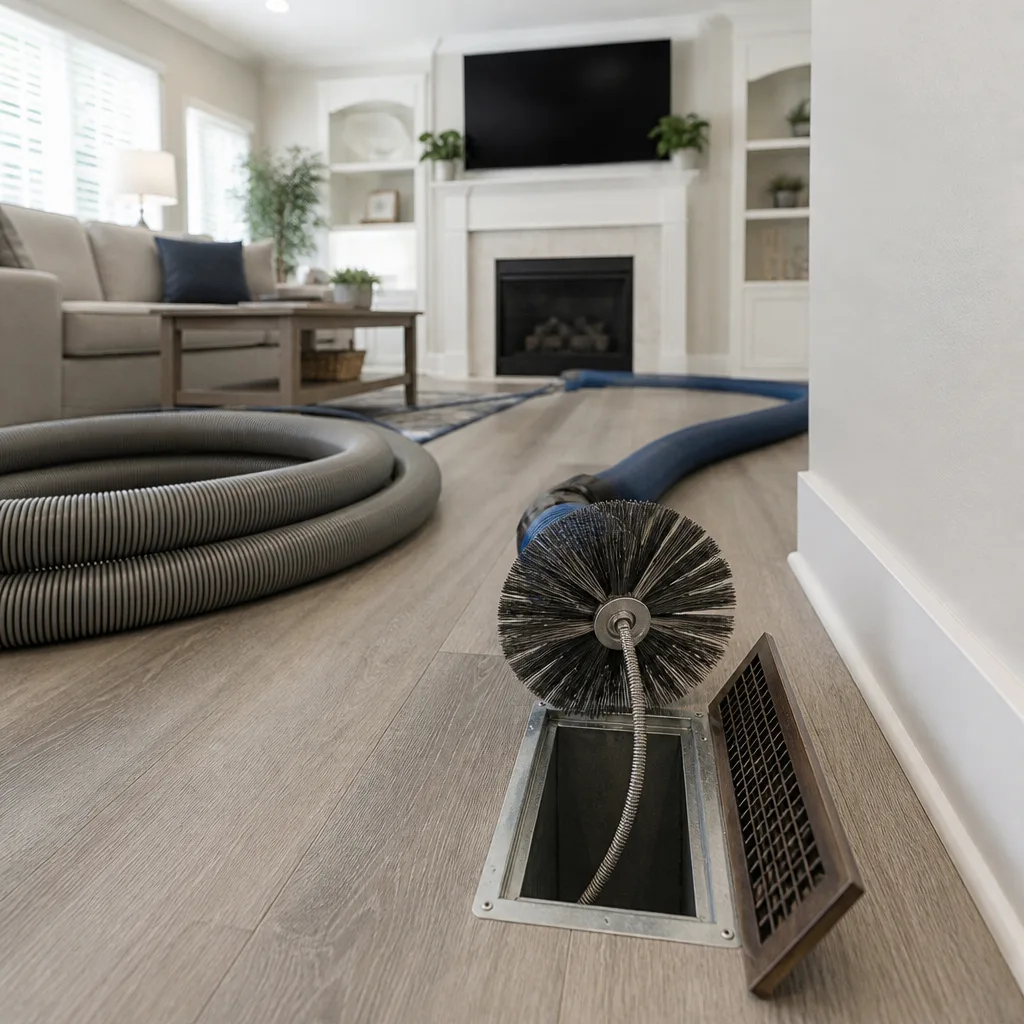
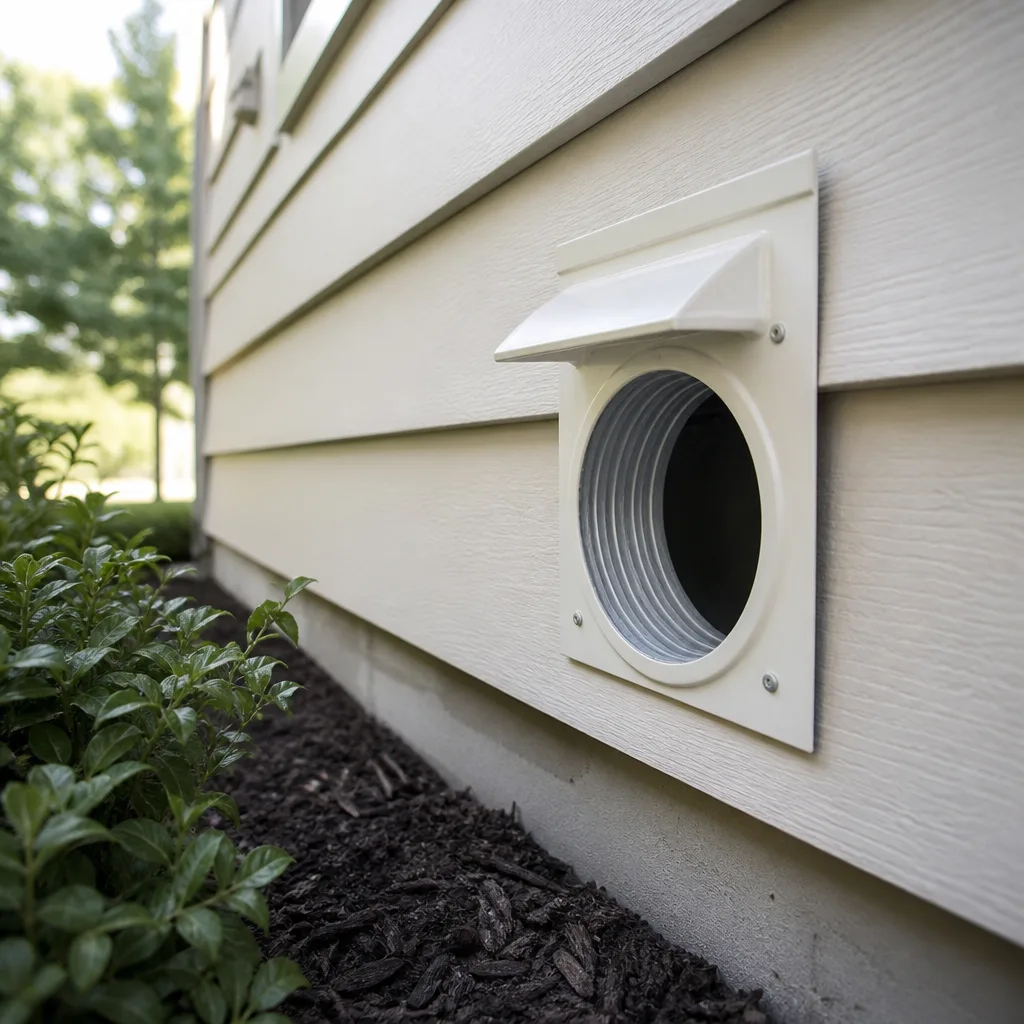
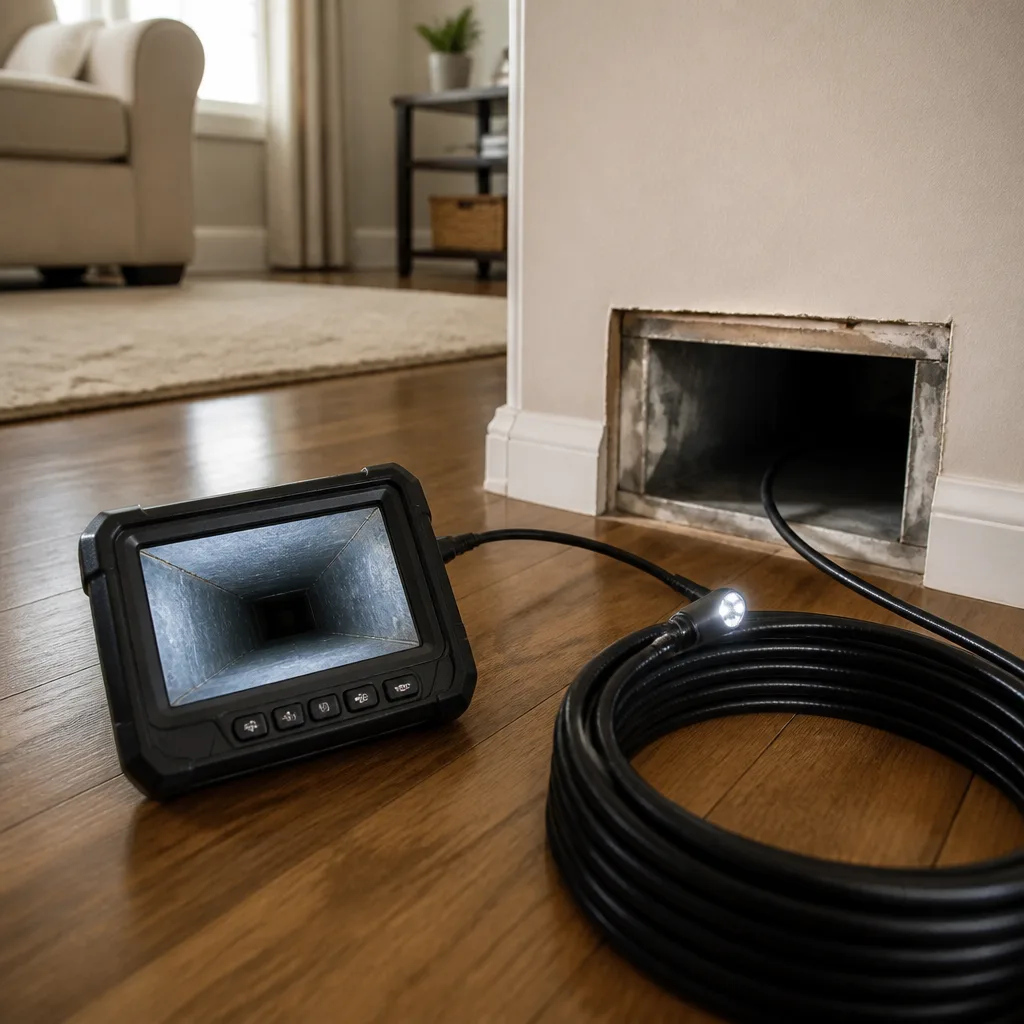
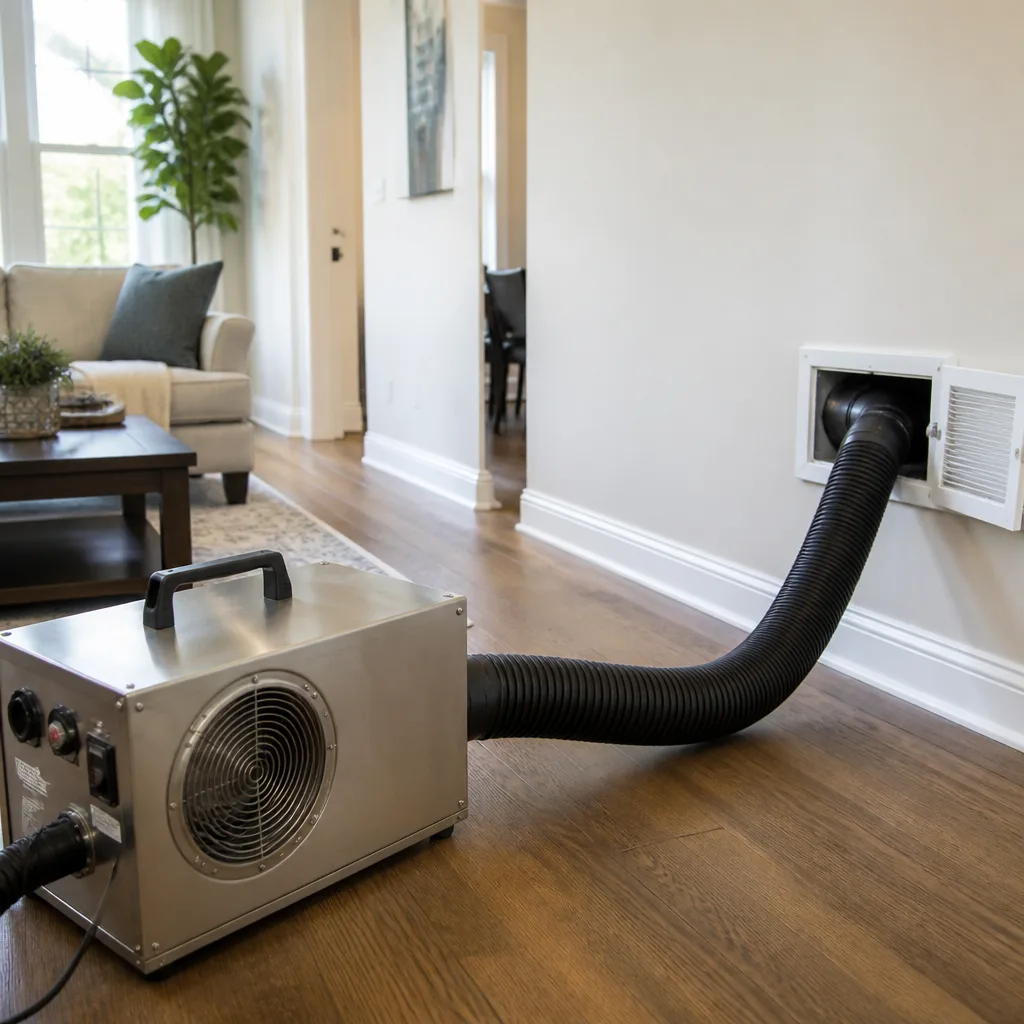
Whole-system duct and dryer vent check with before-and-after photos - you see exactly what came out of your vents
That "$99 whole-house special" is a bait ad - the real number appears once they are in your hallway, or the "clean" is a shop-vac at the register. We photograph the inside of your ducts before and after instead.
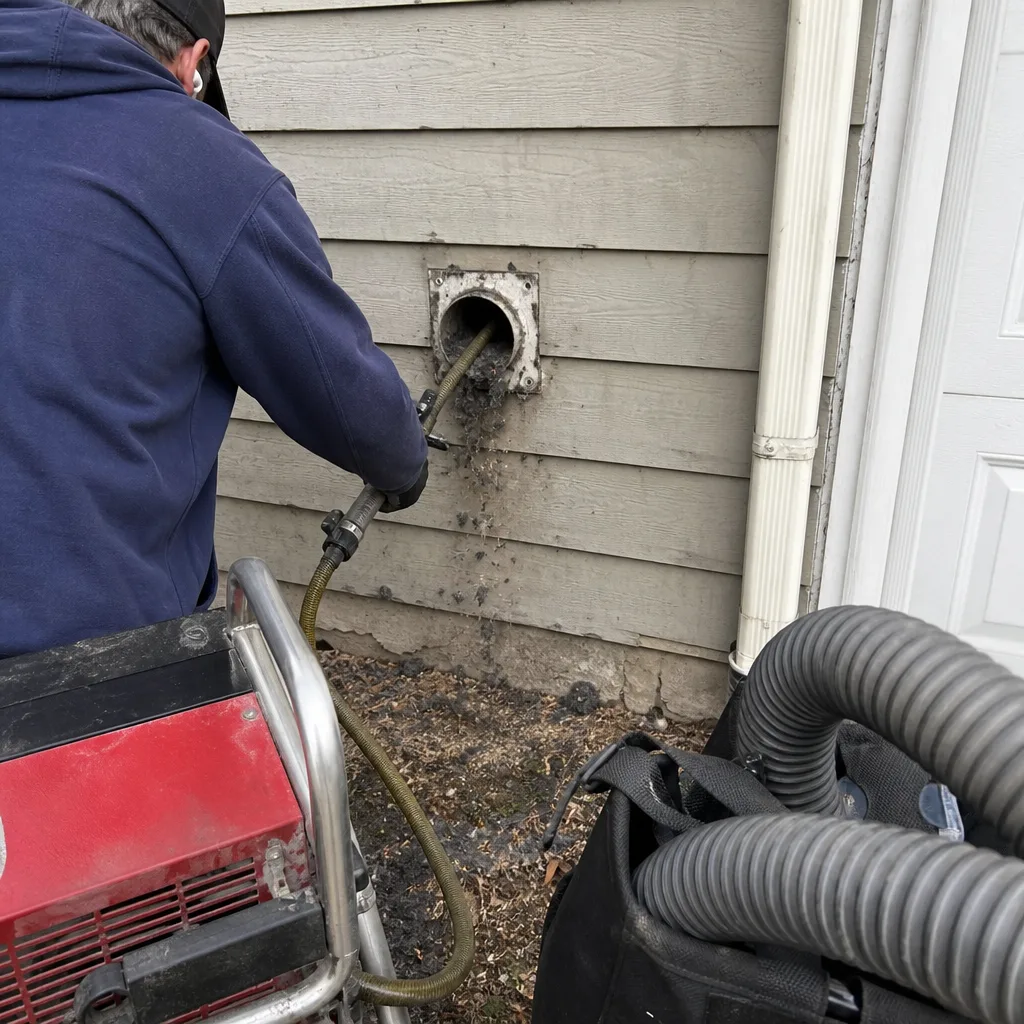 Before
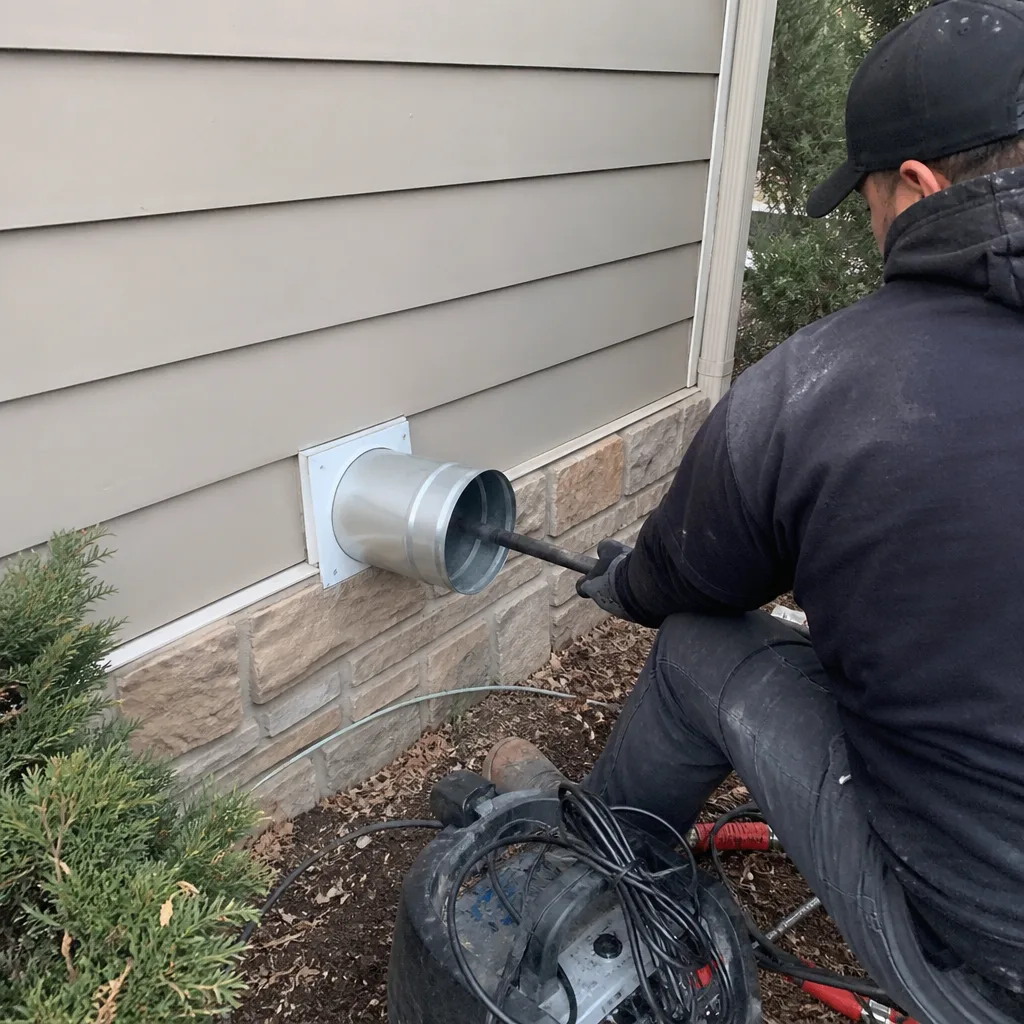 After
After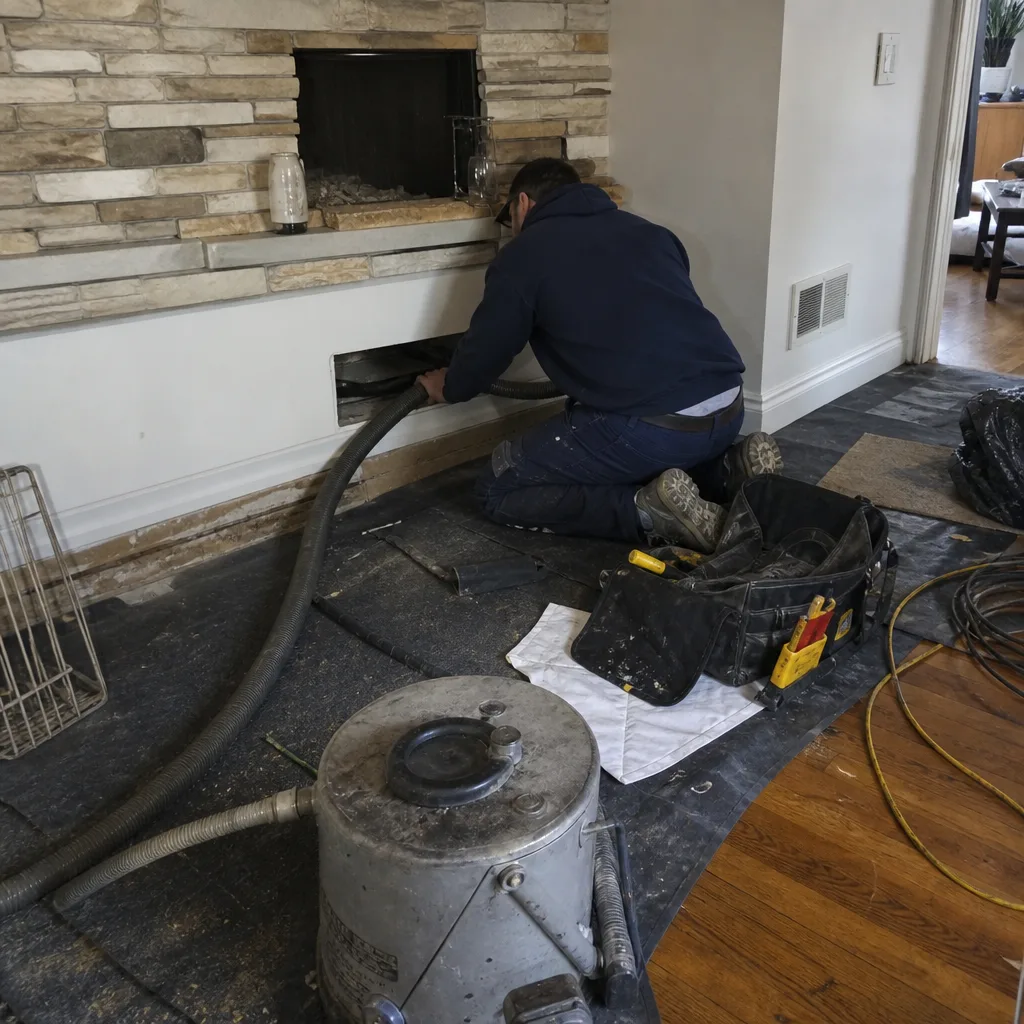 Before
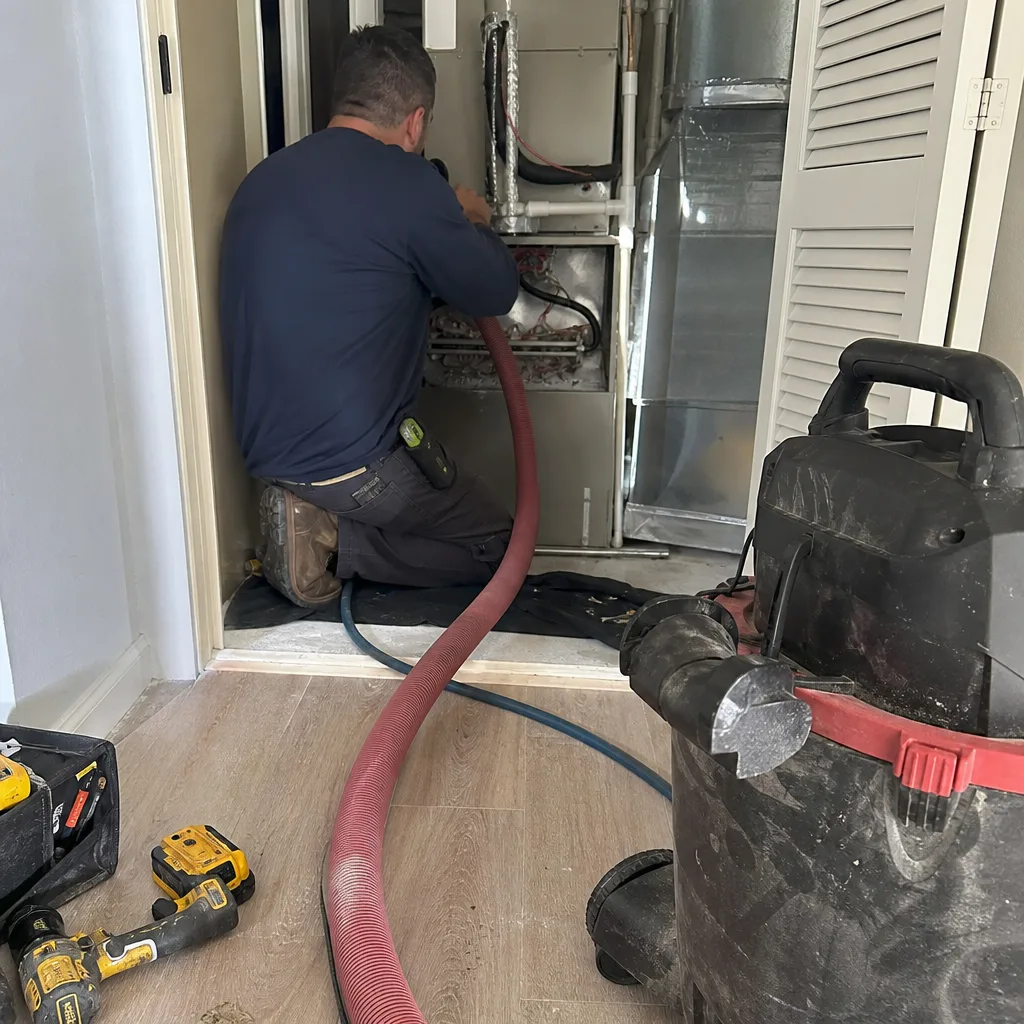 After
After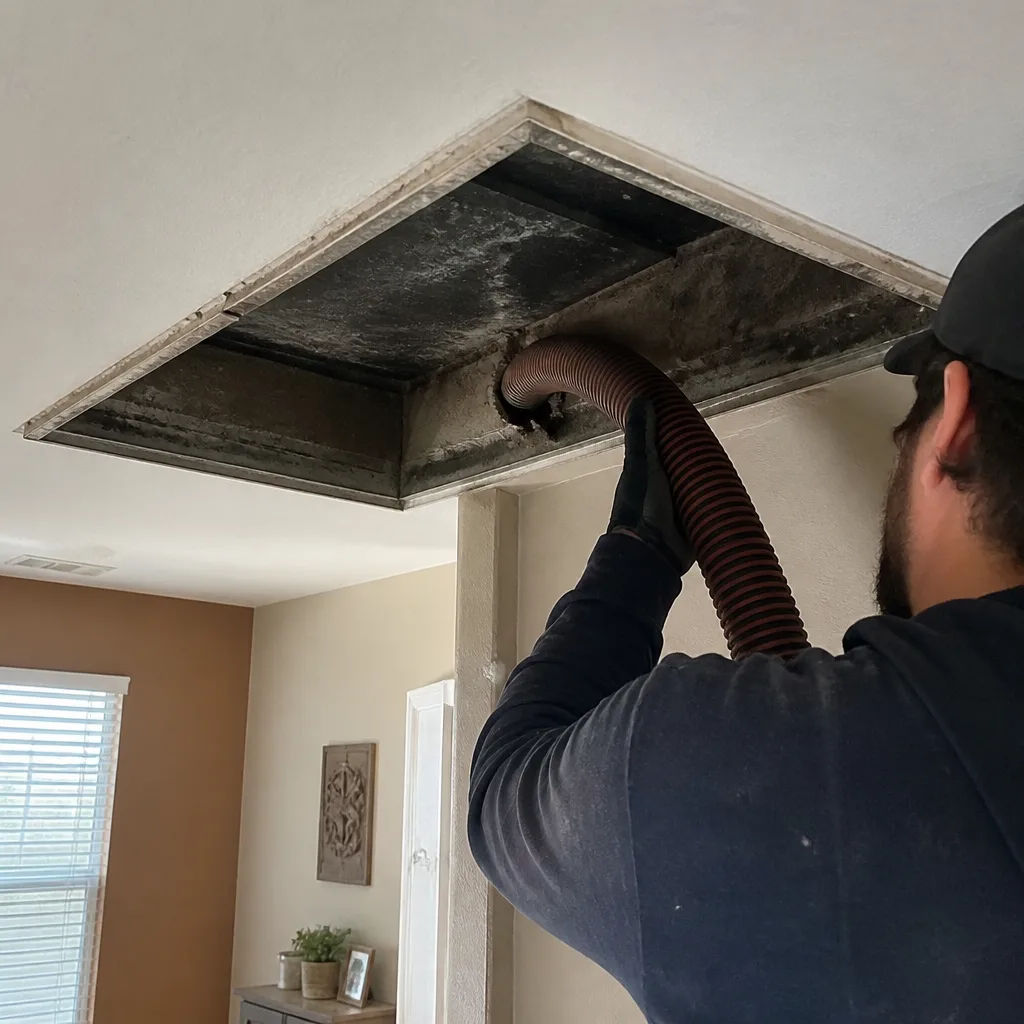 Before
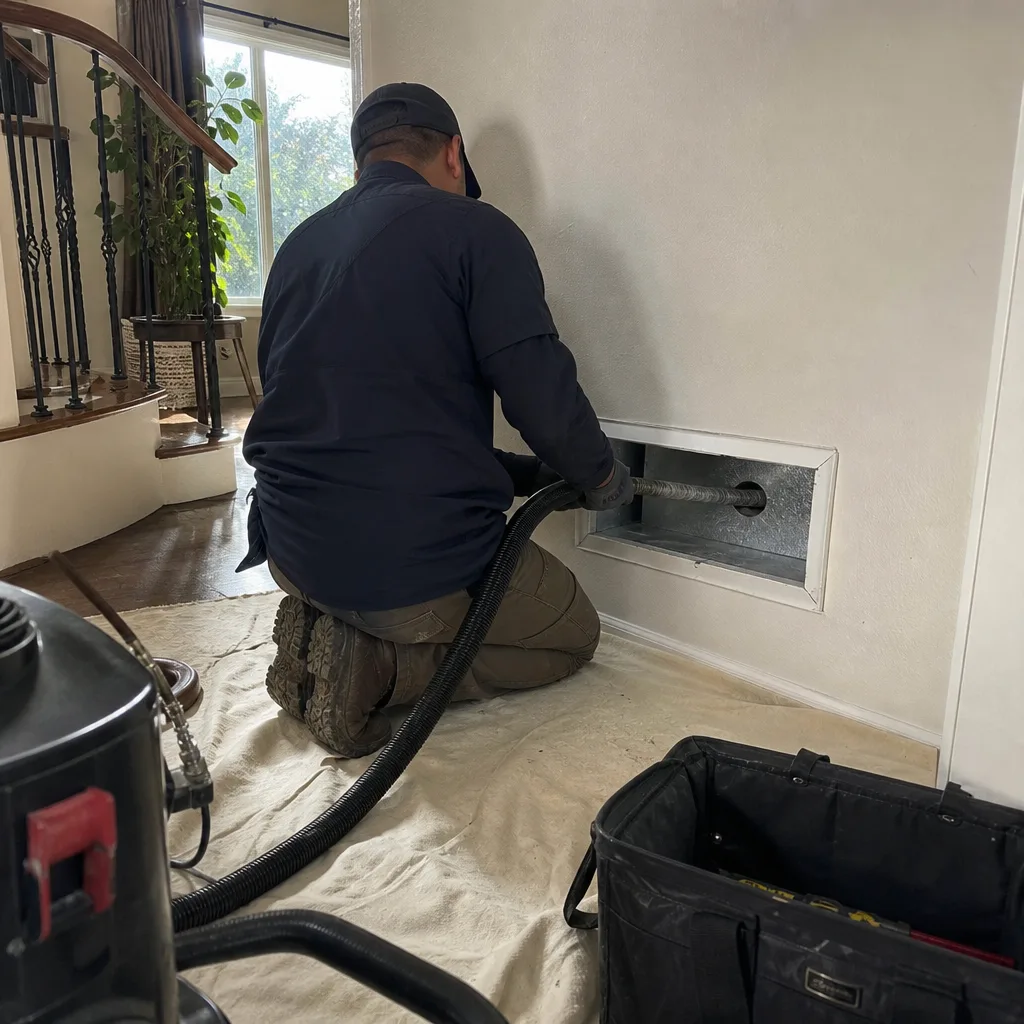 After
AfterAprilaire Vent Sanitizing: The Denver Owner’s Guide
Aprilaire vent sanitizing in Denver typically runs $340-$580 for a whole-system treatment, installed, and we stock Aprilaire-compatible sanitizing solutions on every truck for scheduled same-day service. The part that usually fails first is the UV-C lamp assembly or the associated ballast driver, both of which degrade faster in Denver’s high-altitude UV environment than the manufacturer rates them for sea-level operation. Most owners notice the problem when the blue glow behind the register vanishes, or when allergy symptoms spike despite the filter being new.
Which Aprilaire Models This Applies To
Aprilaire’s vent sanitizing line breaks into three series: the 1900-series whole-home UV systems (1920, 1930, 1950), the 5000-series electronic air cleaners with optional UV add-on (5000, 5010, 5015), and the compact 1000-series in-duct units (1210, 1410, 1610) when fitted with the UV upgrade kit. The critical compatibility gotcha is the lamp socket spacing: 1900-series units built before 2018 use a 9.5-inch pin spacing, while post-2018 production shifted to 11-inch spacing to accommodate the higher-output T6 lamp. The label inside the access panel shows the manufacturing date code; if it reads 1712 or lower, you need the legacy lamp (OEM part 4983, or the Abatement Technologies UVC-9.5 equivalent we carry). Post-2018 units take the 4985 or our Guardsman GUV-11 aftermarket, which matches output at roughly 60% of OEM cost. We do not install generic unbranded lamps; the spectrum output varies enough that an unverified lamp will register as functional on a basic meter while producing negligible sanitizing effect.
CleanRun Air Duct Cleaning Denver is an independent service provider, not affiliated with Aprilaire. We also stock parts for Lennox, Trane, and Carrier systems.
Signs Your Aprilaire Vent Sanitizing Is Failing
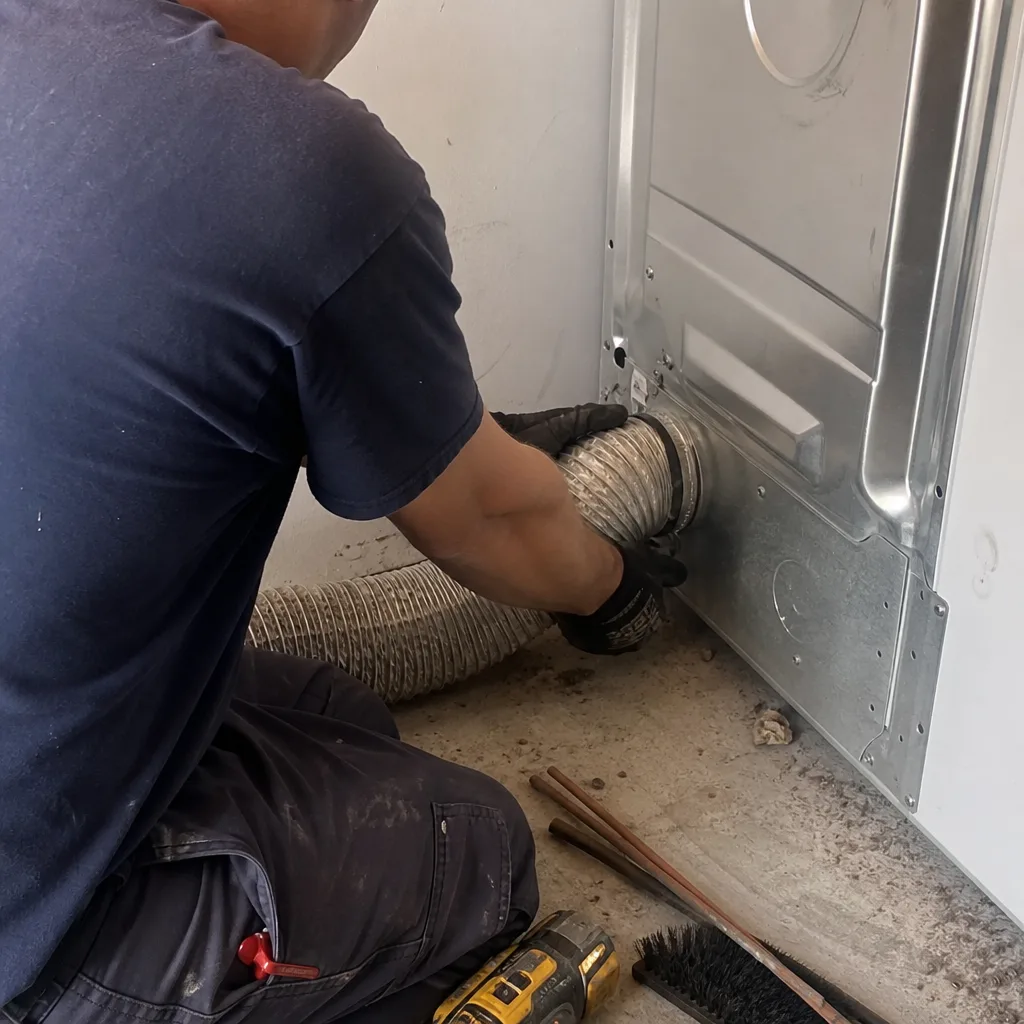
- The indicator light is out or flickering. The UV-C lamp degrades to roughly 60% output at 9,000 hours of operation, but the visible glow often persists longer than the effective sanitizing wavelength. In Denver’s drier climate, static buildup at the ballast connection can cause intermittent flickering that a homeowner might dismiss until microbial growth becomes visible at the register.
- Musty or sour odors return within weeks of filter replacement. When the UV-C output drops below effective levels, biofilm regrows on the evaporator coil and plenum walls. We have photographed this exact pattern in Park Hill and Stapleton homes where the lamp was glowing but producing insufficient UVC intensity to suppress bacterial colonization.
- Increasing allergy or respiratory symptoms among residents. The 254nm wavelength that Aprilaire systems target is specifically calibrated to disrupt DNA replication in mold spores and bacteria. As output degrades, the downstream duct runs, particularly the longer flex-duct branches common in Denver’s 1990s-2000s construction, become recolonization zones.
- The ballast hums but the lamp won’t strike. This usually indicates filament degradation in the lamp itself, though in older 1900-series units we’ve found the capacitor inside the ballast housing fails first, particularly after Denver summer heat cycles in attic-mounted systems. The capacitor is not separately replaceable; the ballast assembly swaps as a unit.
- Visible microbial staining on the register or duct interior. By the time staining is visible at the supply register, the upstream plenum and trunk lines typically show heavier colonization. This is not a cosmetic issue; the camera showed a 3-inch debris build-up at the first elbow in a recent Congress Park job where the UV lamp had failed six months prior.
BeforeAfterReplacement Cost & What’s Included
| Component | Denver Price Range | Notes |
|---|---|---|
| Pre-2018 lamp (9.5″) + labor | $340-$420 | Includes disposal of mercury-containing lamp per Colorado regulation |
| Post-2018 lamp (11″) + labor | $380-$460 | Guardsman GUV-11 or OEM 4985 |
| Ballast replacement + lamp | $480-$580 | Required when ballast fails or is >5 years old |
| Full system sanitizing (lamp + duct treatment) | $580-$740 | Documented Photo Record included; recommended when biofilm is present |
What drives the range: accessibility of the unit (attic vs. basement), whether the existing wiring meets current electrical code, and whether we find biofilm requiring mechanical cleaning before new lamp installation. Every job starts with a written price under Haven Standard Clause 1 - no exceptions. The 365-Day Done Right Promise covers both parts and labor; if the lamp fails prematurely, we replace it and document the cause. Before-and-after photos of your actual duct runs are included as standard deliverables, not an upsell.
DIY or Call Us?
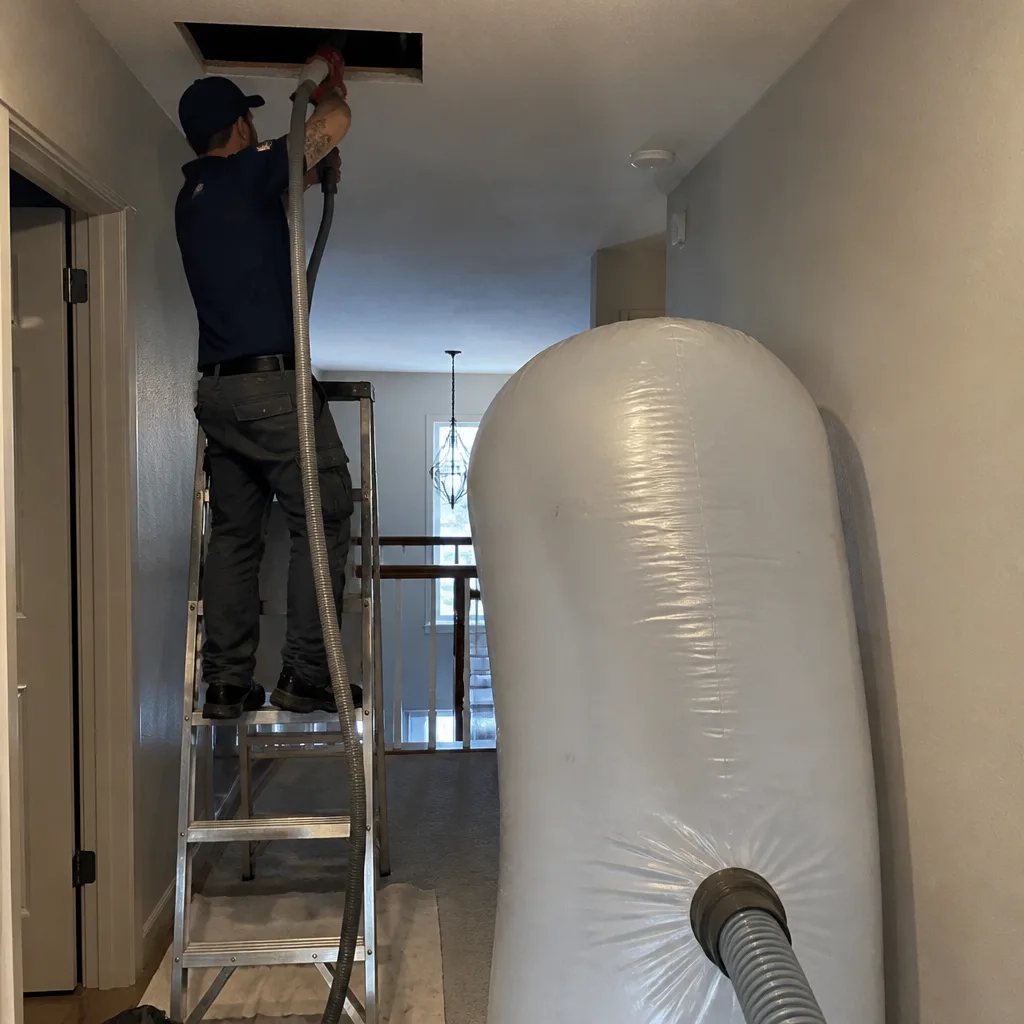
What you can safely check: verify the lamp is seated fully in its socket, confirm the breaker hasn’t tripped, and inspect the access panel for the date code to identify your lamp type. Do not attempt to remove a UV-C lamp while powered; the wavelength causes corneal burns within seconds of direct exposure, and the high-voltage ballast (1900-series units run 220V even when the furnace is 110V) can deliver a lethal shock.
Where DIY goes wrong: homeowners frequently install the wrong lamp spacing, forcing a fit that cracks the quartz tube and releases mercury vapor into the airstream. The socket alignment tolerances are tight, and the O-ring seal that maintains duct pressure is easy to damage without the correct replacement. We stock both lamp sizes on every truck, carry the correct O-rings, and verify output with a calibrated UVC meter, not just visual confirmation. Here is what the camera found. Here is what it costs to fix it. You decide. Call (720) 799-2292 for a written estimate before any work starts.
FAQs
The manufacturer rates lamps for 9,000 hours, but in Denver’s higher UV index and altitude-stressed electrical environment, we typically see effective output decline at 7,000-8,000 hours. We recommend replacement every 12 months for continuous-operation systems, or every 18 months if the unit cycles with the blower. Call (720) 799-2292 and we’ll check your run-time hours as part of a free estimate.
No. UV-C lamps are sealed quartz tubes with a finite filament life; once output degrades, there is no restoration method that returns the lamp to specified nanometer output. Ballast capacitors are also sealed units. Replacement is the only viable repair. We carry both lamp sizes and ballast assemblies on every truck.
A straightforward lamp replacement takes 45-60 minutes, including UVC output verification with our meter. If the ballast requires replacement or we find biofilm requiring mechanical cleaning, plan on 90 minutes to 2 hours. We photograph every step and deliver the record before we leave.
We stock Aprilaire-compatible lamps, ballasts, and O-ring seals on every service vehicle. Tomas Reyes and our crew have been servicing Denver homes since 2013, and we learned early that a truck without the part means a second trip and a wasted afternoon for the homeowner. The 9.5-inch legacy lamp and the current 11-inch version are both on the shelf; no waiting, no shipping delays.
Written by Tomas Reyes, Owner, CleanRun Air Duct Cleaning Denver at CleanRun Air Duct Cleaning Denver, serving Denver and nearby areas.