
Last updated September 23, 2026
Whole-system duct and dryer vent check with before-and-after photos - you see exactly what came out of your vents
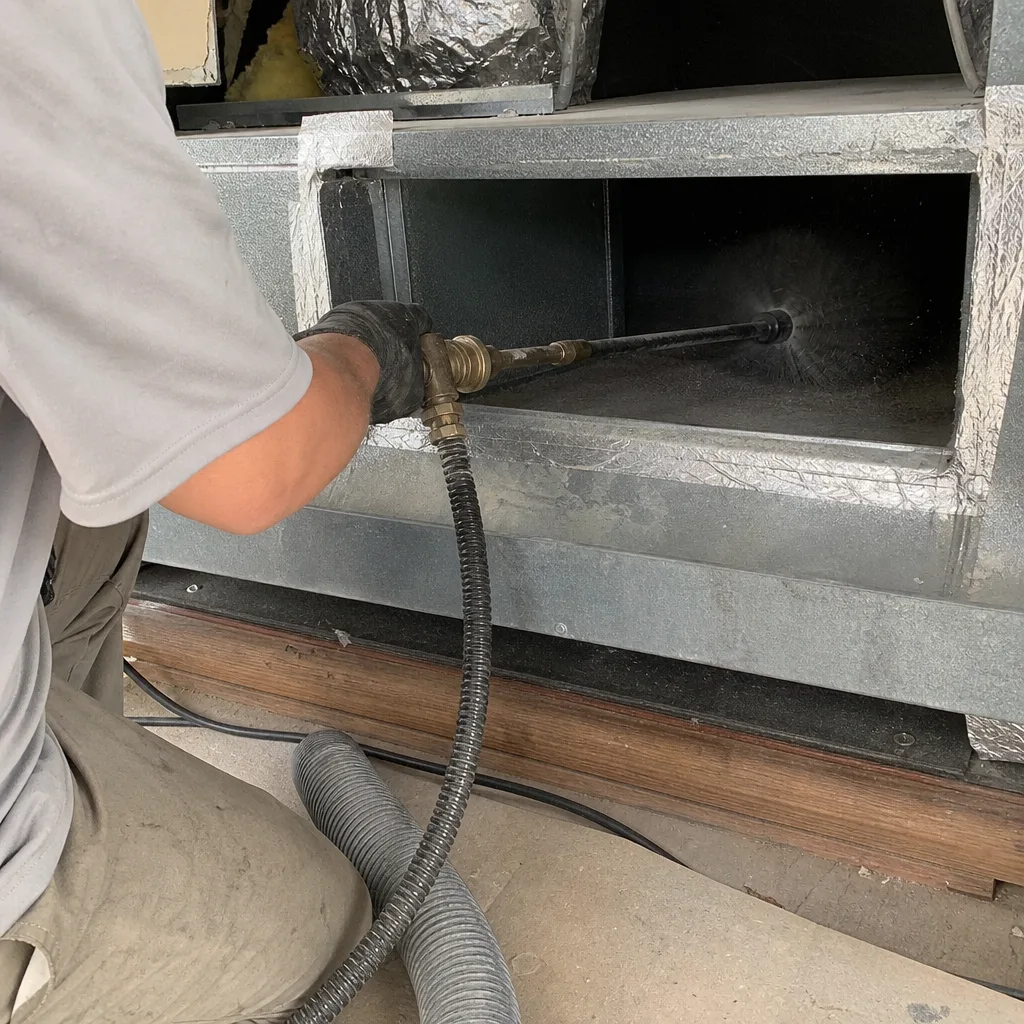
That "$99 whole-house special" is a bait ad - the real number appears once they are in your hallway, or the "clean" is a shop-vac at the register. We photograph the inside of your ducts before and after instead.
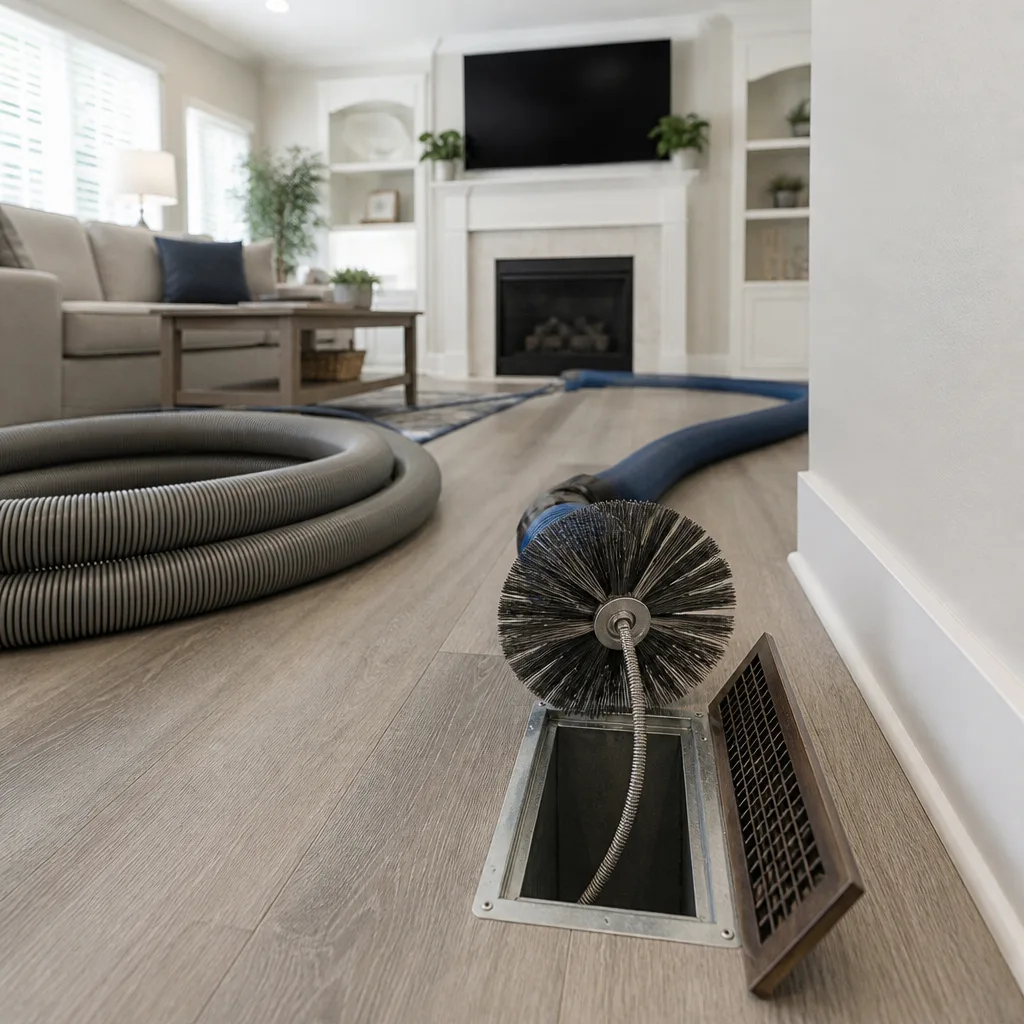
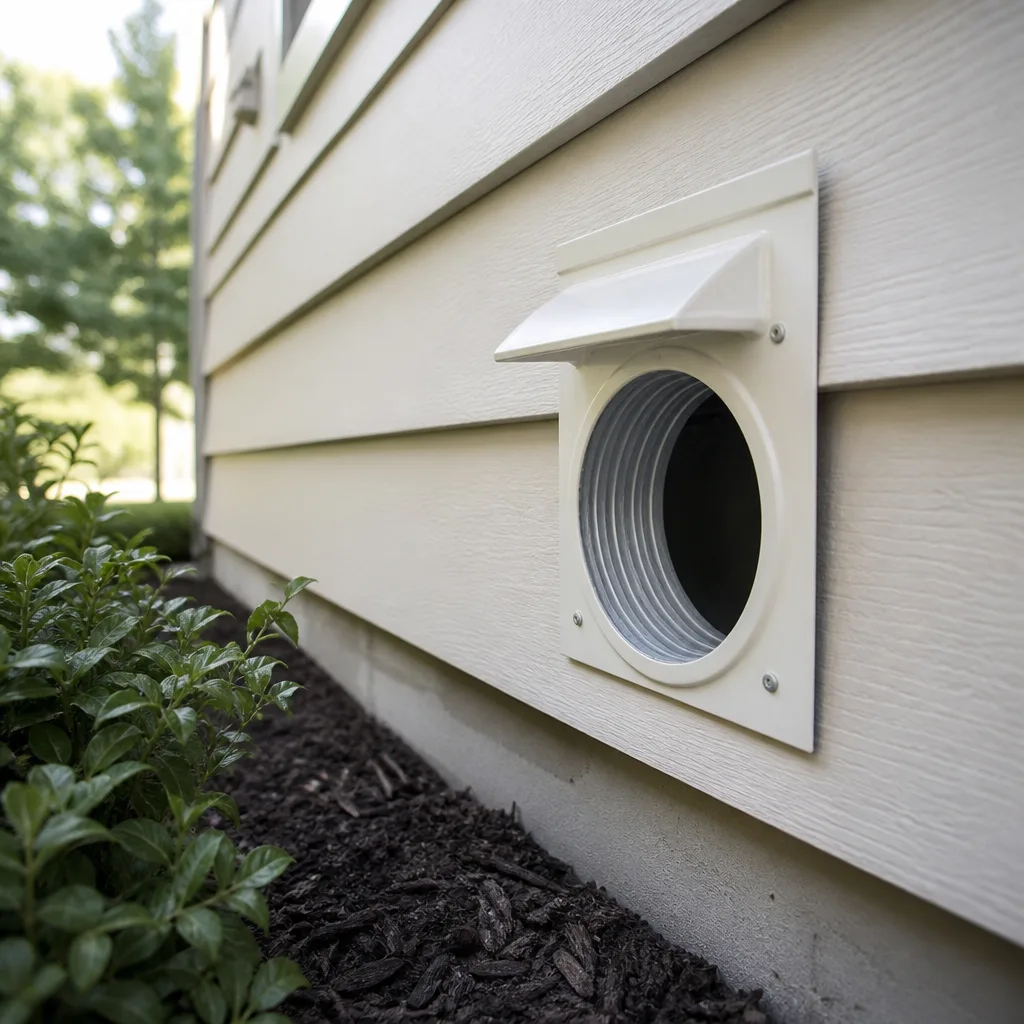
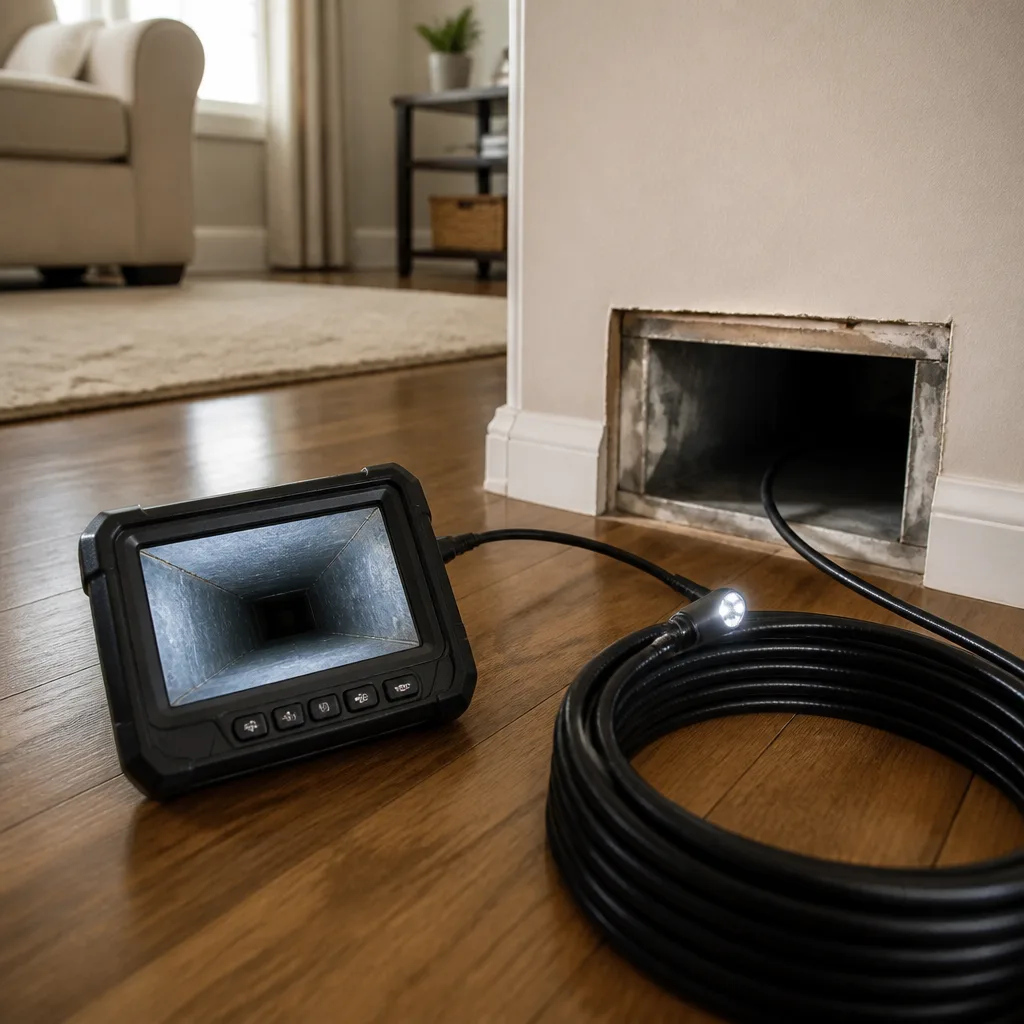
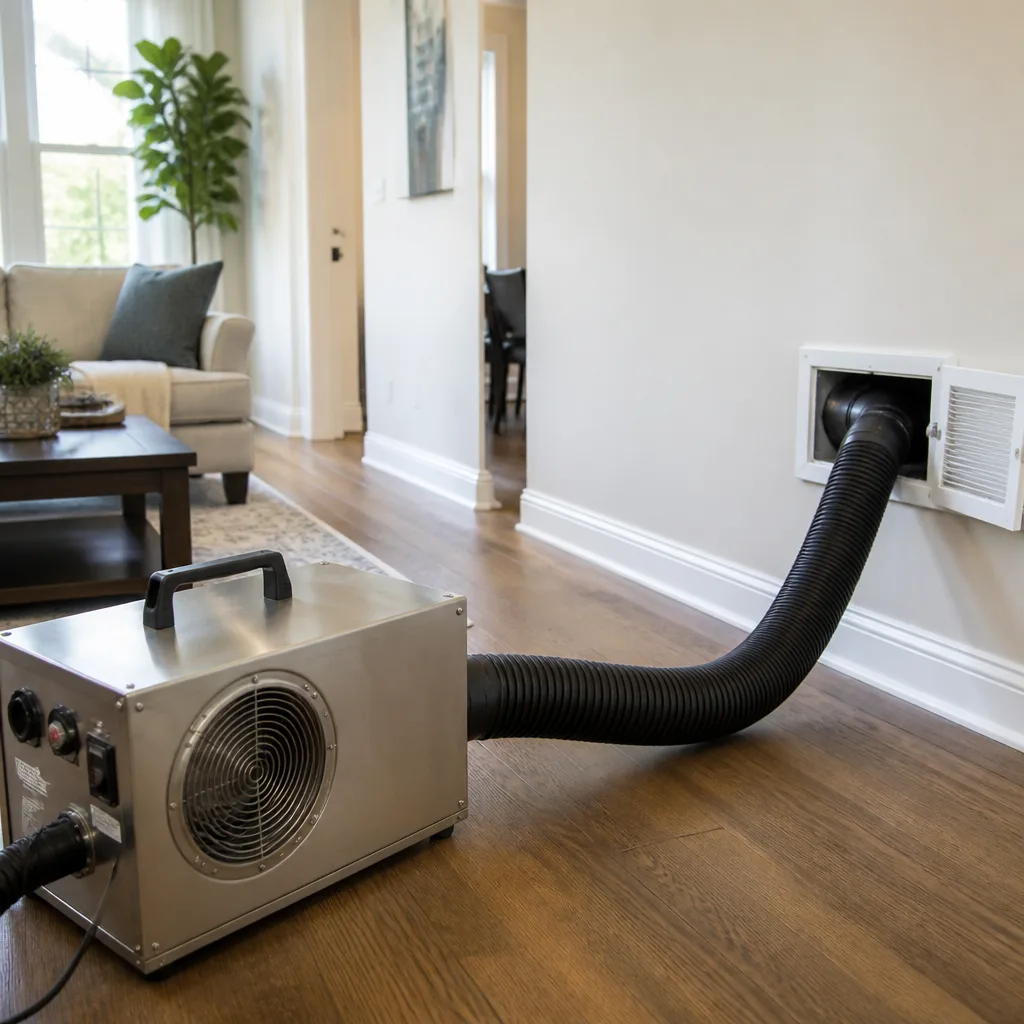
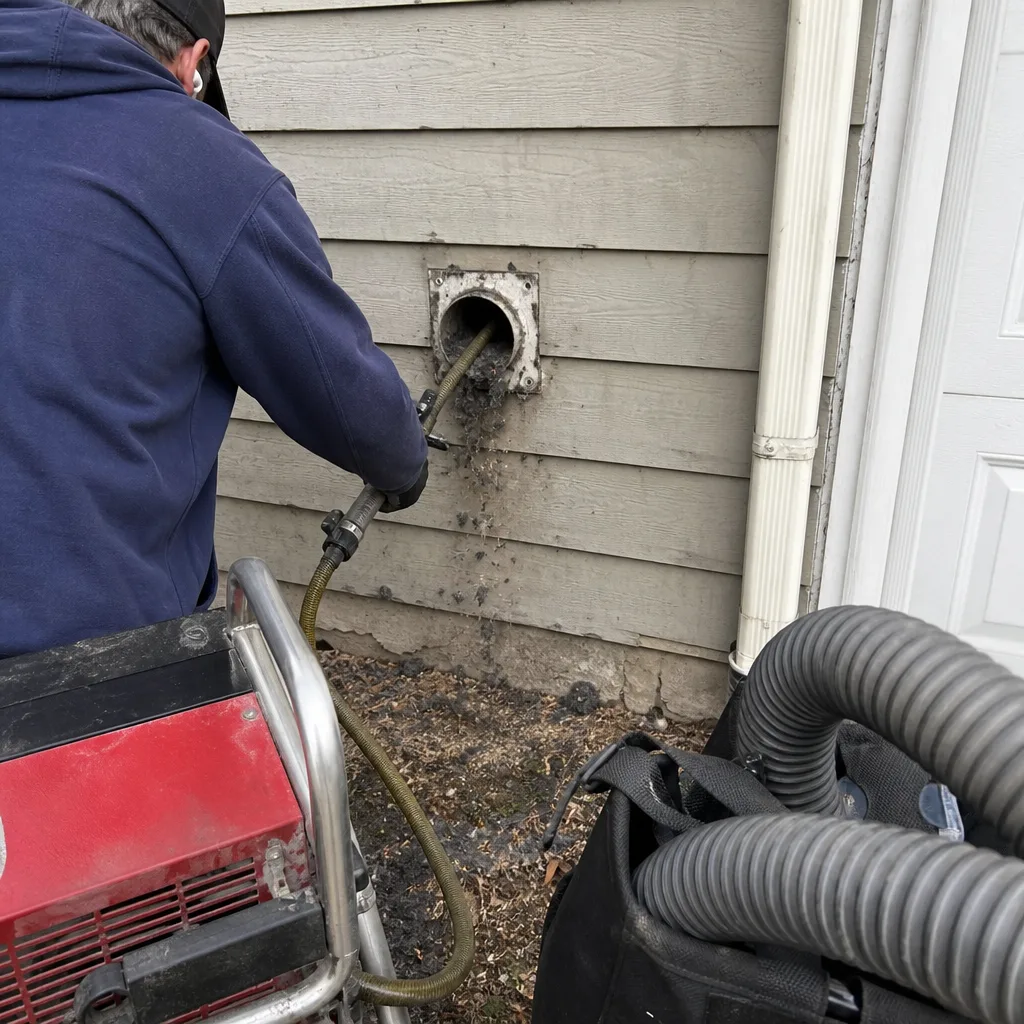 Before
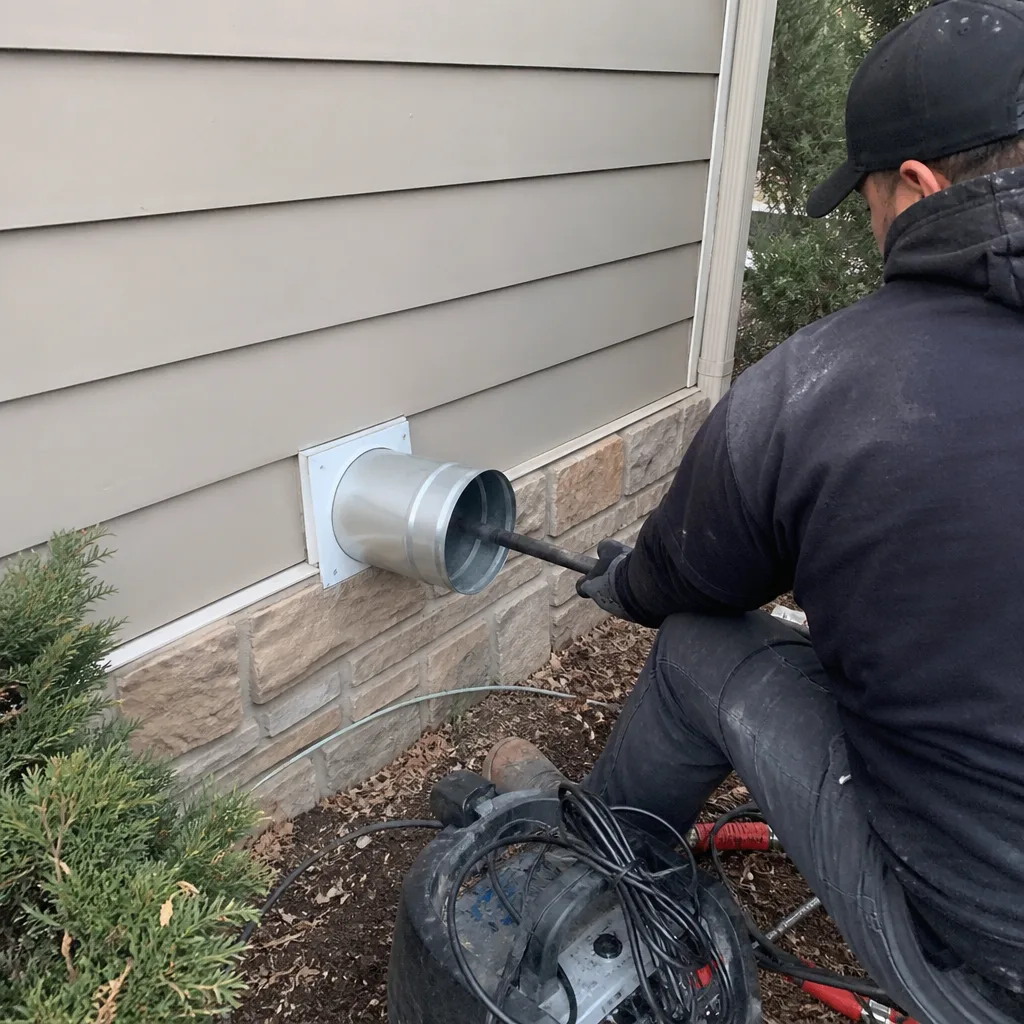 After
After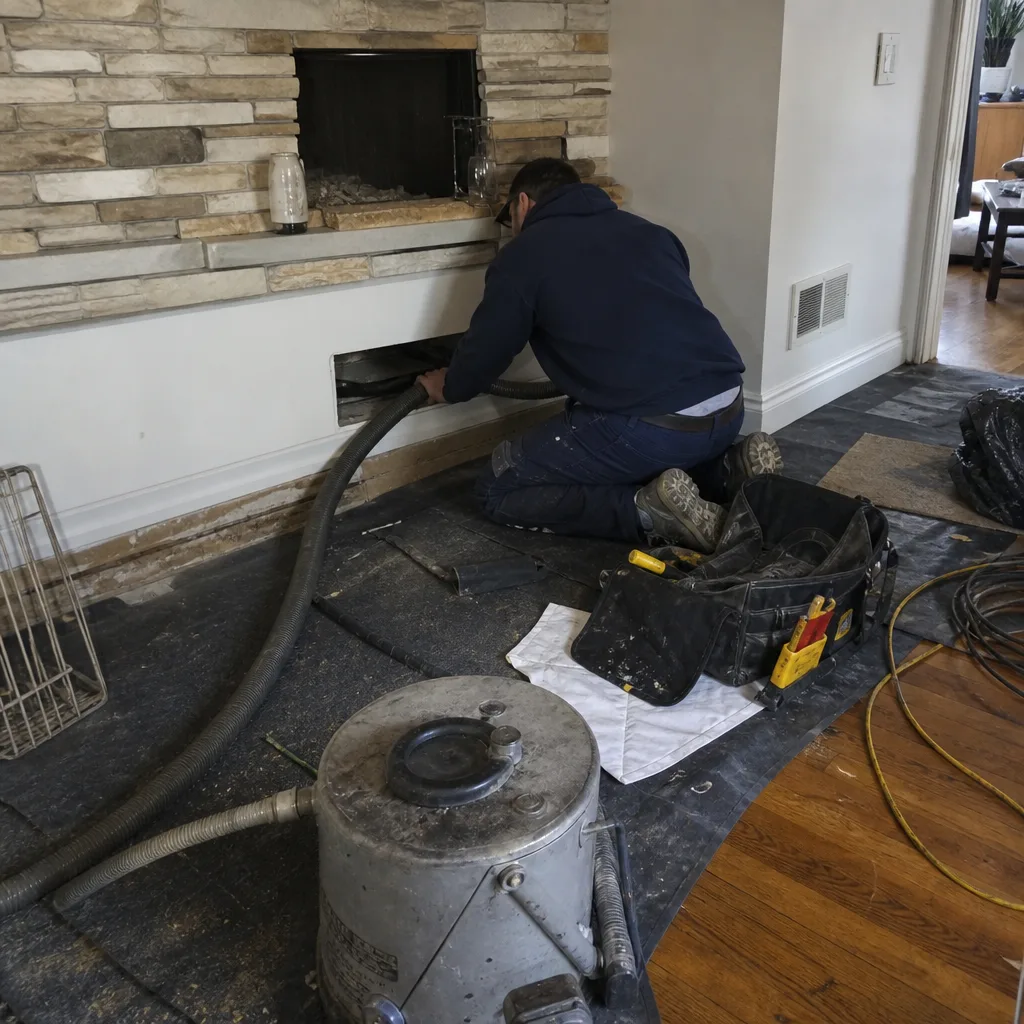 Before
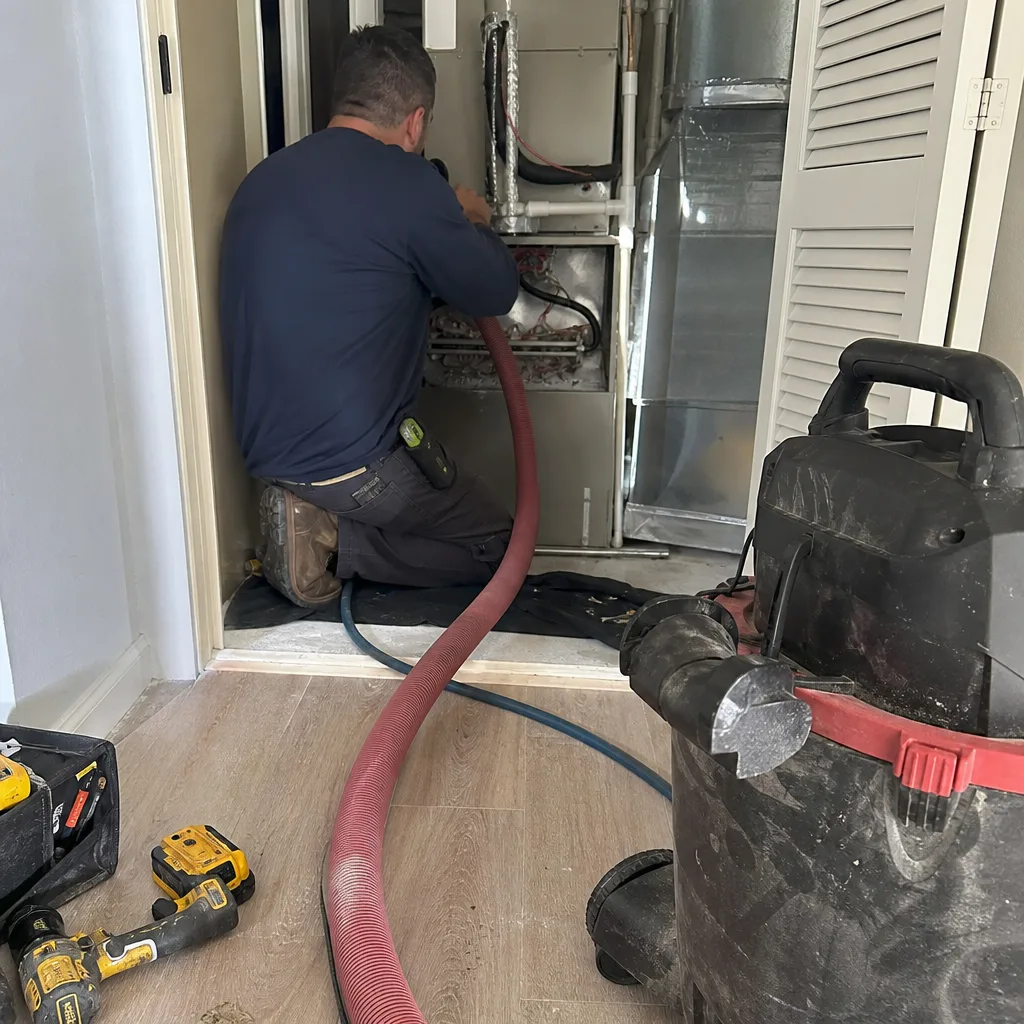 After
After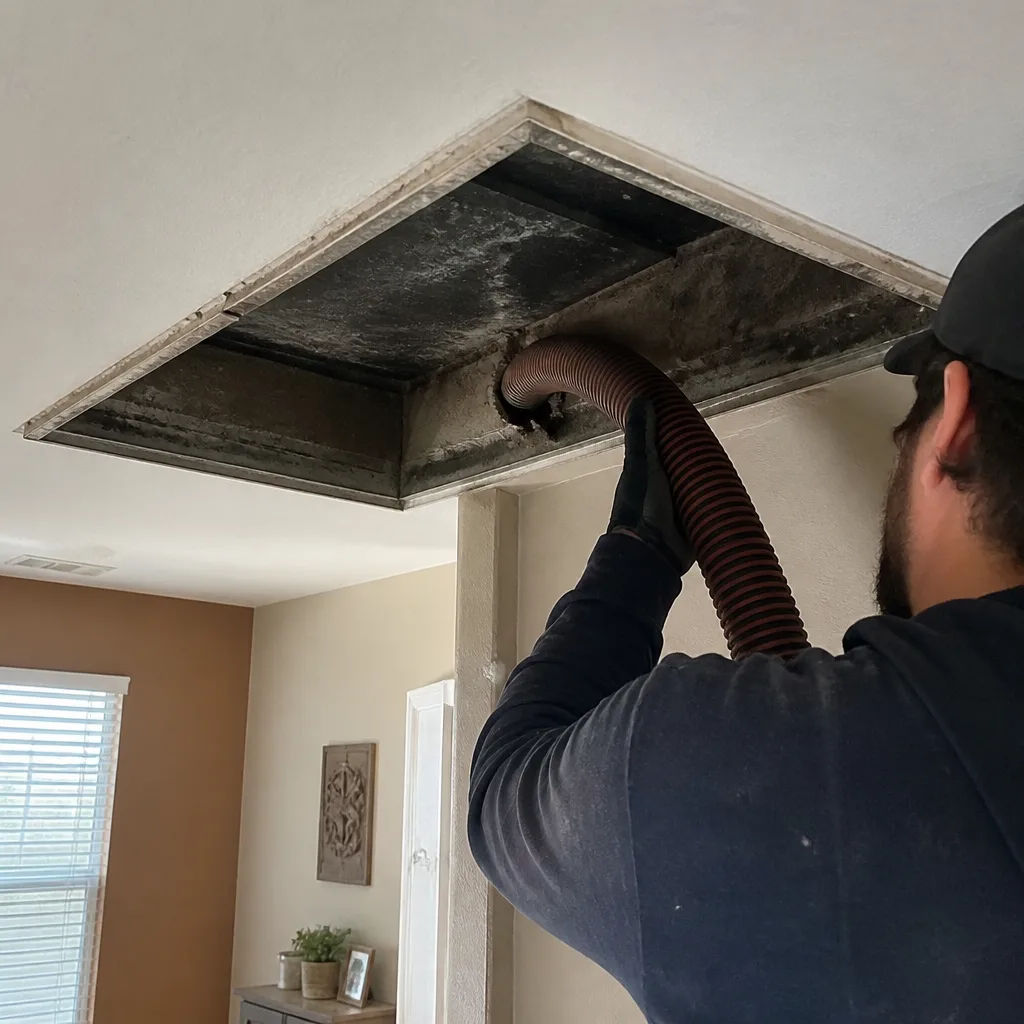 Before
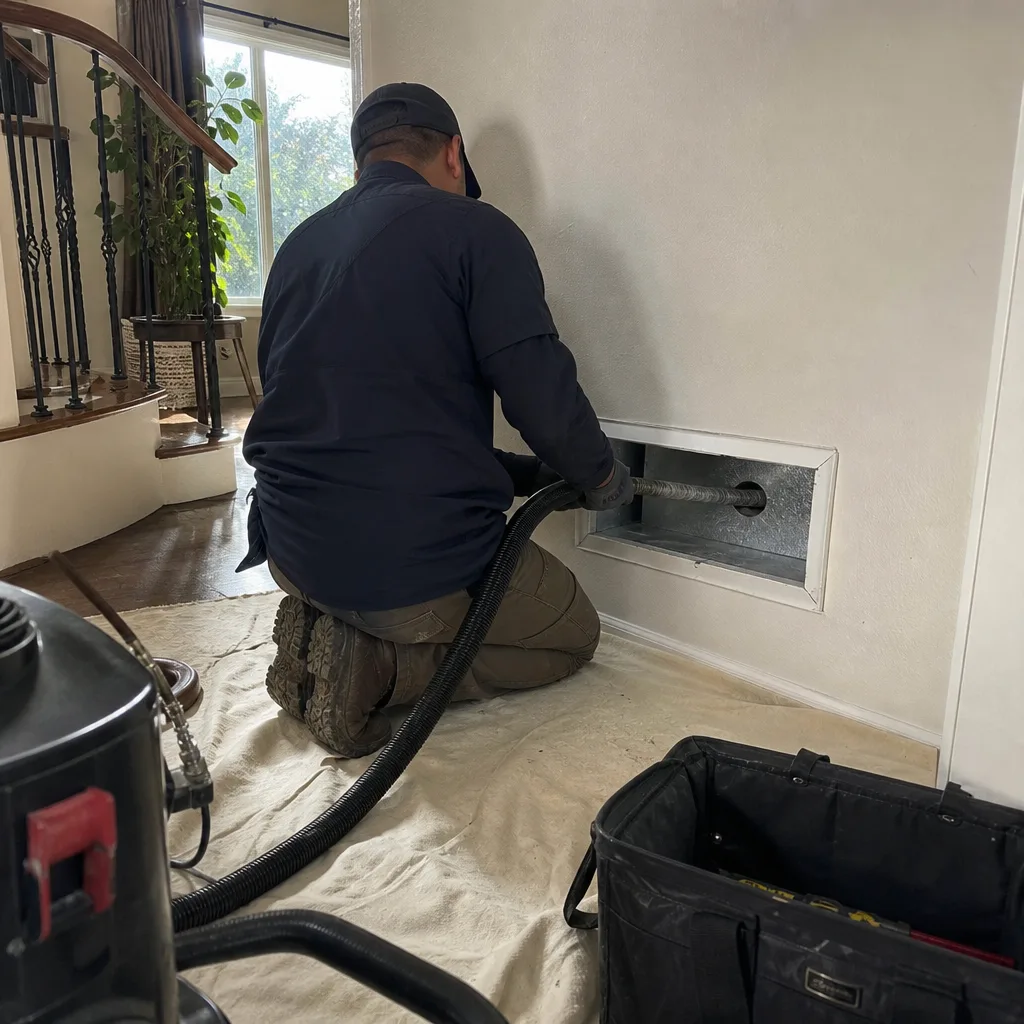 After
AfterHow to Hire a Air Duct Cleaning Contractor in Denver: A Step-by-Step Guide
Ask any Denver duct cleaning company to show you a before photo from a job completed last week. The ones who can’t answer that question in ten seconds are the ones charging $79 to make noise in your basement. We’ve been in this trade since 2013, and the gap between what homeowners think they’re buying and what actually shows up at their door has only widened. This guide is a concrete vetting framework - the exact questions, documentation requirements, and red flags that separate accountable work from vacuum noise. You’ll learn how to read an estimate like a technician, verify credentials that actually matter, and demand a post-job record that proves the work happened.
Quick Answer
Hiring a legitimate Air Duct Cleaning services contractor in Denver requires verifying five written items on every estimate: itemized scope, equipment specifications, labor breakdown, total price, and warranty terms. The contractor must use negative-pressure extraction equipment (not a shop vac), provide NADCA-certified technicians, and deliver a documented photo record of every duct run before and after cleaning. Anything less is a transaction with no accountability.
Table of Contents
- The Five Written Items Every Legitimate Estimate Must Contain
- How to Verify NADCA Membership and What It Actually Requires
- Negative-Pressure Truck-Mount vs. Shop-Vac: How to Ask and Why It Matters
- Red Flags in Reviews: Language Patterns That Signal Bait-and-Switch Pricing
- What Your Post-Job Documentation Package Should Contain
- Denver-Specific Factors: Climate, Codes, and Neighborhood Considerations
- The 7-Step Vetting Process Before You Sign
- Common Mistakes to Avoid
- When to Call a Professional
- Frequently Asked Questions
- The Bottom Line
BeforeAfterThe Five Written Items Every Legitimate Estimate Must Contain
A phone quote is not a price. It’s a number someone said into a phone, with no mechanism for accountability when the final invoice arrives. At CleanRun, we haven’t given a verbal estimate since 2013. Haven Standard Clause 1 requires a written price before any work starts, every time, and we believe any homeowner in Denver should demand the same from any contractor they consider.
Here are the five written items that transform a vague number into a binding estimate:
- Itemized scope of work. The estimate must list every duct run, return, register, and plenum (the central distribution box where heated or cooled air collects) to be cleaned. A generic “whole house” description leaves room for exclusions. In Denver’s older neighborhoods like Berkeley or Congress Park, homes often have modified ductwork from decades of HVAC upgrades - the estimate must account for each segment.
- Equipment specifications. The document should name the extraction method and primary equipment. Negative-pressure truck-mount systems, portable HEPA-filtered units from manufacturers like Rotobrush or Nikro, or professional-grade collection systems from Abatement Technologies - these are verifiable tools with published specifications. A written estimate that says “professional equipment” without naming it is hiding something.
- Labor breakdown. How many technicians? Estimated hours on site? In our experience, a thorough cleaning of a 2,000-square-foot Denver home with a standard duct layout takes 3 to 4 hours with a two-person crew. An estimate promising 90 minutes is either skipping runs or using inadequate equipment.
- Total price with no open-ended variables. The final number must be fixed before work begins. Per-vent pricing is a classic bait-and-switch structure - the low base price covers almost nothing, and every additional component inflates the total. We price per system, not per vent, because homeowners can’t be expected to count their own ductwork accurately.
- Warranty or guarantee terms in writing. What happens if debris remains visible in the photo record? What if a register wasn’t reattached properly? The estimate must state the remedy, not just promise satisfaction. Our 365-Day Done Right Promise is printed on every document - if it’s not right, we make it right, with no manager approval required.
Any contractor unwilling to put these five items in writing before scheduling the job is asking for trust they haven’t earned. In Denver’s competitive home services market, the companies that operate this way are not more expensive - they’re more honest about what the work actually costs.
How to Verify NADCA Membership and What It Actually Requires
The National Air Duct Cleaners Association (NADCA) is the only trade organization with a certification program specifically for HVAC system cleaning. But membership alone means less than most homeowners assume, and the certification that matters - ASCS, or Air Systems Cleaning Specialist - applies to individuals, not companies.
Here’s how to verify what you’re actually getting:
- Ask for the technician’s ASCS certification number, not the company’s NADCA membership number. A company can pay annual dues without sending a single certified technician to your home. The ASCS credential requires passing a proctored exam on HVAC system design, cleaning methods, and containment protocols.
- Cross-check the number on NADCA’s online directory at nadca.com. The database shows certification status, expiration date, and any disciplinary actions. If the technician’s name doesn’t appear, the certification doesn’t exist.
- Ask what the ASCS certification requires them to do on your specific job. The answer should include: protecting the HVAC system during cleaning, containing dislodged debris rather than spreading it, and inspecting the entire system before declaring work complete. If the technician can’t articulate these requirements, the certification is decorative.
- Verify whether the company follows NADCA’s Assessment, Cleaning, and Restoration (ACR) standard. This is the technical specification for what constitutes acceptable work - not a marketing claim, but a published standard with measurable criteria.
In Denver, where wildfire smoke and high-altitude dust create unique contamination patterns, NADCA-certified technicians should be able to discuss how these factors affect cleaning frequency and method selection. A technician who treats every home identically regardless of location hasn’t been trained; they’ve been scripted.
CleanRun technicians operate under Haven Standard Clause 3: Verified Crews, which includes background checks, uniformed appearance, and name identification before arrival. We don’t substitute uncertified labor on scheduled jobs, a practice we’ve encountered too often when reviewing competitor documentation for our Free Second Opinion service.
Negative-Pressure Truck-Mount vs. Shop-Vac: How to Ask and Why It Matters
The equipment question separates duct cleaning from duct theater. Homeowners rarely see inside their ductwork, so the difference between proper extraction and surface disturbance is invisible without documentation. The equipment used determines which one you get.
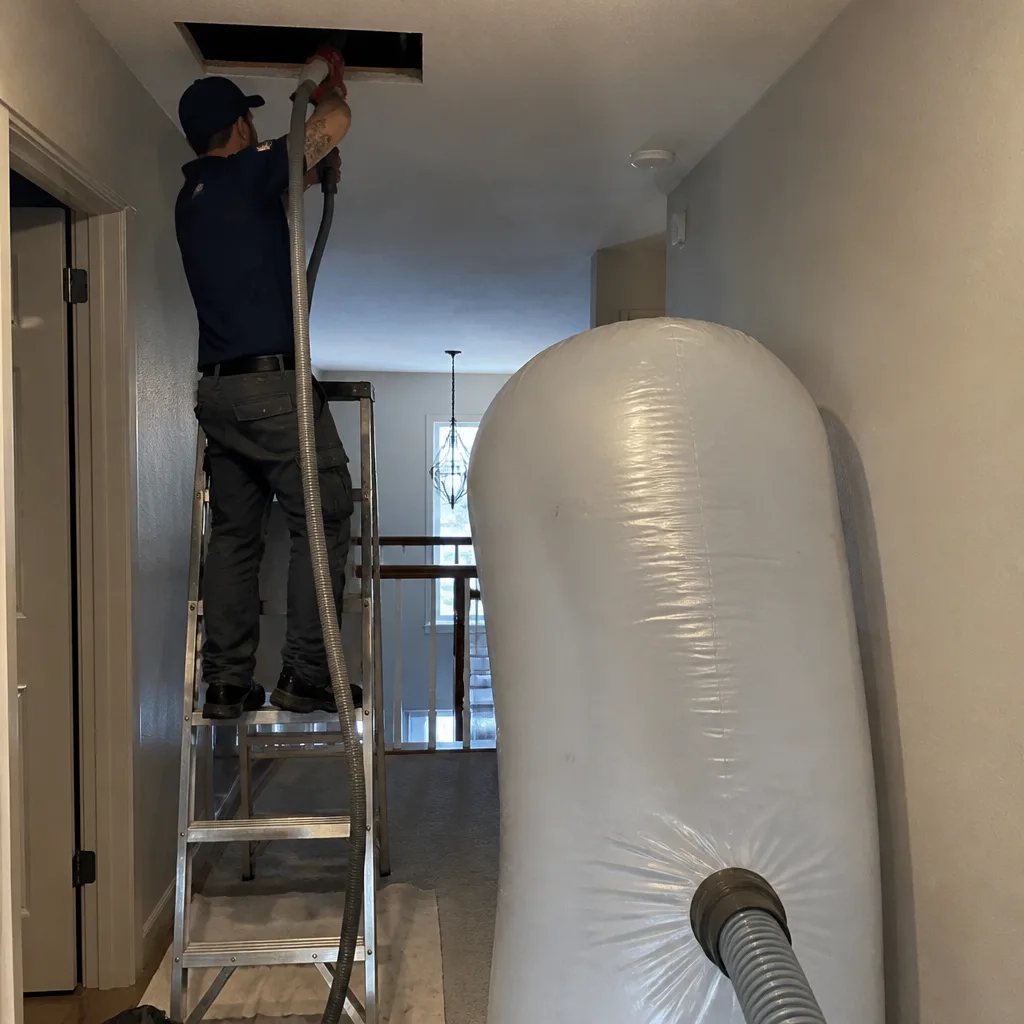
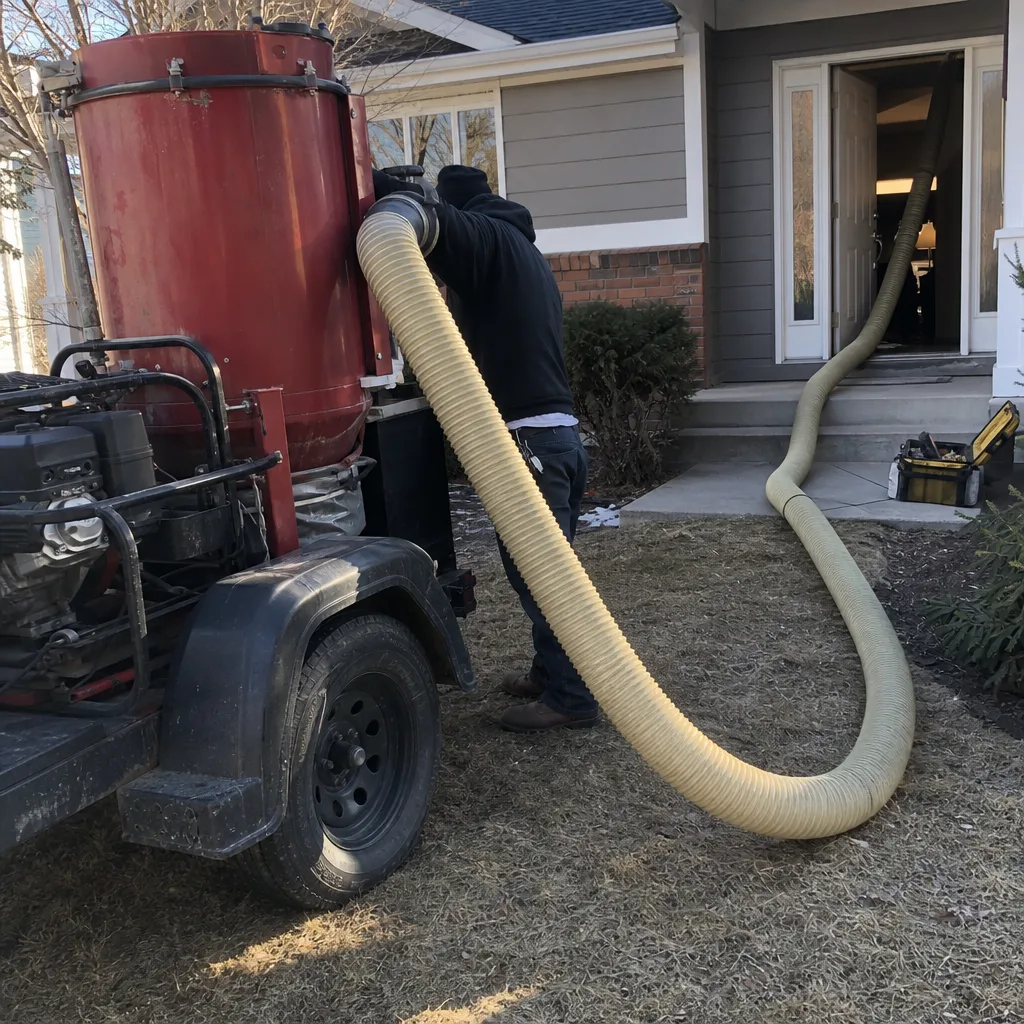
Negative-pressure truck-mount systems create a vacuum throughout the entire duct network, pulling dislodged debris toward a collection point rather than pushing it into the living space. These systems typically operate at 5,000 to 15,000 CFM (cubic feet per minute) of airflow, with HEPA filtration on the exhaust to prevent recontamination. The truck-mounted power unit stays outside; only hoses enter the home. Brands like Nikro and Abatement Technologies manufacture systems in this category, and their specifications are publicly available for verification.
Portable negative-pressure units operate on the same principle but with lower capacity, typically 1,000 to 3,000 CFM. These are legitimate tools for homes where truck access is impossible - tight alleys in Capitol Hill, historic districts with parking restrictions, or multi-unit buildings. Rotobrush manufactures portable systems that, when used correctly with proper agitation tools, achieve thorough cleaning in constrained spaces.
Shop-vac rigs are not duct cleaning equipment. A standard wet/dry vacuum generates approximately 100 to 200 CFM and creates positive pressure at the hose tip, blowing debris downstream rather than extracting it. The $79 coupon operators in Denver typically arrive with a modified shop vac, a rotary brush on a drill, and a laminated price sheet with upsells. We’ve photographed the aftermath: disturbed debris at register openings, untouched accumulation at duct elbows, and in one Park Hill home, a shop vac filter so saturated it was exhausting contamination back into the basement.
Questions to ask any contractor:
- “What CFM rating does your primary extraction unit generate?” A legitimate contractor knows this number. A scripted operator will deflect.
- “Is your system negative-pressure or positive-pressure?” The answer must be negative-pressure for proper containment.
- “What brand and model equipment will be used on my job?” Write down the answer and look it up. Honeywell, Aprilaire, and Guardsman manufacture components and verification tools used in professional duct cleaning; their presence indicates investment in proper equipment.
- “How do you access the main trunk line?” The trunk line (the large central duct that distributes air to branch runs) requires dedicated access points, not just register removal. If the contractor has no plan for trunk access, they’re not cleaning the system - they’re cleaning what you can already see.
In Denver’s older housing stock, particularly pre-1950s homes in Whittier or Cheesman Park, asbestos-containing duct insulation is a known hazard. Professional equipment with HEPA containment is not just preferable here - it’s required for safe disturbance of any degraded material. A shop vac has no containment capability.
Red Flags in Reviews: Language Patterns That Signal Bait-and-Switch Pricing
Online reviews are manipulated more systematically than most homeowners realize. The $79 coupon companies in Denver operate review farms, dispute negative feedback aggressively, and seed platforms with language designed to drown out complaints. Knowing the patterns helps you read past the star average.
Red flag patterns in positive reviews:
- Repetitive phrasing across multiple reviews: “so professional and courteous,” “highly recommend,” “on time and efficient” appearing verbatim or near-verbatim suggests template submissions, not genuine customers.
- No specific detail about the work performed. A real review mentions something found - “they pulled two grocery bags of lint from the dryer vent” or “showed me the before photo of the master bedroom return.” Vague praise without specifics is often purchased.
- Reviews posted in clusters on the same date or within 48-hour windows, particularly for companies with otherwise sparse activity. This indicates bulk submission campaigns.
- Mentions of “the owner” by name in multiple reviews, particularly for companies where ownership isn’t public information. This is a common template element in fabricated reviews.
Red flag patterns in how companies respond to negative reviews:
- Immediate public accusations that the reviewer is a competitor, fake, or confused. Legitimate companies investigate privately before responding publicly.
- Offers to “make it right” that require the customer to contact a specific manager - a deflection tactic that never resolves the issue but looks responsive.
- Claims that the pricing was “clearly explained” when multiple reviewers dispute transparency. Pattern recognition matters more than individual disputes.
The most reliable review indicator: Look for mentions of documentation. Customers who received before-and-after photos, written scopes, or warranty documents describe these deliverables specifically. Companies that actually provide documentation have customers who mention it without prompting. In twelve years of operation, we’ve found this correlation holds consistently across platforms.
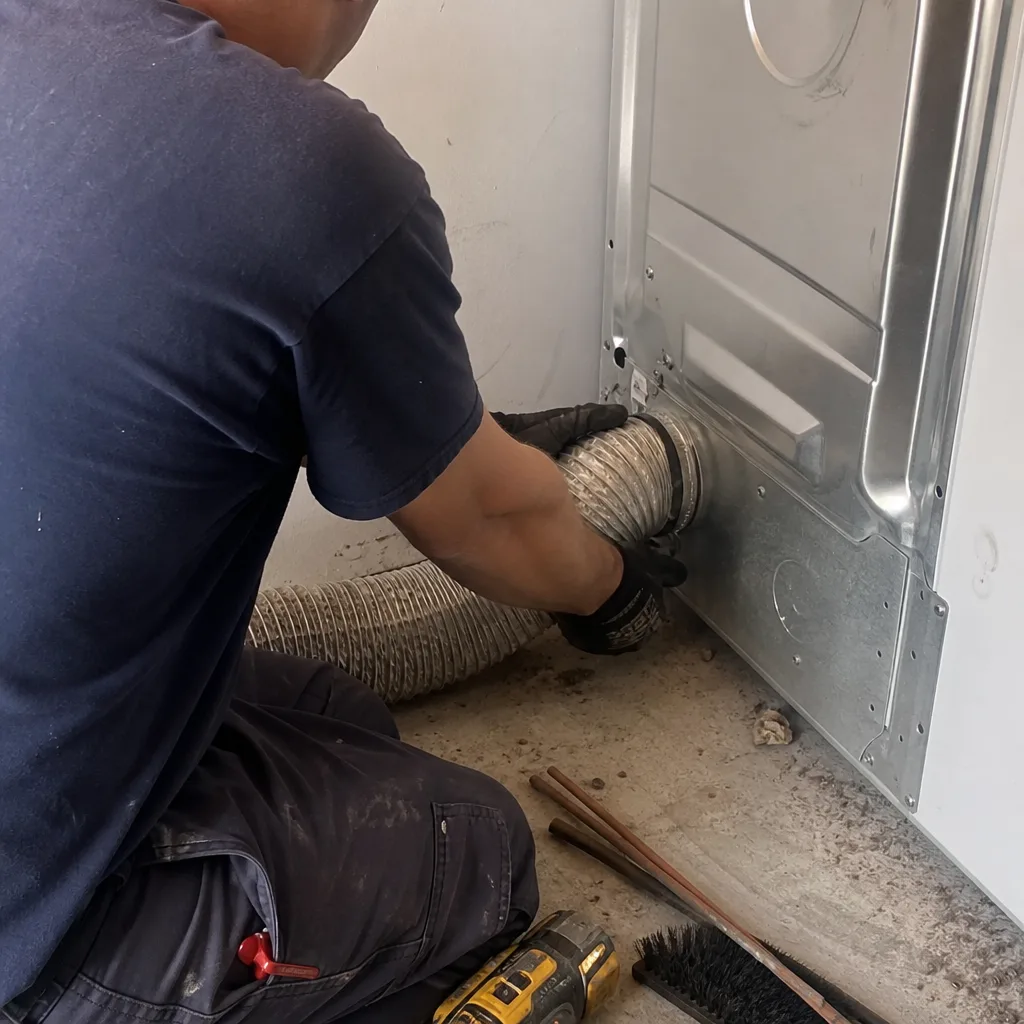
For dryer vent cleaning in Denver, the same review scrutiny applies - the coupon operators often bundle duct and dryer vent services with identical pricing tactics.
What Your Post-Job Documentation Package Should Contain
The work you can’t see requires proof. Duct cleaning happens inside walls, behind panels, and in spaces no homeowner inspects routinely. Without documentation, you’re trusting a verbal assurance that the job is complete. At CleanRun, we resolved this problem in 2013 by making the photo record a standard deliverable, not an optional extra.
Here’s what a complete post-job documentation package should include, and how to request it in writing before scheduling:
- Before-and-after photographs of every duct run. Not a representative sample - every run. The photos should show the interior surface of the duct, not just the register opening. Timestamp and location metadata are preferable but not universal; at minimum, each image should be labeled by room and run number.
- Written scope confirmation. A signed or initialed document stating which components were cleaned: supply ducts, return ducts, registers, grilles, plenum, and air handler components if included. This prevents disputes about what was actually in the work order.
- Equipment and method record. What was used, for how long, and any modifications made to access points. This matters for warranty claims - if a panel is damaged during access, the documentation should note it.
- Final invoice matching the written estimate. Line-item alignment with no additions. Haven Standard Clause 1 prohibits invoice surprises; any legitimate contractor should be willing to put equivalent language in writing.
- Warranty or guarantee document with contact information and claim procedure. Not a verbal “call us if there’s a problem” - a printed document with specific terms. Our 365-Day Done Right Promise includes the direct line for claims and a commitment to response within 24 hours.
Request this package structure in your initial contact. Email is best - it creates a written record of the request. A contractor who agrees readily is likely already providing it. A contractor who deflects (“we’ll take care of you,” “our guys are really thorough”) is telling you documentation isn’t part of their standard process.
We’ve reviewed competitor documentation for our Free Second Opinion service where the “after” photos were clearly from a different home - different register style, different wall color, different duct material. Without demanding specific documentation standards, homeowners have no defense against this substitution.
Denver-Specific Factors: Climate, Codes, and Neighborhood Considerations
Denver’s environment creates duct contamination patterns that differ materially from coastal or humid climates. Understanding these factors helps you evaluate whether a contractor has local experience or is applying a generic national playbook.
Altitude and dust loading. At 5,280 feet, Denver’s thinner air carries more particulate per volume of airflow. The city’s semi-arid climate means dust doesn’t adhere with humidity; it accumulates as dry, mobile layers that redistribute through the system. We’ve photographed 2-inch debris buildups in Stapleton homes less than five years old, not from neglect but from the volume of material drawn through intakes.
Wildfire smoke infiltration. The 2020 Cameron Peak and East Troublesome fires introduced a new contamination category: fine particulate and volatile organic compounds from smoke that penetrates even closed systems. Duct cleaning after significant smoke events requires different agitation methods and verification standards than routine maintenance. A contractor who treats wildfire season identically to standard conditions hasn’t adapted to local conditions.
Neighborhood-specific duct configurations:
- Stapleton / Central Park: Newer construction with flexible ductwork (insulated, corrugated plastic tubing) that requires gentler agitation to avoid tears or disconnections at joints.
- Capitol Hill / Cheesman Park: Century-old homes with galvanized steel ducts, often modified repeatedly, with asbestos insulation on exterior surfaces. These require containment protocols and potential abatement coordination.
- Highlands / Berkeley: Mid-century ranch homes with rigid fiberglass duct board, which degrades over time and may require repair or replacement rather than cleaning alone.
- Sloan Lake / Edgewater adjacents: Post-war construction with mixed materials and frequent homeowner modifications - the ductwork equivalent of a house with four eras of electrical wiring.
Permit and code considerations. Denver requires permits for duct modification but not for cleaning alone. However, if cleaning reveals damage requiring repair or replacement - particularly in asbestos-containing systems - the contractor must coordinate with the city’s Community Planning and Development department. A contractor unfamiliar with this process may perform illegal disturbance or leave you with unpermitted modifications that complicate future sale.
For HVAC cleaning in Denver, these same neighborhood and climate factors apply to coil and blower maintenance, which is often bundled with duct cleaning.
The 7-Step Vetting Process Before You Sign
This framework integrates everything above into a sequential process you can complete in a single afternoon. Each step builds documentation that protects you if the job goes wrong.
- Request a written estimate with the five required items. Do this by email to create a record. If the company refuses or offers to “explain pricing on site,” eliminate them. On-site pricing changes are the primary mechanism for bait-and-switch.
- Verify NADCA ASCS certification for the assigned technician. Get the name and number, check it on nadca.com, and confirm the expiration date is current. If the company can’t name the technician before scheduling, they use rotating subcontractors without certification verification.
- Confirm equipment specifications in writing. Brand, model, and extraction method. Cross-reference with manufacturer specifications if unfamiliar.
- Review online feedback for documentation mentions and red flag patterns. Spend ten minutes on Google and Yelp reading the 2-star and 3-star reviews in detail - these contain more operational information than 5-star praise. Look for our documentation indicators: specific findings, photo mentions, written price confirmations.
- Request the post-job documentation package structure. Send the list from the documentation section above and ask for confirmation that all items will be provided. A contractor who already operates this way will confirm immediately. One who doesn’t will reveal hesitation or deflection.
- Confirm warranty terms in writing. What triggers it, what the remedy is, and how to initiate a claim. Vague “satisfaction guaranteed” language is not a warranty - it’s a marketing phrase with no enforceable meaning.
- Compare against a second opinion. Our Free Second Opinion service exists because we believe homeowners deserve comparable written estimates before committing. Bring any competitor’s written quote; we’ll put our number next to it with no obligation. The exercise of comparison itself reveals which companies are structuring pricing transparently and which are hiding variables.
Completing these seven steps doesn’t guarantee perfect service, but it eliminates the majority of Denver’s low-accountability operators. The companies that survive this vetting are the ones that have invested in systems, training, and documentation - not just advertising.
Common Mistakes to Avoid
- Booking based on the lowest phone quote. The $79 to $129 range in Denver universally converts to $400+ on site through per-vent add-ons, “required” sanitizing, and equipment surcharges. The initial number is designed to secure the appointment, not represent the actual price.
- Assuming NADCA membership equals certified technicians. Company membership and individual ASCS certification are separate systems. Verify the person who enters your home, not the entity that dispatched them.
- Neglecting to ask about access to the main trunk line. Register-level cleaning only addresses visible openings. The trunk line, where the largest debris accumulations occur, requires dedicated access. A contractor with no trunk access plan is performing partial work.
- Accepting verbal warranties. “We’ll take care of you” is not a warranty. The 365-Day Done Right Promise is printed, signed, and transferable because we believe verbal commitments evaporate when problems arise.
- Ignoring Denver’s wildfire season implications. Post-smoke duct cleaning requires specific methods and verification. A contractor who doesn’t ask when your home last had significant smoke exposure isn’t assessing your actual needs.
- Scheduling without confirming the assigned technician. Subcontractor rotation is common in coupon-model companies. The person who answers the phone is not the person who arrives, and credentials don’t transfer between individuals.
- Failing to request documentation before work starts. Asking after the job puts you in a weaker position. The time to establish documentation standards is during scheduling, when the company still wants your business.
When to Call a Professional
Certain conditions in Denver homes warrant immediate professional assessment rather than scheduled maintenance. Visible mold inside registers or duct openings requires containment before disturbance - improper cleaning spreads spores through the entire system. Persistent musty odors after rain or snowmelt often indicate moisture intrusion in ductwork, particularly in homes with crawl space or basement plenum configurations common in Park Hill and Montbello. Sudden increases in dust accumulation, especially after wildfire smoke events, suggest filter failure or duct leakage pulling from unconditioned spaces.
CleanRun Air Duct Cleaning in Denver offers free estimates with written pricing before any commitment. Our technicians are background-checked, uniformed, and identified by name before arrival, operating under Haven Standard Clause 3: Verified Crews. Every estimate includes the five required items, equipment specifications, and confirmation of the documentation package you’ll receive. Call (720) 799-2292 to schedule.
Frequently Asked Questions
Whole-system duct cleaning for a typical Denver home ranges from $450 to $850, depending on system size, accessibility, and contamination level. See our Air Duct Cleaning Cost Breakdown: The Denver Homeowner’s Reference for 2026 for detailed pricing factors. The lower end covers homes under 2,000 square feet with standard duct layouts; the upper end addresses larger homes, complex configurations, or significant debris accumulation. Per-vent pricing models advertised at $79 to $129 typically convert to $500+ through add-ons. Call (720) 799-2292 for a written estimate with no on-site price changes - estimates are free.
The price gap reflects different definitions of “cleaning.” A $79 service uses a shop vac or portable blower with minimal agitation, cleans only accessible register openings, and generates revenue through upsells after arrival. A $600 service employs negative-pressure extraction, accesses the main trunk line, cleans every duct run, and documents the work photographically. The cheaper quote is not a discount - it’s a different service entirely, often designed to create pressure for additional purchases once the technician is in your home.
Demand a documented photo record of every duct run, before and after, with location labels. At CleanRun, this is standard on every job - not optional, not extra. The photos should show interior duct surfaces, not just register openings. Review them before the crew leaves. If a company cannot produce recent examples when asked during the estimate phase, they will not produce them after the job either.
For most Denver homes, every 3 to 5 years under normal conditions. Homes with pets, recent construction, or significant wildfire smoke exposure may need more frequent service. The “every year” recommendation some companies promote is not supported by NADCA guidance for typical residential systems. We assess actual conditions through camera inspection rather than selling arbitrary schedules.
Duct cleaning addresses the distribution network - supply and return ducts, registers, and plenum. HVAC cleaning includes the air handler components: evaporator coil, blower assembly, and sometimes the condensate drain system. In Denver’s dry climate, coil cleaning is often the more impactful service for efficiency, as dust accumulation on coils restricts heat transfer more severely than moderate duct debris affects airflow. We offer both and can assess which your system needs.
No. Proper negative-pressure extraction contains debris at the collection point, and HEPA filtration on exhaust air prevents recontamination. The process generates noise comparable to a running vacuum cleaner. We do recommend that sensitive individuals - infants, those with severe respiratory conditions - occupy a separate room during agitation phases, as a standard precaution even with proper containment.
The Bottom Line
Hiring a duct cleaning contractor in Denver comes down to one principle: accountability requires documentation. For more guides & resources on vetting home services, visit our blog. A written price before work starts, verifiable technician credentials, specified professional equipment, and a complete photo record after completion - these are not premium services. They are the minimum standards for a transaction where the work product is invisible to the customer.
The companies that resist these standards have something to hide. The ones that embrace them, like CleanRun Air Duct Cleaning Denver home, have built their operations around evidence rather than promises. Since 2013, we’ve served 52,000+ homes with written prices every time, documented photo records on every visit, and the 365-Day Done Right Promise backing every job. The framework in this guide works because it demands what we already provide.
Call (720) 799-2292 for a free written estimate. We’ll show you the before photo before we say a word about what needs to happen next.
Written by Tomas Reyes, Owner at CleanRun Air Duct Cleaning Denver, serving Denver since 2013.