
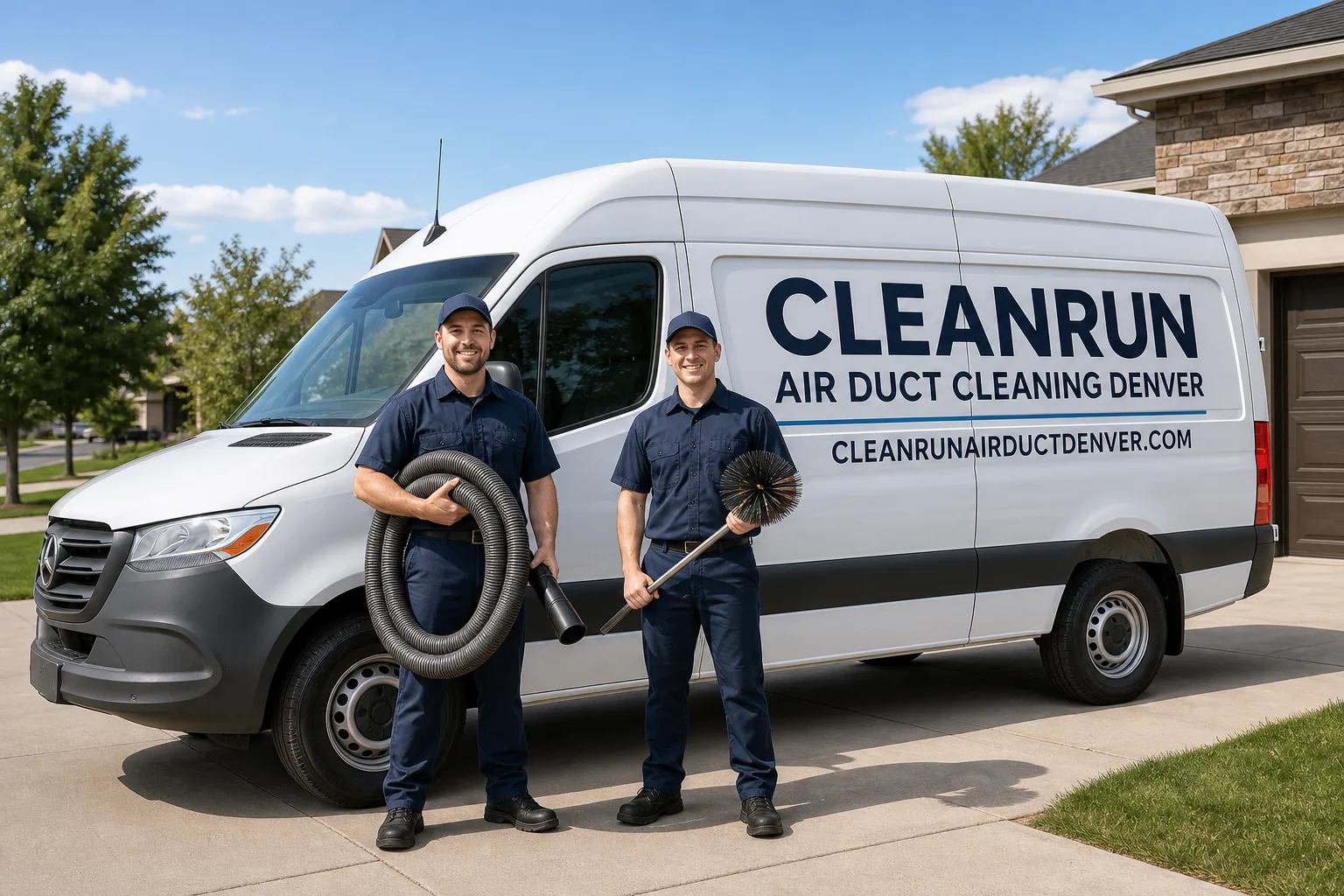
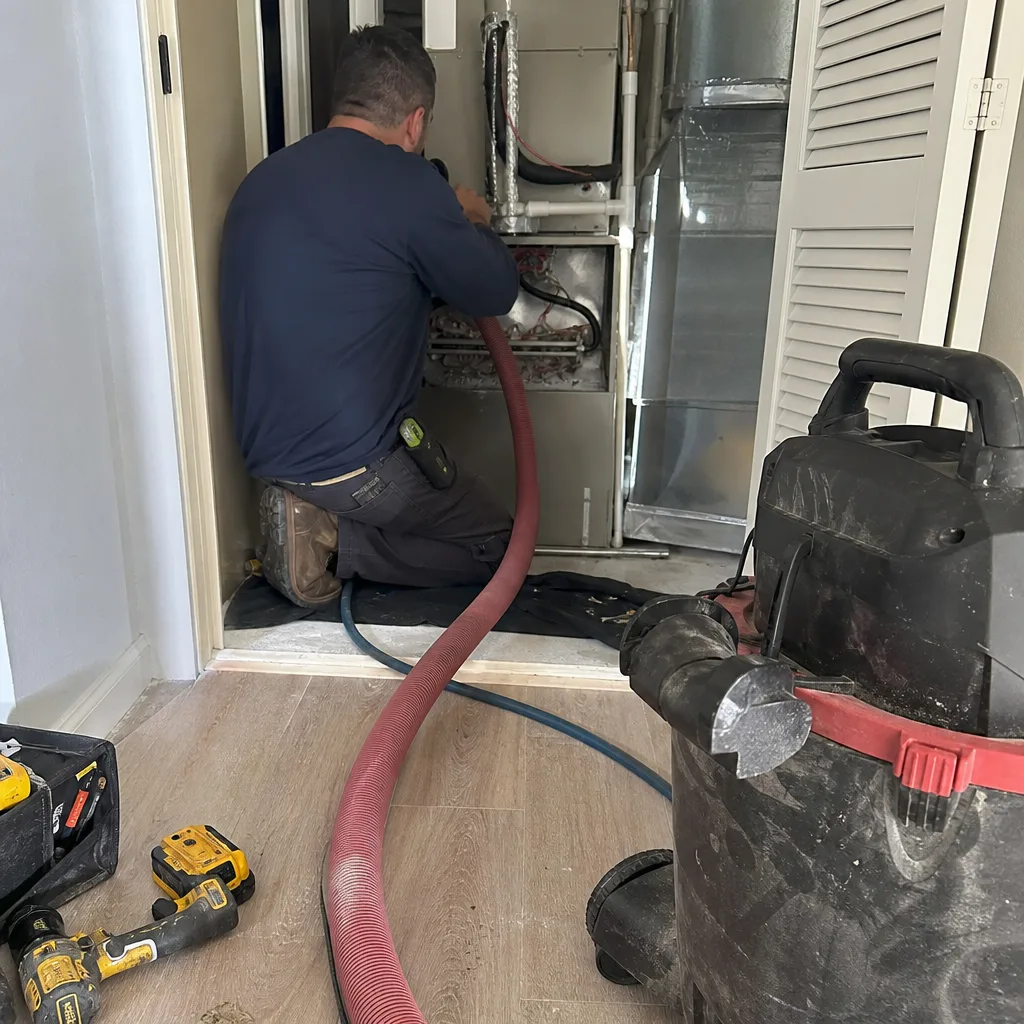
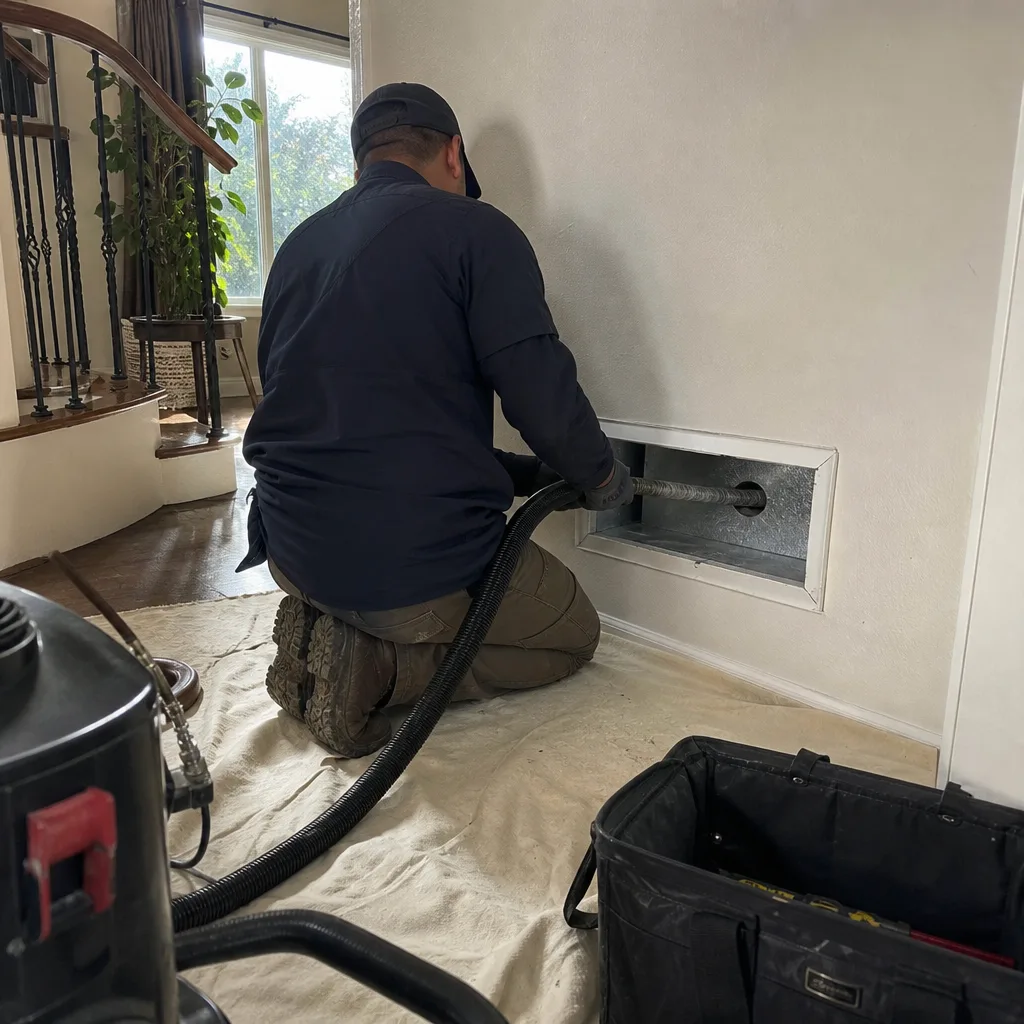
Whole-system duct and dryer vent check with before-and-after photos - you see exactly what came out of your vents
That "$99 whole-house special" is a bait ad - the real number appears once they are in your hallway, or the "clean" is a shop-vac at the register. We photograph the inside of your ducts before and after instead.
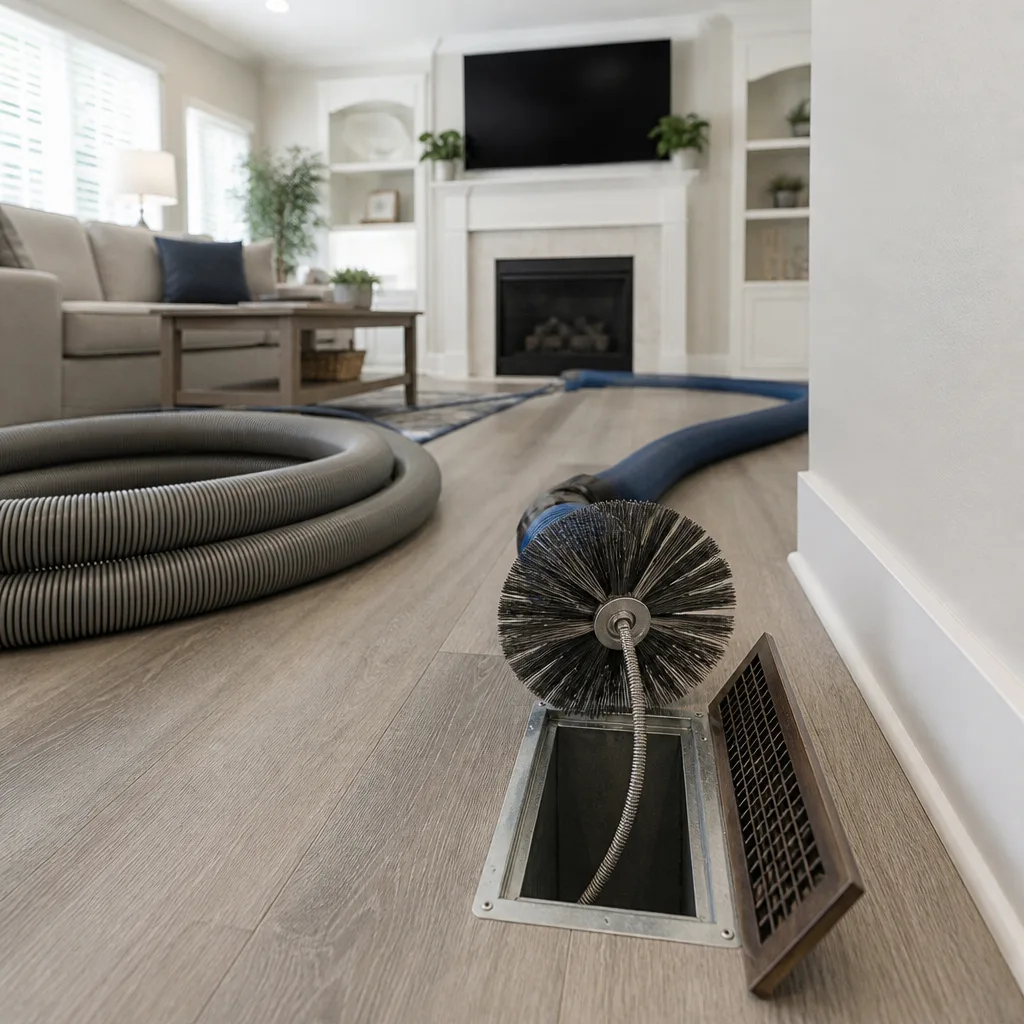
 Before
 After
After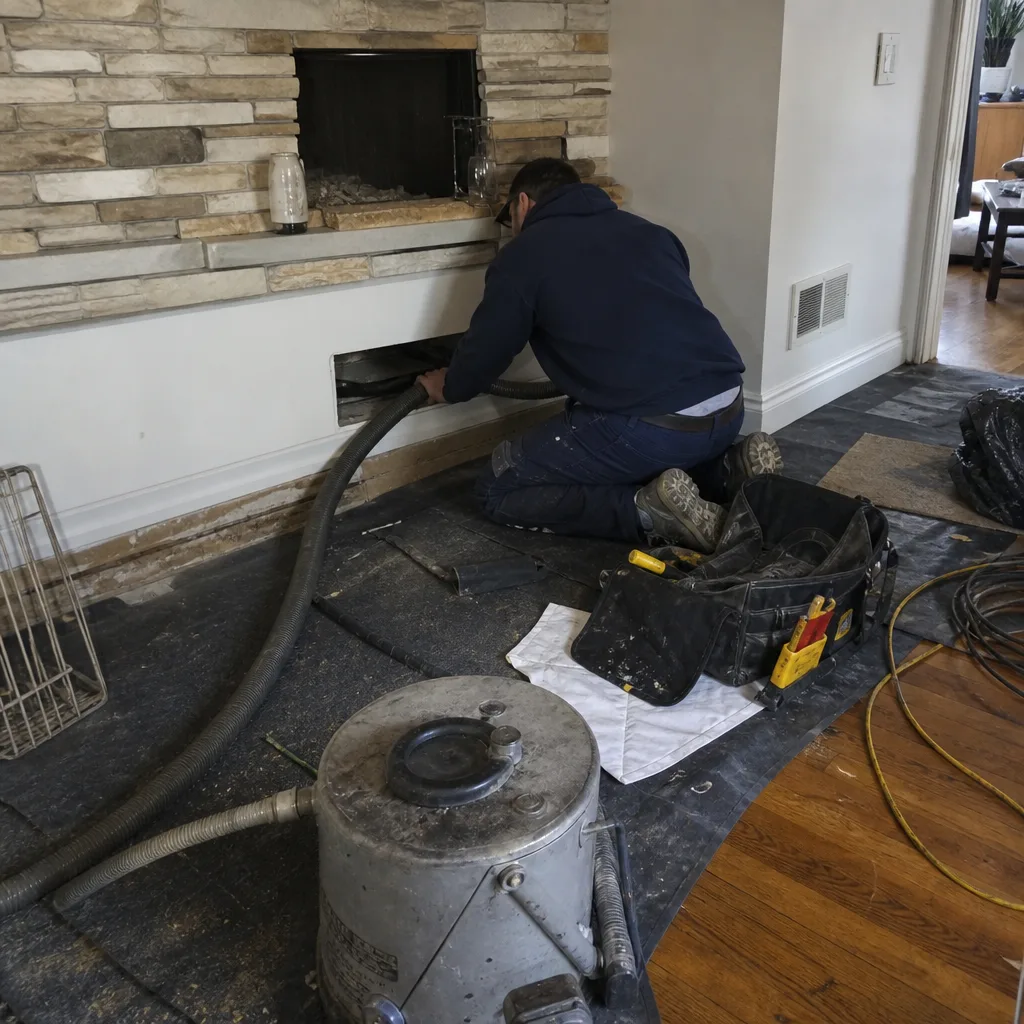 Before
 After
After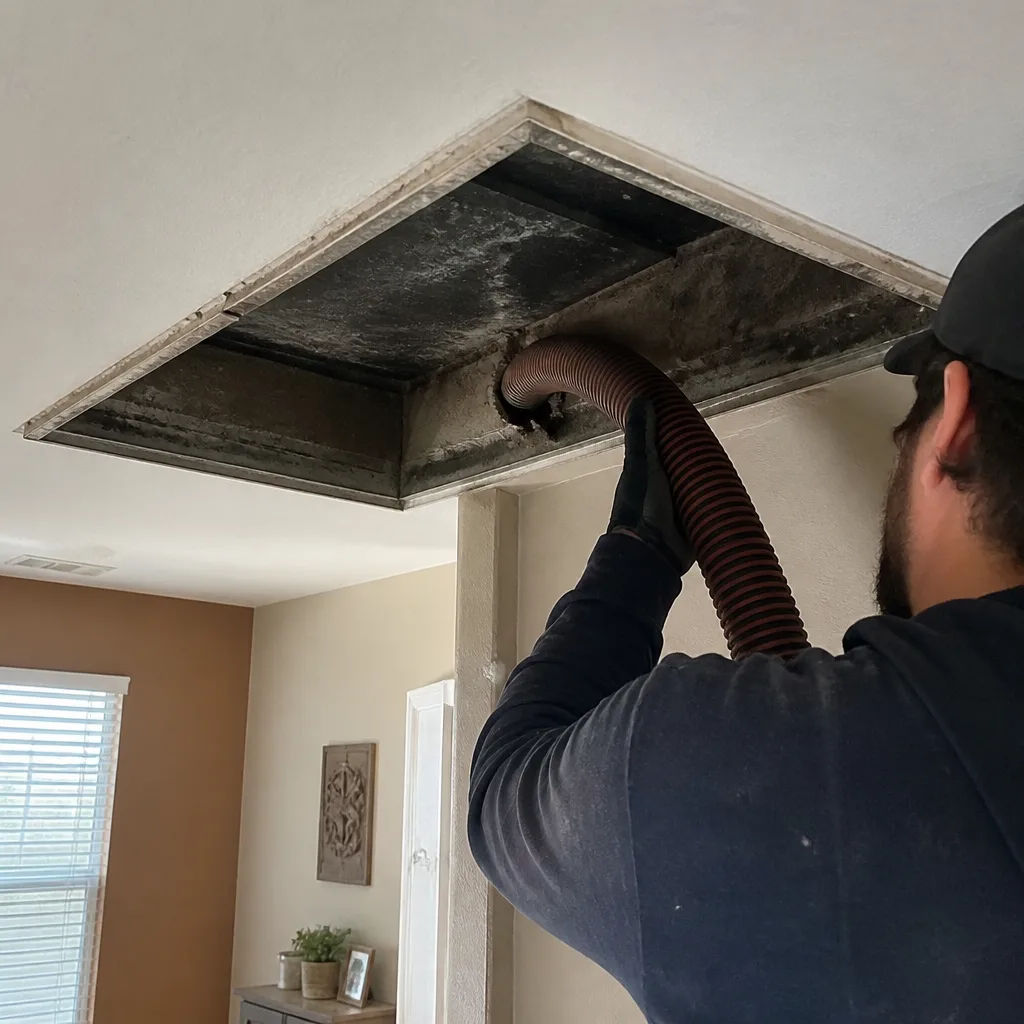 Before
 After
AfterHow Much Does Dryer Vent Cleaning Cost in Denver?
Dryer Vent Cleaning services in Denver, CO typically cost between $99 and $249 for a standard single-vent job, with most homeowners in metro Denver paying around $129 to $179. Jobs that require rerouting, bird nest removal, or vent replacement can run higher – from $250 to $500 or more depending on materials and labor involved.
At CleanRun Duct Repair & Cleaning, every job starts with a written price before any work begins – no exceptions, no “call for a quote” runaround. That’s Haven Standard Clause 1, and it applies to every home we service in Denver and the surrounding metro.
If you’ve received a written estimate from another company, bring it. We’ll put our own number next to it in writing at no charge – our Free Second Opinion applies to any written estimate in the Denver market.
Dryer Vent Cleaning Cost Breakdown (2026)
Dryer vent cleaning in Denver costs $99 to $249 for a standard single-vent job. Here is how the pricing breaks down by job type, so you know exactly what you’re paying for before agreeing to anything.
| Service | Typical Denver Price Range (2026) | Notes |
|---|---|---|
| Standard dryer vent cleaning (single vent, accessible) | $99 – $179 | Most common job type in older Denver neighborhoods like Washington Park, Sunnyside, and Stapleton. Covers negative-pressure extraction and photo documentation. |
| Long-run or routed vent cleaning (10+ ft, multiple elbows) | $149 – $249 | Common in newer construction in Highlands Ranch-adjacent Denver suburbs and multi-story homes. Extra elbows restrict airflow and require more time. |
| Bird nest or blockage removal | $75 – $150 (added to base cleaning cost) | Denver’s starlings and house sparrows nest in dryer vent terminations year-round. Removal requires a separate step and is priced as an add-on. |
| Vent cap/termination replacement | $45 – $95 (parts + labor) | Damaged or missing caps are a direct path for pests and moisture. Priced on-site after inspection, never added without your approval. |
| Dryer vent rerouting (new path through wall or cabinet) | $200 – $500+ | Required when a vent is improperly routed through an interior wall with no exterior exit, or when flexible vinyl duct needs to be replaced with rigid aluminum. |
| Booster fan installation | $175 – $350 (parts + labor) | Needed when total duct run length exceeds code-allowed footage. Denver’s higher-altitude builds sometimes require longer runs to exterior exits. |
| Full vent system replacement (rigid aluminum) | $300 – $650+ | When the existing ductwork is foil flex, accordion plastic, or severely crushed, replacement with rigid aluminum is the only code-compliant fix. |
What These Numbers Include
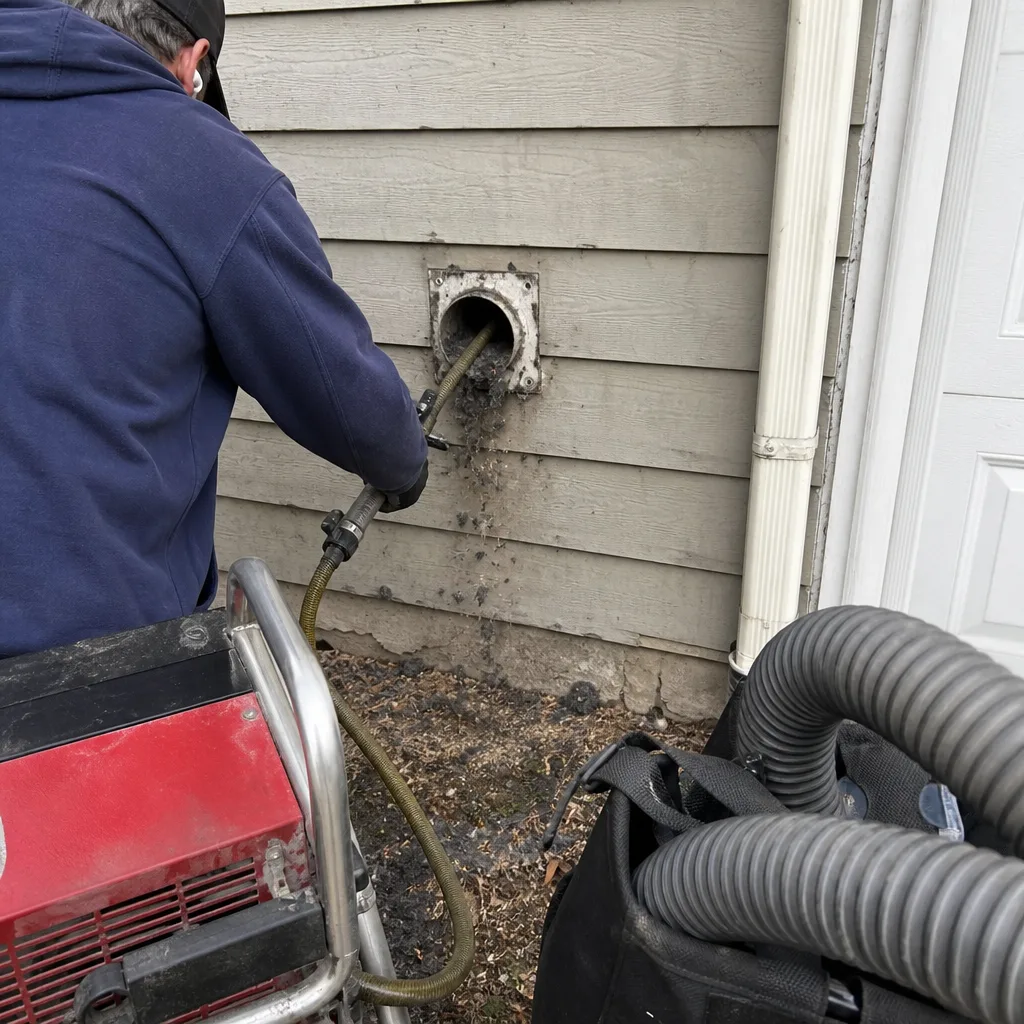
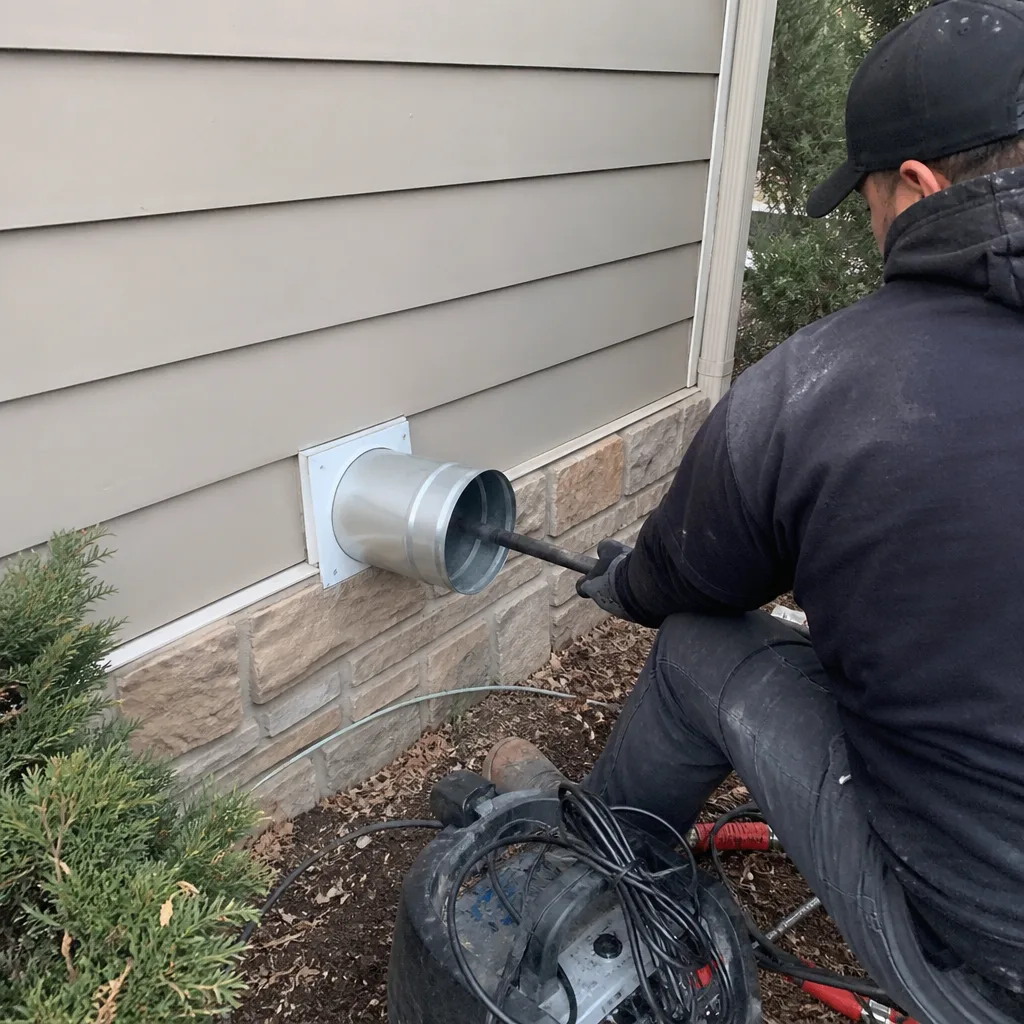
Every CleanRun job in Denver includes a Documented Photo Record – a set of before-and-after photographs of the interior of your vent run, delivered to you as a standard part of the job record. You’ll see the lint accumulation, debris location, and condition of your duct wall before a single piece of equipment goes in, and again after extraction is complete. That’s not a premium add-on; it’s how every job works, and it has been since our first job in 2013.
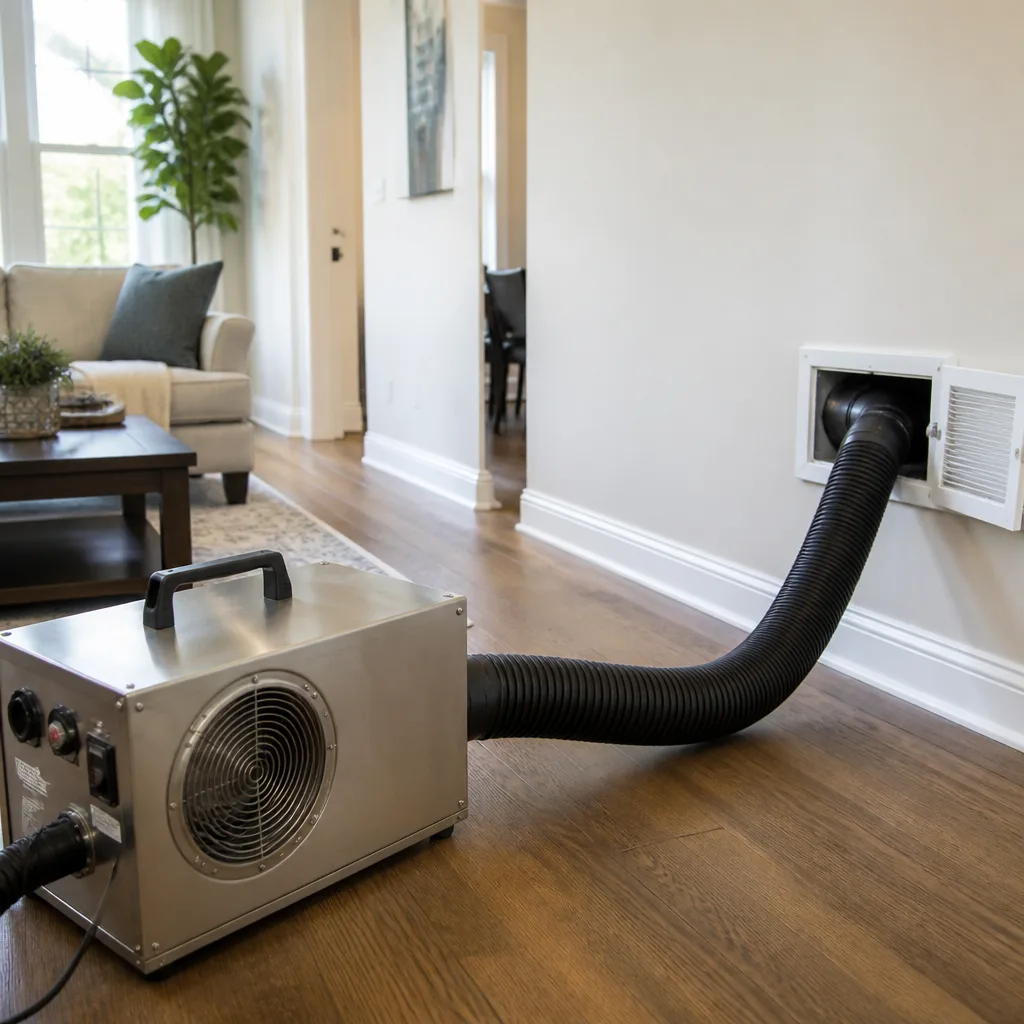
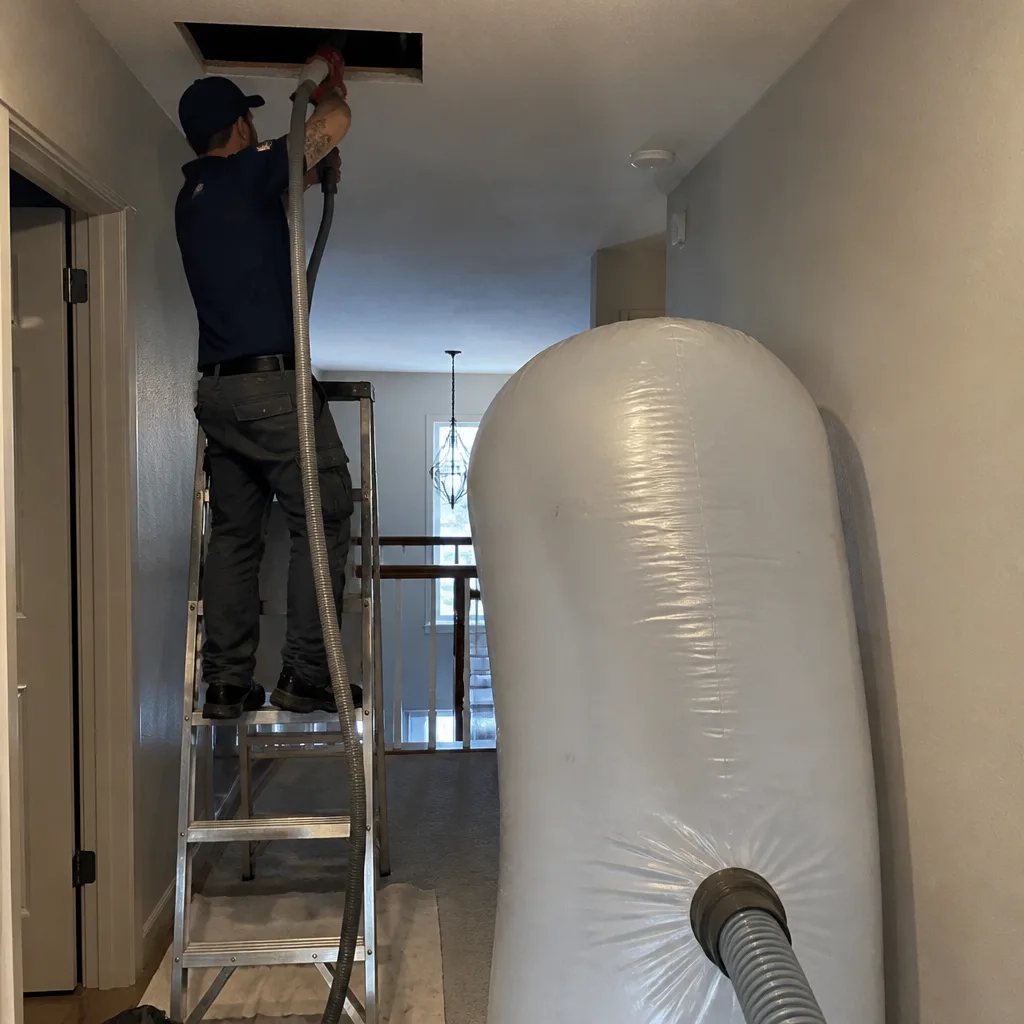
We use Rotobrush agitation systems combined with negative-pressure extraction equipment – the negative-pressure step means a powered vacuum draws debris toward the termination point while the brush loosens buildup from the duct walls, rather than pushing lint further into the system. The result is measurable: most vents show a return to near-manufacturer airflow capacity after a proper cleaning.
Why the $79 Coupon Is a Different Product
Denver homeowners have seen $49 and $79 dryer vent cleaning coupons circulate on social media and in mailer packs. Those prices are real – they’re just not for the same job. A standard shop-vac-and-brush visit with no camera, no documentation, and no written scope is a fundamentally different service than a documented, photographed, negative-pressure extraction with a written price and a 365-Day Done Right Promise behind it. Both exist. They’re just not comparable on price alone.
CleanRun’s written price covers everything in the scope before the technician starts. If the camera reveals a blockage that changes the scope, you’re told in writing before any additional work begins. That’s Haven Standard Clause 1 – it doesn’t have exceptions.
What Affects Dryer Vent Cleaning Pricing in Denver
Pricing isn’t arbitrary – it reflects actual variables in your home’s vent configuration, location, and condition. Here are the six factors that most often move the number up or down in the Denver market.
- Vent run length and number of elbows. International Residential Code caps dryer duct runs at 35 feet total, with each 90-degree elbow reducing that allowance by 5 feet. In Denver’s older housing stock – particularly the 1940s and 1950s bungalows in Berkeley, Barnum, and Villa Park – ductwork was often installed before these code limits existed, and runs can exceed 25 feet with multiple bends. Longer runs take more time and equipment passes to clear.
- Duct material. Rigid aluminum duct is the easiest to clean and holds its shape under agitation. Foil flex – common in Denver homes built or renovated between 1985 and 2005 – is prone to crushing, which traps lint at the compression point. Accordion plastic duct, which was sold in big-box stores through the mid-2000s, is no longer code-compliant for dryer exhaust and frequently needs replacement rather than cleaning. Material affects both the time required and whether cleaning is sufficient or replacement is needed.
- Vent termination location. A ground-level exterior termination on the side of a house is straightforward. A rooftop termination on a two-story Denver home adds time, safety equipment requirements, and in some cases a second technician. Rooftop exits are more common in Denver’s newer infill construction and townhome developments in RiNo, Cole, and the areas around Colfax where lot sizes push the duct path upward.
- Blockage type and severity. Lint accumulation is routine. A compacted lint clog at an elbow is more labor-intensive. A bird nest at the termination cap – extremely common in Denver given the city’s starling and sparrow populations – requires manual removal before cleaning can proceed and is priced separately. In early spring, our technicians in Baker and Congress Park regularly pull nests that have been building since late fall.
- Time since last cleaning. The National Fire Protection Association recommends annual dryer vent inspection and cleaning. Denver homes that haven’t been serviced in three or more years tend to show lint accumulation at multiple points along the run, not just at the first elbow. A heavily loaded vent takes longer to clear and may require multiple equipment passes.
- Vent accessibility. Most dryer vents exit through a laundry room wall or floor. When the dryer is stacked, built into cabinetry, or located in a finished basement with limited clearance, setup and breakdown time increases. In Denver’s growing market for condo conversions in Capitol Hill and the Highlands, stacked units in tight laundry closets are a common configuration that adds to the base cleaning time.
BeforeAfterDenver’s Altitude and Dry Climate – What It Means for Your Dryer Vent
Denver sits at 5,280 feet. That’s not just trivia – it has a measurable effect on how dryers and their vents perform. At altitude, air is less dense, which means dryer heating elements work harder to achieve the same evaporation that happens at sea level. The result is more heat cycling, longer dry times (a common complaint from people who move to Denver from lower elevations), and in some cases, more lint generation per cycle as the dryer runs longer to achieve the same result.
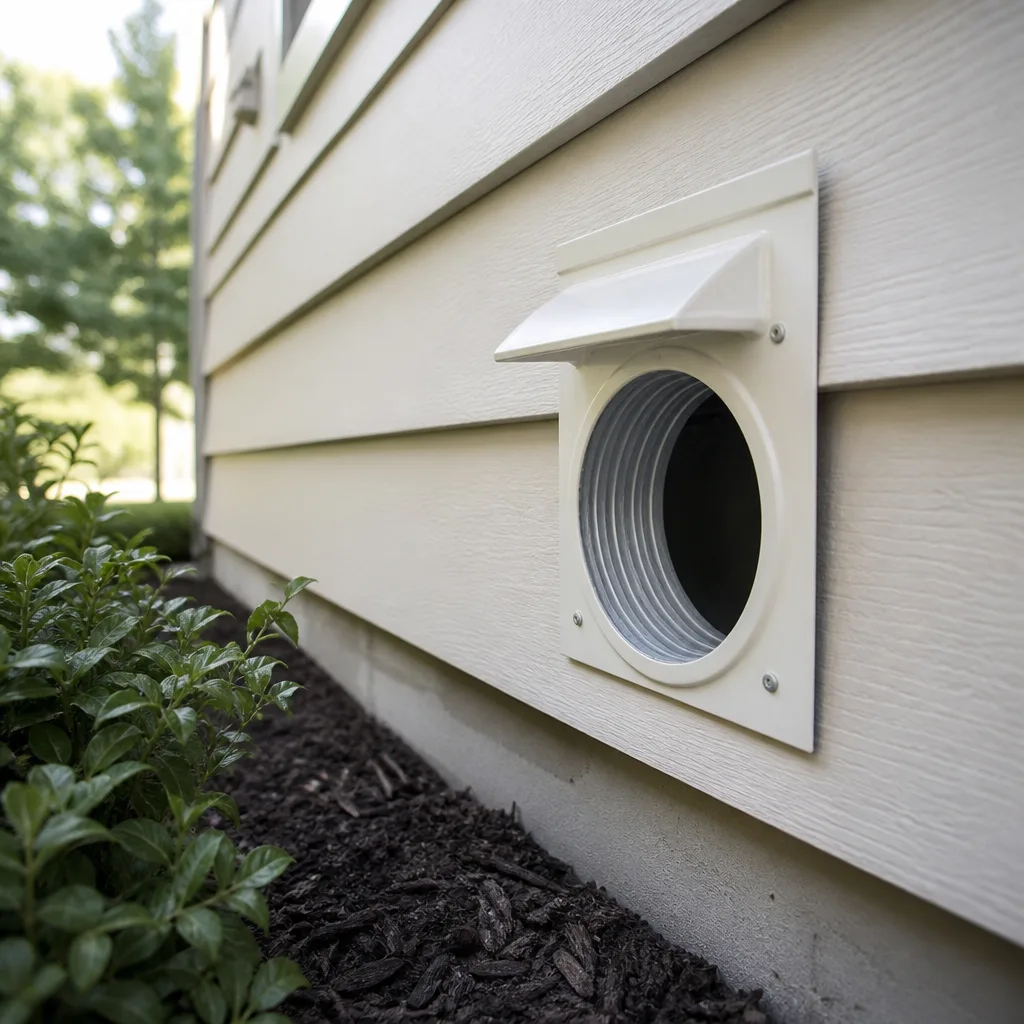
Denver’s semi-arid climate – roughly 300 sunny days a year and annual precipitation well below the national average – means vent termination caps experience significant UV exposure and temperature swings. Plastic caps crack. Metal caps corrode at the hinge. A compromised cap is the most common entry point for birds and pests, and it’s something we document photographically on every Dryer Vent Inspection. If the cap needs replacement, you’re told the price in writing before we do anything.
Winter temperature swings also matter. Denver regularly swings 40 to 50 degrees Fahrenheit in a single day during shoulder seasons. That thermal cycling causes flexible duct connections to loosen over time, creating small gaps where lint escapes into wall cavities – a fire hazard and a condition that doesn’t resolve with cleaning alone.
How to Save on Dryer Vent Cleaning in Denver
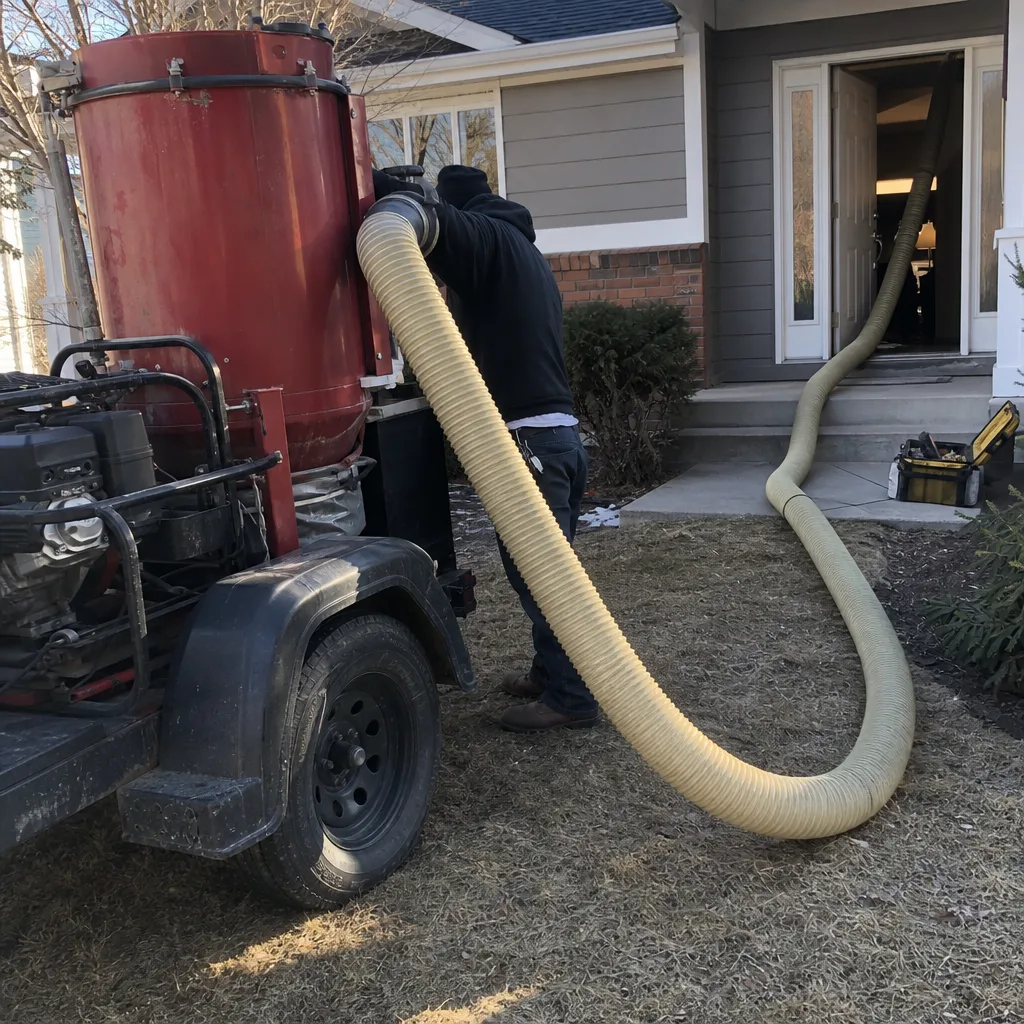
There are legitimate ways to keep costs down. There are also ways that look like savings but end up costing more when a vent fire or HVAC damage follows a shortcut. Here’s the practical version.
Get a Written Price Before You Agree to Anything
This seems obvious, but a significant number of Denver homeowners report being given a verbal price at the door and then presented with a higher number at the end of the job. A written price before any work starts is the only version that’s enforceable. At CleanRun, it’s not a policy subject to exceptions – it’s Haven Standard Clause 1, and it applies to every job we take. Call (720) 799-2292 and we’ll give you a written price over the phone based on your vent configuration before we arrive.
Use Your Free Second Opinion
If you’ve already received a written estimate from another Denver duct or dryer vent company, CleanRun will put our own written number next to it at no cost. This isn’t a negotiating tactic – it’s a direct comparison. If the other company’s scope and ours are the same, you’ll see it on paper. If they differ, you’ll know exactly why before making any decision.
Don’t Defer Cleaning Past the Recommended Interval
Annual cleaning costs $99 to $179 for a standard Denver home. A dryer vent fire restoration – including drywall repair, smoke remediation, and appliance replacement – runs into the thousands. Lint fires are not rare: the U.S. Fire Administration attributes tens of thousands of residential fires per year to dryer vent accumulation. Annual cleaning is the cost-effective interval.
Schedule Before Nesting Season
In Denver, European starlings begin scouting nesting sites as early as late February. A cleaning completed in January or early February often avoids the bird nest removal add-on entirely. The same job in April or May regularly requires that additional step. The difference is $75 to $150 on the total invoice.
Combine Services When a Technician Is Already in Your Home
If you’re scheduling dryer vent cleaning, it’s worth asking about air duct cleaning at the same visit. Travel and setup costs are already absorbed. You can learn more about what a full Dryer Vent Cleaning in Denver service includes, or visit our home to see the full range of services CleanRun offers across the metro.
Ask What the Cleaning Includes Before Agreeing to a Price
A cleaning that includes a Documented Photo Record, a written scope, and a 365-Day Done Right Promise is not the same product as a cleaning that includes none of those things. Ask the question directly: “What do I receive in writing after the job is done?” The answer tells you what you’re actually buying.
CleanRun’s 365-Day Done Right Promise – What It Actually Means
Most service companies offer some version of a satisfaction guarantee. The 365-Day Done Right Promise is specific: if the work isn’t right, CleanRun makes it right. That commitment is in writing on every job – it’s not subject to manager approval, it doesn’t expire in 30 days, and it doesn’t require the customer to prove anything beyond the fact that the problem exists.
In practical terms, it means that if your dryer vent shows restricted airflow within a year of a CleanRun cleaning, we come back and fix it. If the photo record we left you shows a clean duct and your appliance is still running hot, we diagnose the cause at no charge. The Promise covers the work, not just the visit.
This matters in Denver specifically because of the nesting and cracking issues described above. A vent that’s clean in February can be partially blocked by a starling nest by May. The Promise draws a clear line between what CleanRun is responsible for and what is a new condition – and the before-and-after photo record is the objective record that makes that distinction possible without an argument.
What a Documented Photo Record Actually Shows
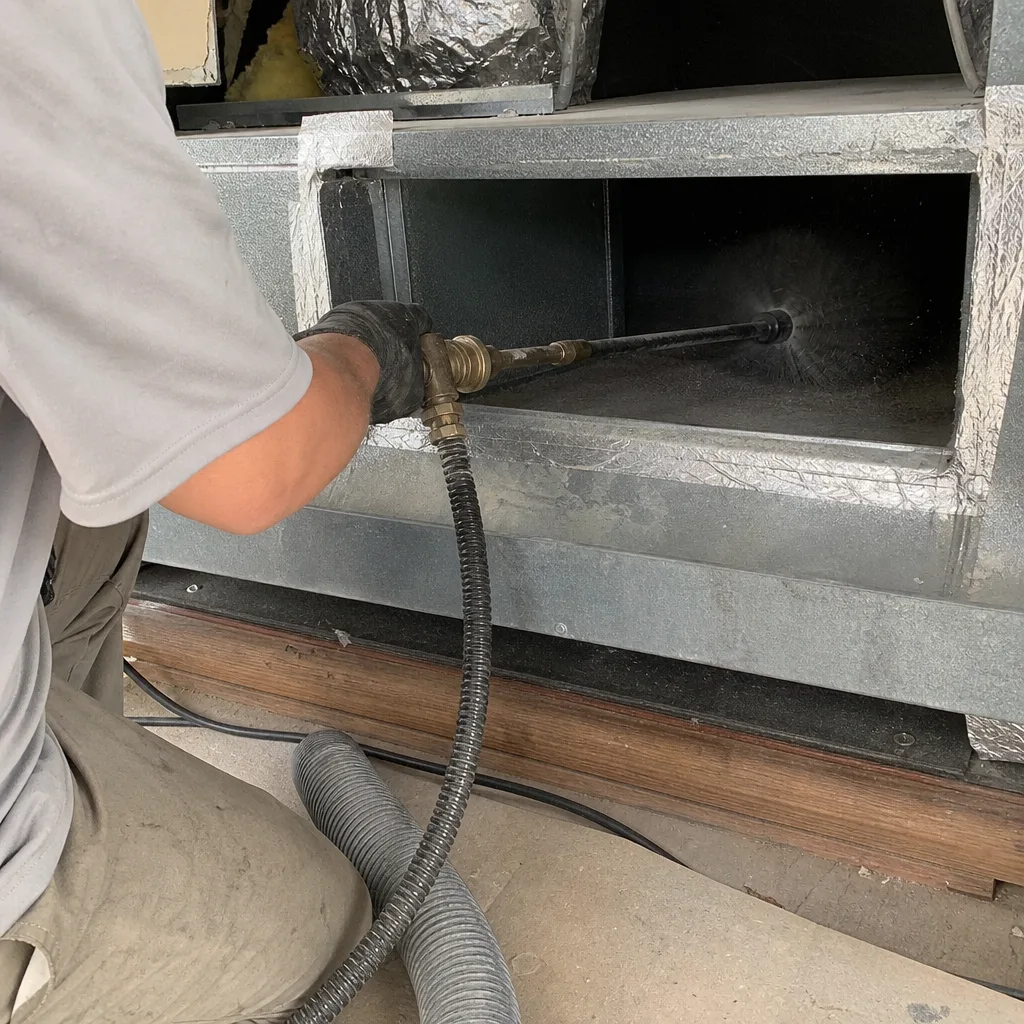
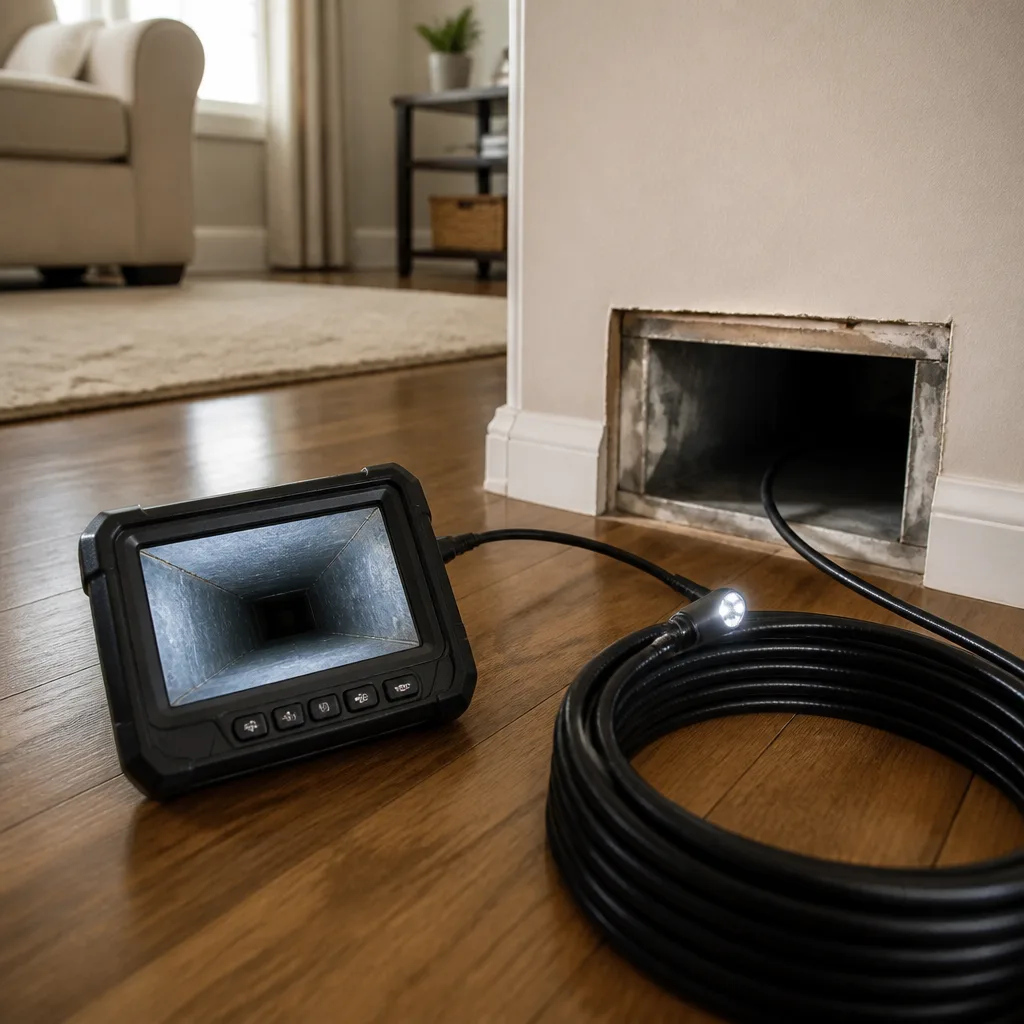
Before any equipment enters your vent, a CleanRun technician photographs the interior of the duct run – the lint accumulation, debris type, any visible damage or obstruction, and the condition of the duct wall. These images are captured at multiple points along the run, not just at the connection behind the dryer.
After cleaning, the same points are photographed again. You receive both sets. “The inside of your vent is clean now” is not documentation. A side-by-side photograph of a duct wall before and after negative-pressure extraction is documentation. That’s the difference between work you’re told was done and work you can verify was done.
This practice has been standard on every CleanRun job since 2013. It originated because Tomas Reyes believed – and still believes – that a customer who can see the before photo has no reason to take the technician’s word for anything. The evidence does the talking.
How CleanRun Prices Dryer Vent Cleaning in Denver
The written price you receive before any CleanRun technician starts work is based on three things: the vent configuration you describe (or that we observe during a pre-job walkthrough), the equipment required to clean it properly, and the time the job is expected to take. There is no “standard rate with add-ons revealed mid-job.” If the camera finds something that changes the scope – a collapsed section, a nest, a disconnected elbow – you’re given a new written price before that additional work proceeds. Always.
Equipment used on every dryer vent cleaning job includes Rotobrush agitation systems and Nikro negative-pressure extraction units. These are trade-recognized tools with published specifications – you can look them up independently before agreeing to a job. CleanRun doesn’t use proprietary equipment with unverifiable performance claims, because Haven Standard Clause 1 means the price is in writing and the tools are identifiable.
FAQs – Dryer Vent Cleaning Cost in Denver
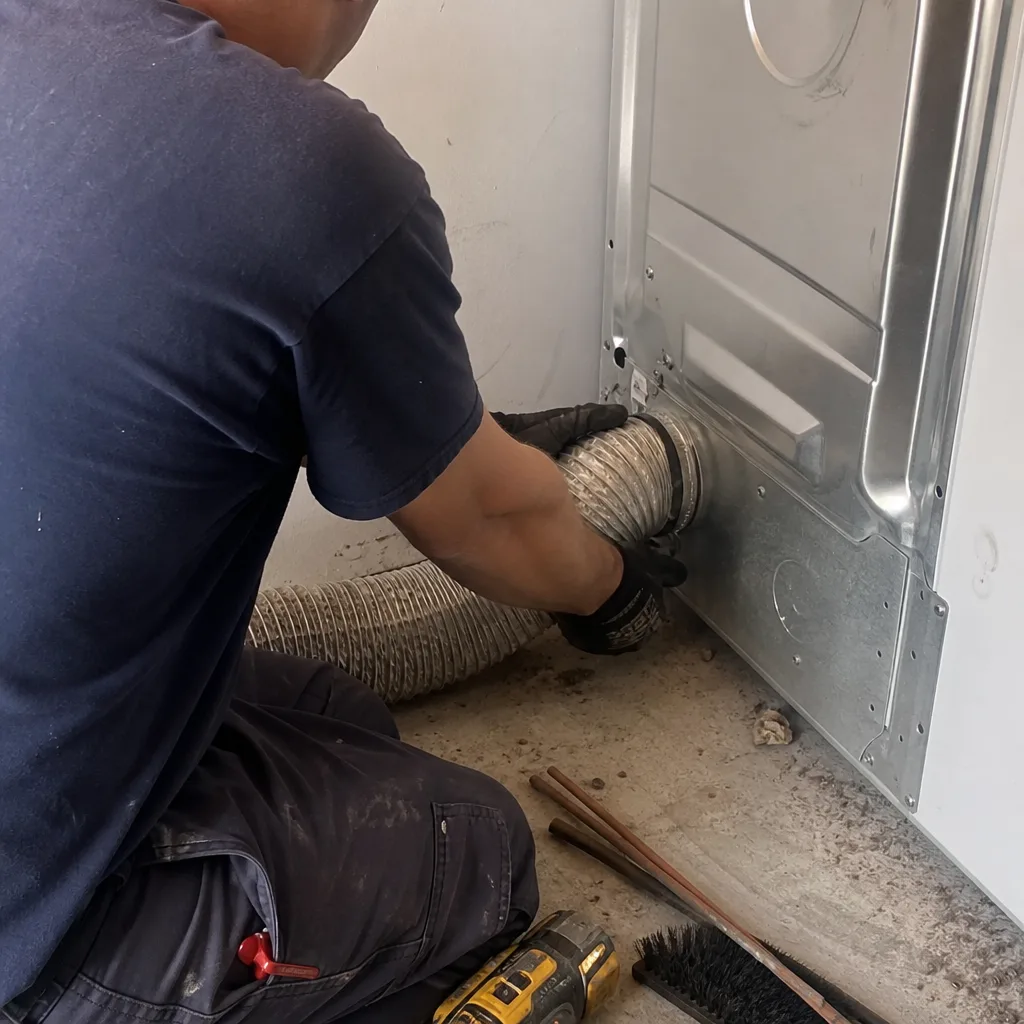
How much does dryer vent cleaning cost in Denver in 2026?
Dryer vent cleaning in Denver costs between $99 and $249 for a standard single-vent job, with most homes in the metro paying $129 to $179. Jobs requiring blockage removal, vent cap replacement, or rerouting can run $250 to $500 or more. At CleanRun, the written price is delivered before any work starts – call (720) 799-2292 for a written quote based on your specific vent configuration.
How often should dryer vents be cleaned in Denver?
Annual cleaning is the standard interval recommended by the National Fire Protection Association, and it’s the right answer for most Denver homes. Homes with longer vent runs (common in two-story infill construction in neighborhoods like RiNo and the Highlands), households doing more than five to six loads per week, or homes with pets should consider cleaning every six to eight months. Denver’s bird nesting season adds a practical reason to inspect in late winter before starlings establish nests at the termination cap.
Is dryer vent cleaning worth the cost?
A standard cleaning costs $99 to $179. A lint-related dryer fire – which the U.S. Fire Administration identifies as one of the most common causes of residential structure fires – costs far more in appliance replacement, smoke remediation, and structural repair, even before insurance considerations. Beyond fire risk, a restricted vent adds measurable time to every drying cycle, which increases energy use directly. The arithmetic is straightforward. Call (720) 799-2292 if you’d like a written price before deciding.
What’s included in a dryer vent cleaning from CleanRun?
Every CleanRun Vent Cleaning in Denver includes a written price before work starts (Haven Standard Clause 1), negative-pressure extraction using Rotobrush and Nikro equipment, a Documented Photo Record of the duct interior before and after cleaning, and the 365-Day Done Right Promise in writing. If the camera reveals a condition that changes the scope – a blockage, a damaged cap, a disconnected elbow – you receive a new written price before that work proceeds. There are no mid-job surprises.
Why are some Denver dryer vent cleaning prices so low?
$49 to $79 dryer vent cleaning offers are real – they’re just a different service. A shop-vac-and-brush visit with no camera, no photo documentation, no written scope, and no guarantee behind it can legitimately be priced at $49. It’s not the same job as a documented, photographed, negative-pressure extraction with a written price and a year-long promise. Both exist in the Denver market. The question is what you’re buying, not just what the number on the coupon says.
Can bird nests be removed during a dryer vent cleaning in Denver?
Yes, and it’s one of the most common add-on services we perform, particularly in Denver neighborhoods with older housing stock and roof-level or side-wall terminations. Bird nest removal is priced as a separate line item – typically $75 to $150 added to the base cleaning cost – and is always quoted in writing before the work is done. The best way to avoid the add-on cost is to schedule cleaning in January or early February, before Denver’s starlings begin nesting in late February and March.
Key Takeaways
- Dryer vent cleaning in Denver costs $99 to $249 for most standard jobs, with the majority of metro homes falling in the $129 to $179 range.
- Add-ons like bird nest removal ($75 to $150), vent cap replacement ($45 to $95), and rerouting ($200 to $500+) are priced as separate line items – always in writing, always before work begins.
- Denver’s altitude, semi-arid climate, and bird activity create specific conditions that can affect vent performance and cleaning frequency compared to lower-elevation markets.
- A written price before any work starts is not optional at CleanRun – it’s Haven Standard Clause 1.
- Every job includes a Documented Photo Record and is backed by the 365-Day Done Right Promise in writing.
- The $49 to $79 coupon market exists, but it’s a different product – no documentation, no guarantee, no written scope.
- Annual cleaning is the right interval for most Denver homes; households near nesting habitat or with high laundry volume should consider every six to eight months.
Get a Written Price for Your Denver Home
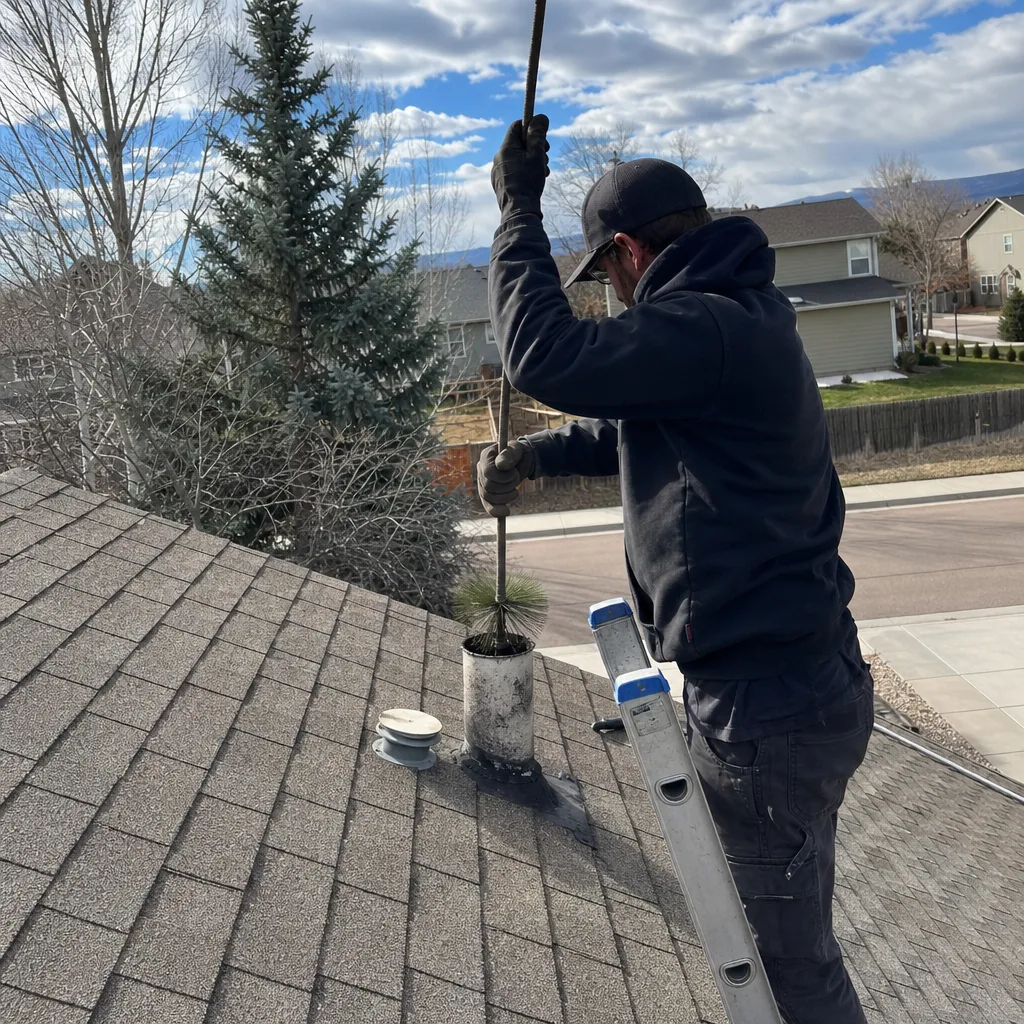
CleanRun Duct Repair & Cleaning has served more than 52,000 homes since 2013, every one with a written price before work started and a documented photo record when the crew left. Every technician is background-checked, uniformed, and identified by name before arrival – Haven Standard Clause 3: Verified Crews.
If you’re ready for a written price on dryer vent cleaning in Denver, call (720) 799-2292. A live person answers every call, and you’ll have a written number before any technician arrives at your door. If you have a written estimate from another company, bring it – the Free Second Opinion is available at no cost and puts both numbers on paper so you can make a direct comparison.
There’s no “call for a quote” here. The price is the price, it’s in writing, and it doesn’t change when the work starts.
Written by Tomas Reyes, Owner at CleanRun Duct Repair & Cleaning, serving Denver, CO since 2013.
Pricing reflects the Denver market as of 2026. CleanRun Air Duct Cleaning Denver offers free estimates – call (720) 799-2292.
What Our Customers Say
"The before and after photographs of each run are the reason I used them. You cannot argue with what came out of the return."
- Marguerite O."My allergies genuinely improved. They also told me the ducts did not need sealing, which I had been quoted for elsewhere."
- Petra K."On time, professional, and explained what the readings meant without talking down to me."
- Warren E.