
Last updated September 23, 2026
Whole-system duct and dryer vent check with before-and-after photos - you see exactly what came out of your vents
That "$99 whole-house special" is a bait ad - the real number appears once they are in your hallway, or the "clean" is a shop-vac at the register. We photograph the inside of your ducts before and after instead.
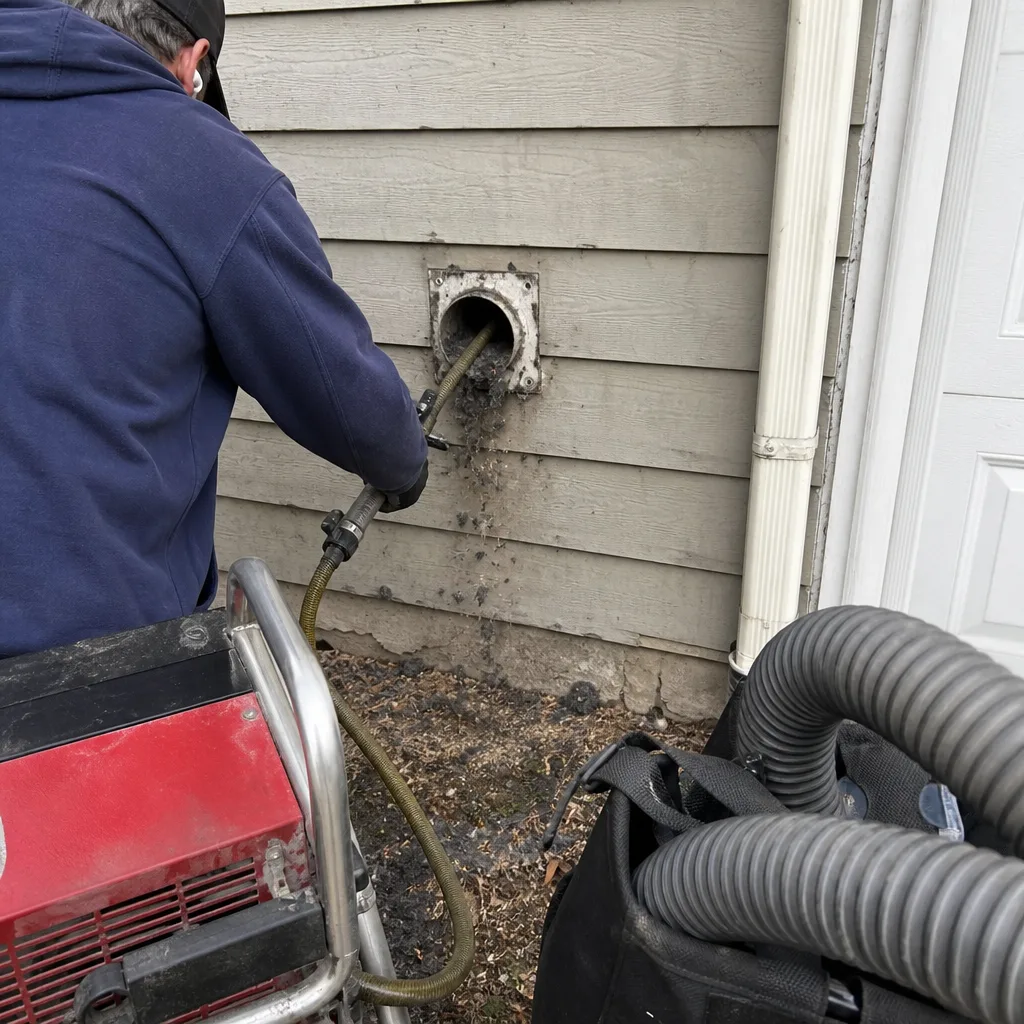 Before
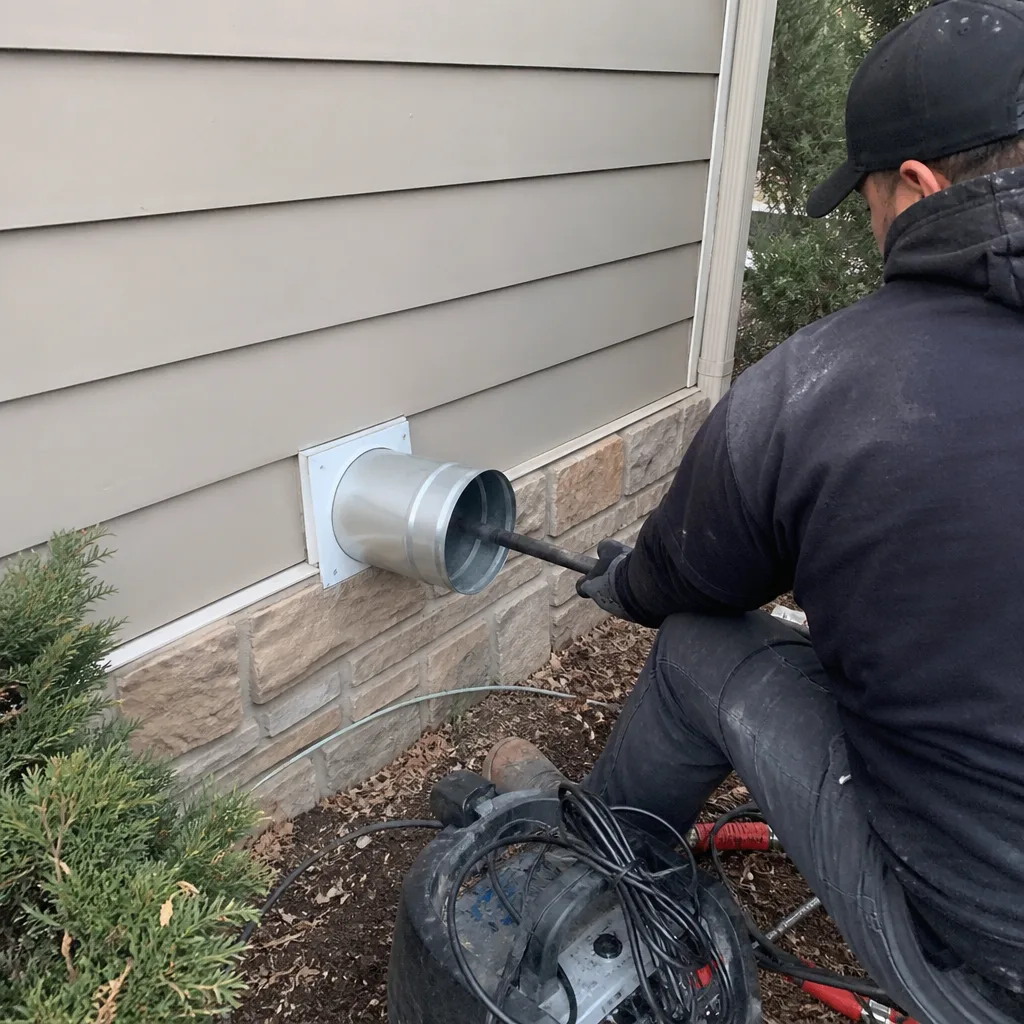 After
After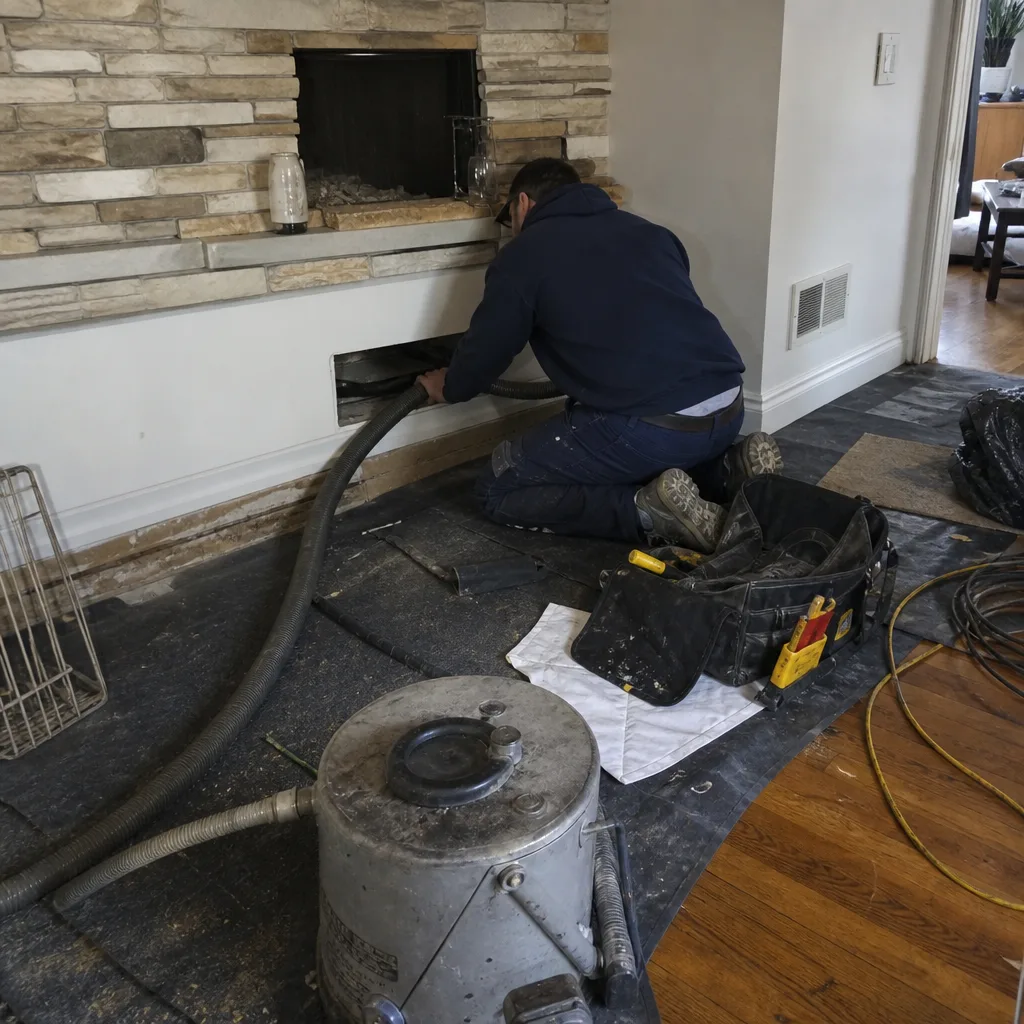 Before
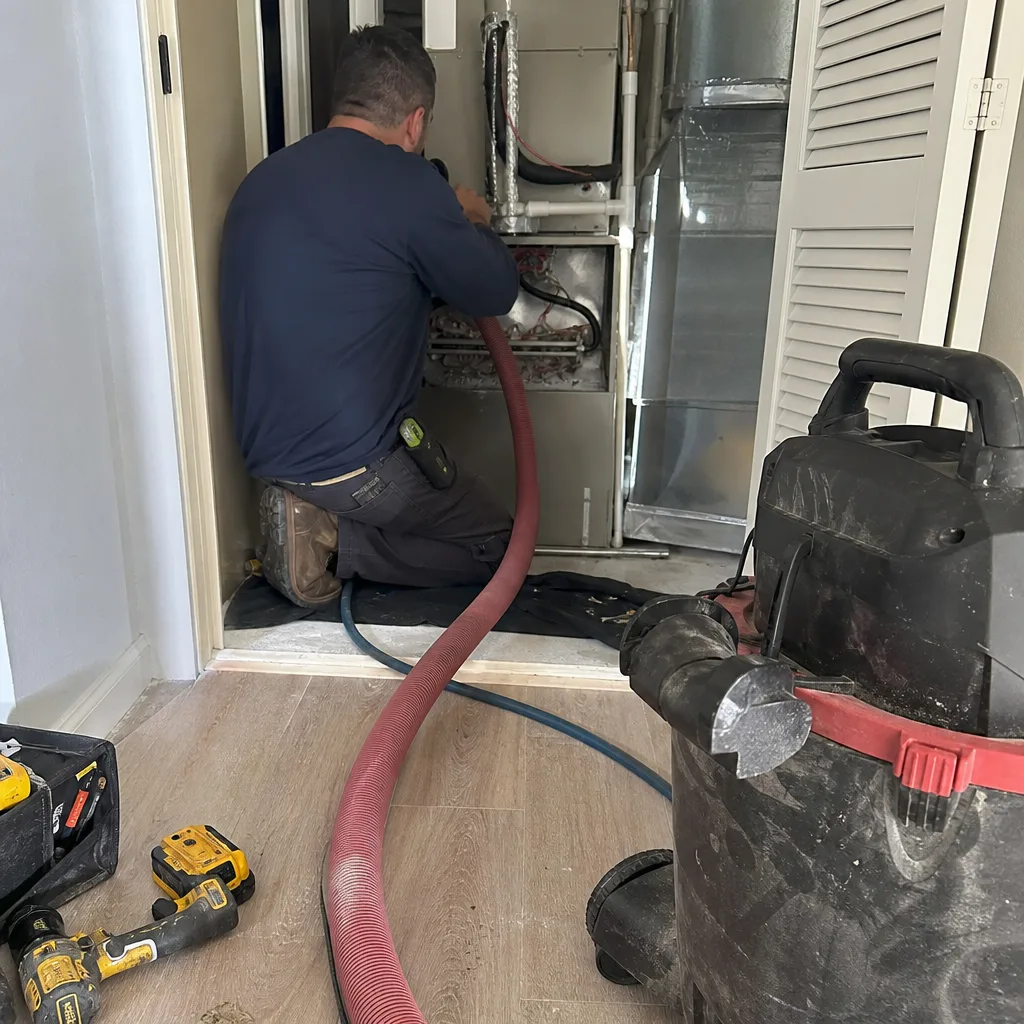 After
After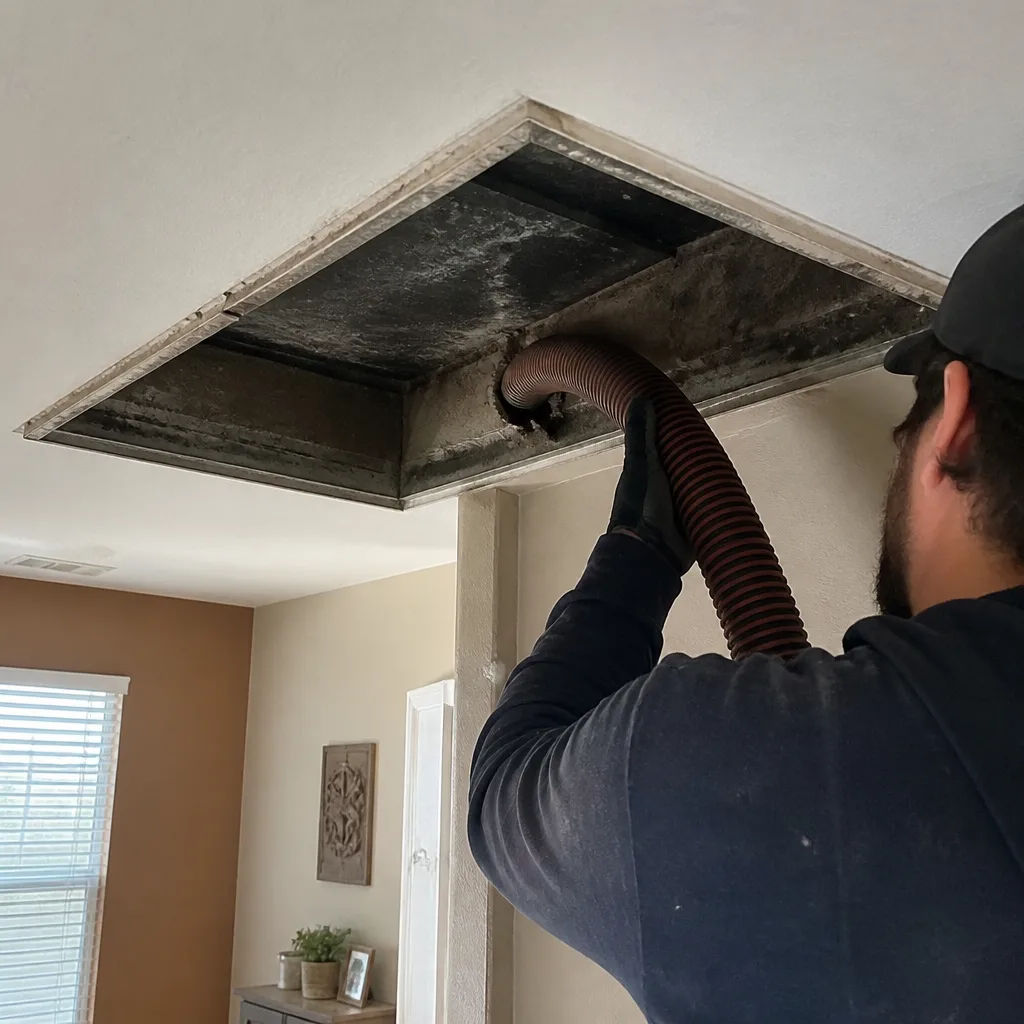 Before
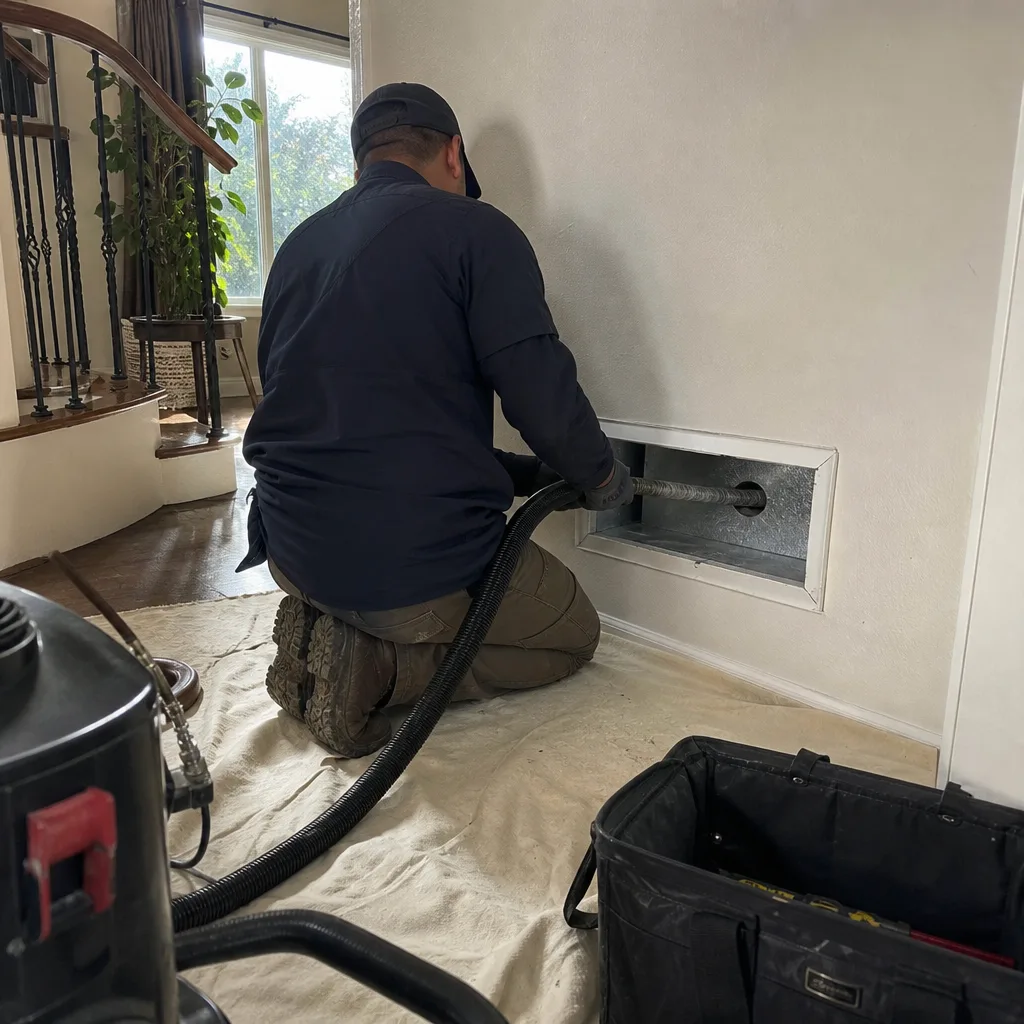 After
AfterSeasonal Air Duct Cleaning Care for Denver: Year-Round Homeowner’s Guide
Denver averaged 15 days of unhealthy air quality in 2023. Every one of those days pushed particulate through residential HVAC systems that filters only partially captured, and the accumulation pattern that creates is measurable if you know where to look. Most national duct cleaning guides treat all climates the same, but Denver’s combination of wildfire smoke seasons, six-month heating cycles, and rapid spring humidity swings produces a contamination calendar that looks nothing like Miami’s or Minneapolis’s. In this guide, we’ll map what enters your ductwork month by month, show you where to inspect it yourself, and explain why certain seasons in Denver create problems that others don’t.
Quick Answer
The best seasonal air duct cleaning schedule for Denver homeowners centers on three critical moments: a camera inspection of the return air plenum in late March during HVAC switchover, full system cleaning in early September after wildfire smoke season, and dryer vent cleaning every May before summer fire risk peaks. Most Denver homes need professional Air Duct Cleaning every 2-3 years, with annual plenum inspections in between.
Table of Contents
- January-February: Heating Season Debris Accumulation
- March-April: The HVAC Switchover Inspection Window
- May-June: Pre-Summer Preparation and Construction Dust
- July-August: Wildfire Smoke Season and Filter Bypass
- September-October: Post-Smoke Deep Cleaning
- November-December: Pre-Heating System Check
- Common Mistakes to Avoid
- When to Call a Professional
- Frequently Asked Questions
- The Bottom Line
BeforeAfterJanuary-February: Heating Season Debris Accumulation
By mid-January, most Denver furnaces have been running continuously for ten to twelve weeks. The air moving through your ductwork at 120-140 degrees carries more than heat. It carries loosened debris from the heat exchanger area, fragmented filter media that passed through a loaded MERV 8, and skin cells, textile fibers, and pet dander that settle during the system’s off-cycles and resuspend when the blower fires again.
Here’s what we’ve documented in Denver homes during January service calls. In Park Hill, a 1920s bungalow showed a 2-inch debris ridge at the first elbow of the main return, built up from twelve heating seasons without inspection. In Stapleton, a 2017 build had clean-looking registers but a return air plenum packed with construction dust that the original contractor never removed. The difference wasn’t the home’s age. It was whether anyone had looked inside with a camera.
Denver’s winter relative humidity typically runs 25-35%, far below the 50% threshold where mold becomes a concern. This is good news and bad news. The dry air prevents biological growth inside ductwork, but it also eliminates the moisture that would otherwise weigh down light debris and cause it to settle. Instead, static-charged particles cling to flex duct interiors, especially in the sagging sections common in attic installations across Congress Park, Hilltop, and the older ranch homes of southeast Denver. When the blower starts, those particles resuspend in pulses. You don’t see them, but they’re in the airstream.
What to check yourself in January:
- Remove a floor register in a heavily used room and photograph the duct opening with your phone’s flash on. Look for a dark ring around the duct perimeter where debris has accumulated past the register boot.
- Hold a flashlight at a low angle across the register face. Fine dust on the grille slats indicates the filter is loaded or improperly sealed.
- Check your filter’s fit in the return air grille or furnace cabinet. A 1/4-inch gap around a poorly sized filter allows unfiltered air to bypass entirely.
If you find more than surface dust, the debris is likely deeper in the run. This is where a documented camera inspection matters. At CleanRun, we photograph every duct run before and after work, and we’ve found that January inspections in Denver homes often reveal the year’s heaviest accumulation precisely because the system has been running hard with no break since October.
One more Denver-specific factor: the Front Range’s temperature inversions can trap wood smoke and vehicle exhaust in the metro basin for days. When outdoor PM2.5 spikes, your system pulls more of it inside. A MERV 11 or higher filter helps, but no residential filter captures everything. The particles that pass through begin coating your duct interiors from November forward.
March-April: The HVAC Switchover Inspection Window
Late March is the highest-value inspection moment in Denver’s entire duct maintenance calendar. Here’s why: your furnace has just completed its longest continuous run of the year, your air conditioner is about to start its own, and the debris left behind by heating season sits undisturbed in the transition period. It’s the only time you can see what six months of forced-air heating actually deposited without summer cooling airflow already redistributing it.
The critical inspection target is the return air plenum, the large sheet-metal chamber where all return ducts converge before entering the furnace. In our experience across 52,000+ homes, this single component reveals 80% of the duct problems that eventually affect air quality. The plenum collects everything: filter bypass debris, settled construction dust in newer homes, deteriorated flex duct liner in older installations, and in Denver specifically, fine particulate from wildfire smoke seasons past that never fully evacuated.
What a proper March plenum inspection looks like:
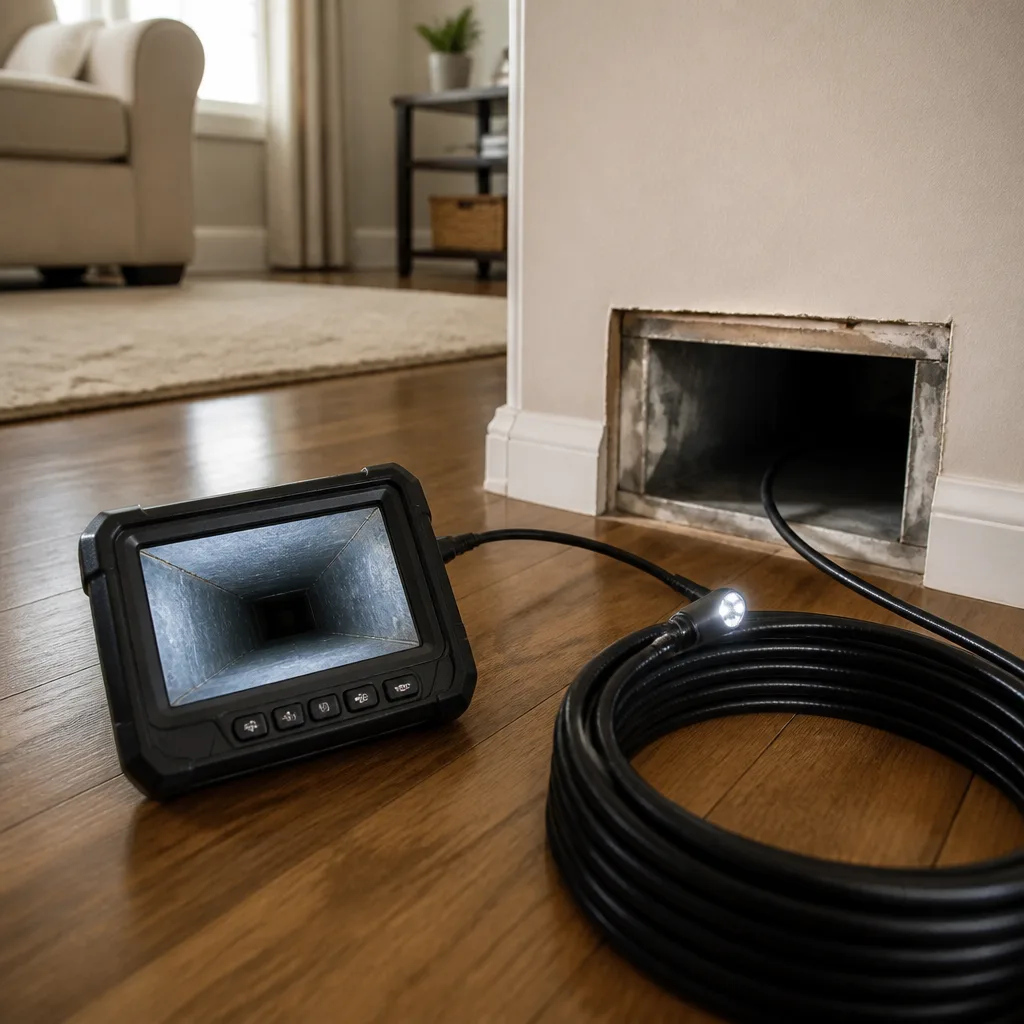
- A technician removes the furnace access panel and inserts a borescope camera through the filter slot or a plenum access port.
- The camera documents the plenum floor, walls, and the interior of each return duct connection.
- Photos are delivered to the homeowner as part of the standard job record, with debris levels noted by location.
In Cherry Creek and Glendale, where many homes were built during the 1980s flex duct boom, we regularly find collapsed or disconnected return ducts inside finished basements. The homeowner’s first clue is a room that never reaches temperature, but the root cause is visible only from inside the plenum. In newer developments like Central Park and Green Valley Ranch, the issue is often leftover construction debris: drywall dust, wood chips, and insulation fragments that the builder’s rough cleaning never reached.
The March timing matters for another Denver-specific reason: our spring humidity swings. A March day can start at 20% relative humidity and spike to 60% by afternoon as a Front Range storm moves through. Those rapid changes cause expansion and contraction in metal ductwork, loosening debris that was previously adhered. A camera inspection catches this before the cooling season begins circulating it.
We schedule more plenum inspections in March than any other month. Not because it’s the only time to clean, but because it’s the only time to see the full picture of what heating season left behind. Haven Standard Clause 1 requires a written price before any work starts, so if the inspection finds nothing actionable, you pay only for the inspection itself. No phantom debris, no invented problems. The photo record shows what the camera saw.
May-June: Pre-Summer Preparation and Construction Dust
May in Denver brings two forces that affect ductwork: rising outdoor dust from landscaping and construction season, and the annual spike in dryer vent fire risk as lint accumulation meets higher ambient temperatures. This is the month to address both.
Construction dust is a particular problem in Denver’s rapidly developing neighborhoods. In Berkeley, Sunnyside, and the areas around the I-70 corridor, new builds and major renovations generate fine particulate that enters neighboring HVAC systems through outdoor air intakes and window gaps. We’ve documented this repeatedly: a home three doors down from an active construction site can show measurable drywall dust in the return plenum within six weeks. The particles are small enough to pass through standard filters and large enough to settle in duct runs with low airflow velocity.
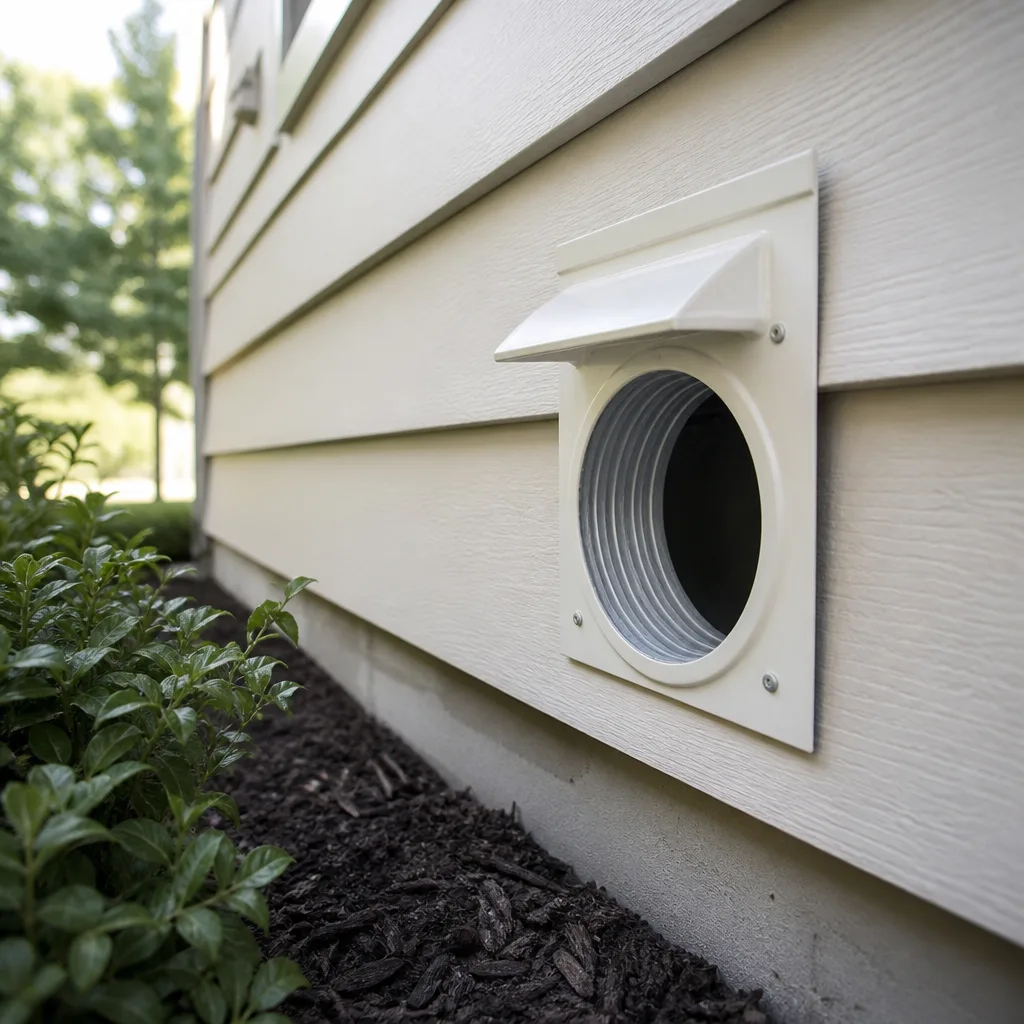
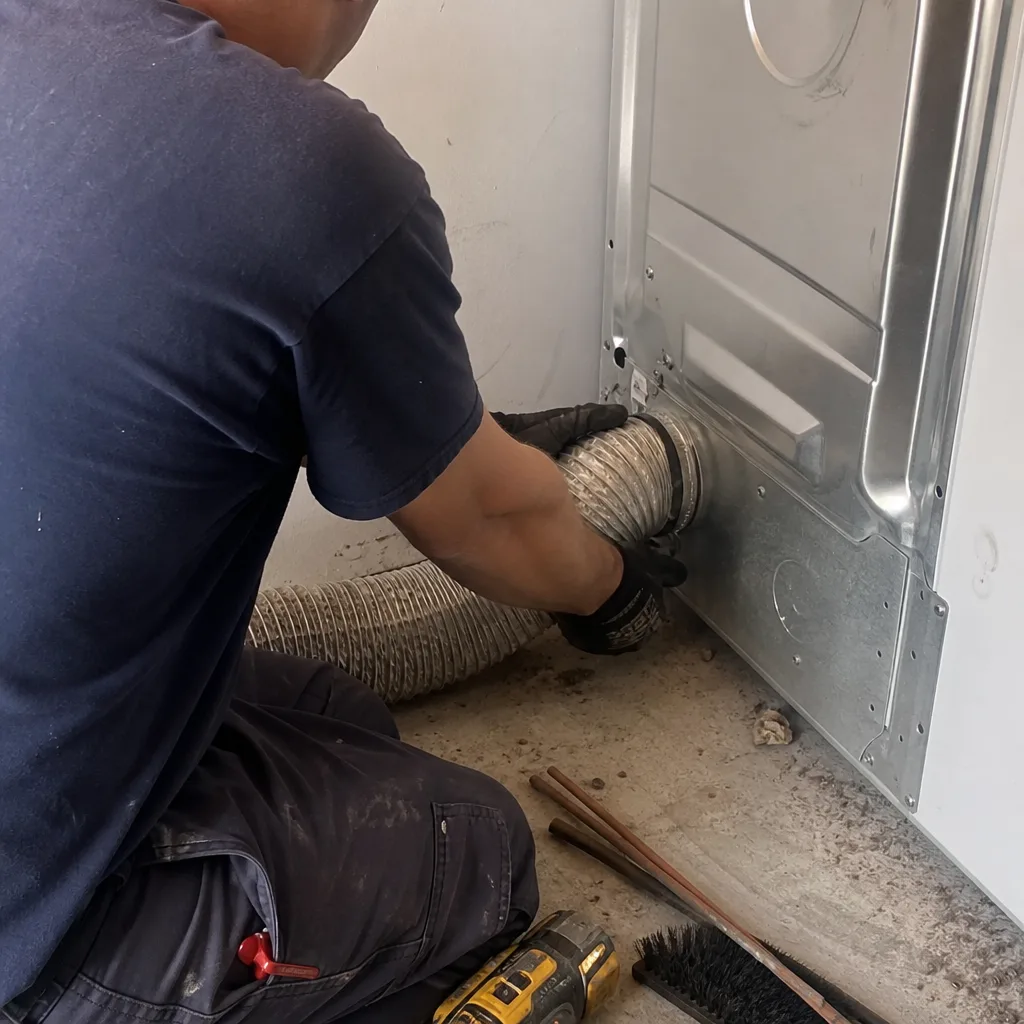
May is also when we recommend Dryer Vent Cleaning in Denver as a standalone service. The National Fire Protection Association identifies dryer lint as a leading cause of home fires, and Denver’s dry May conditions amplify the risk. A properly cleaned dryer vent run, inspected with a camera and cleared to the exterior termination, removes the fuel source before summer heat peaks.
For your main duct system, May maintenance focuses on the cooling side:
- Inspect the evaporator coil for debris that passed the filter during heating season and lodged on wet coil surfaces during first cooling cycles.
- Check condensate drain lines for blockage, a common issue in Denver where hard water scale builds in plastic drain tubing.
- Verify that outdoor condenser coils are clear of cottonwood seed, which peaks in late May along the South Platte and Cherry Creek drainages.
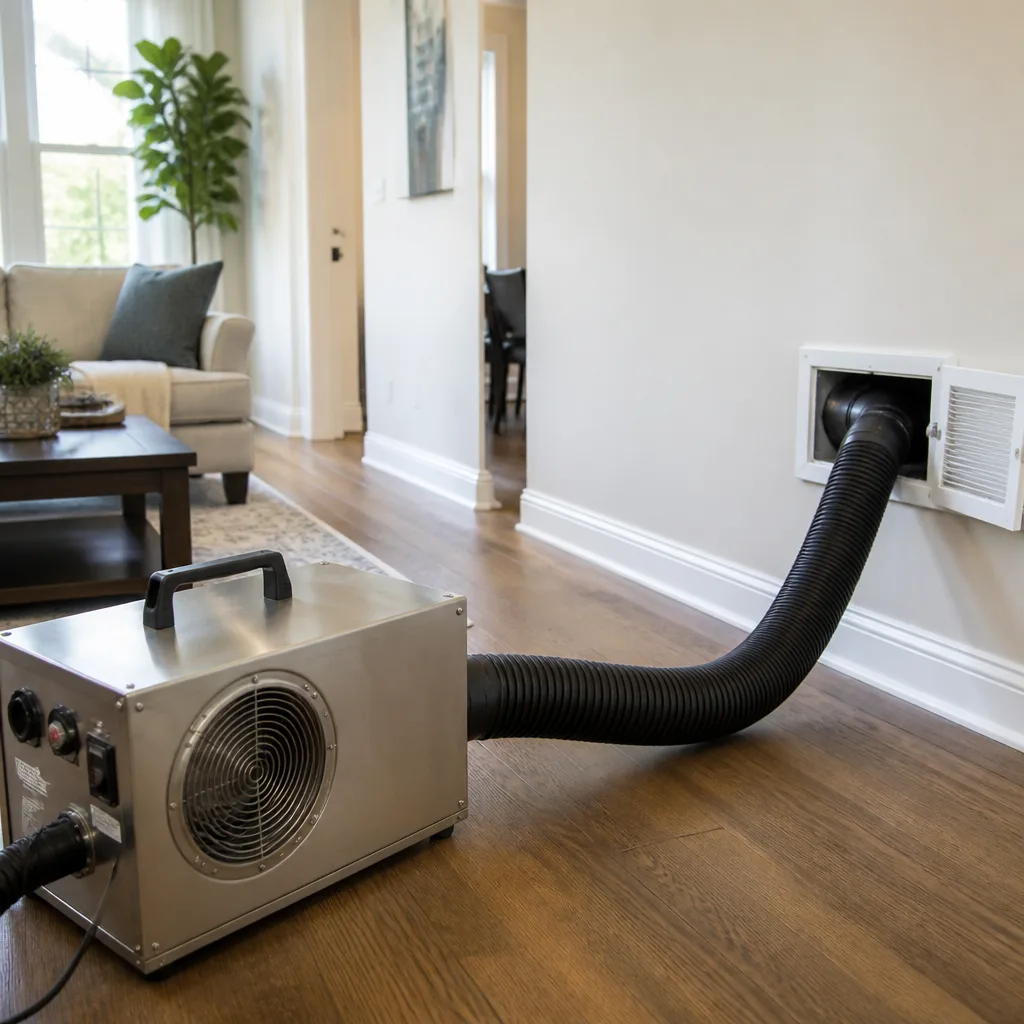
The equipment matters here. CleanRun uses Rotobrush and Nikro systems for duct cleaning, with HEPA-filtered negative-pressure extraction that captures dislodged debris rather than redistributing it. For coil and component cleaning, Abatement Technologies equipment allows us to access tight evaporator plenums without dismantling refrigerant lines. These are trade-recognized brands; customers can verify specifications independently before agreeing to any price.
One practical note on May scheduling: Denver’s spring weather is unpredictable. A late snowstorm can delay cooling startup by weeks. We don’t push artificial urgency. Instead, we recommend booking your pre-summer inspection for mid-May with flexibility to shift if temperatures stay low. The inspection itself takes 45-90 minutes, and the written price for any recommended work is delivered before a single panel comes off.
July-August: Wildfire Smoke Season and Filter Bypass
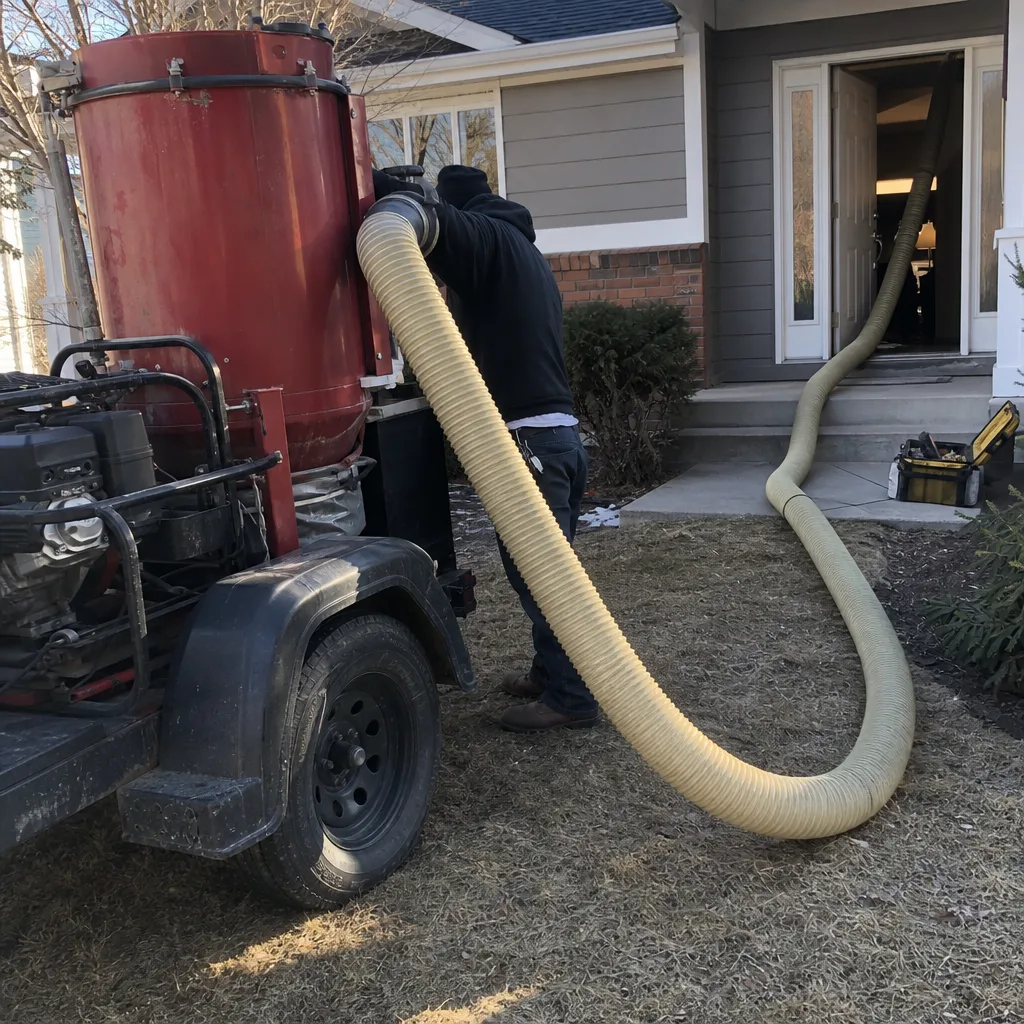
July and August are when Denver’s air quality calendar diverges most sharply from national norms. While much of the country worries about humidity and mold, Denver faces wildfire smoke from in-state fires and, increasingly, California and Pacific Northwest sources carried east on jet stream patterns. The 2023 season produced those 15 unhealthy air quality days. 2020 and 2021 were worse.
The critical concept for homeowners is filter bypass. A MERV 11 or 13 filter, properly sized and sealed, captures most wildfire smoke PM2.5 at the point of intake. But “most” is not “all.” The particles that pass through, or that enter through gaps around the filter frame, settle in the duct system in a distinctive pattern: fine, gray-white, and often concentrated in the first few feet of duct past the filter location.
We’ve photographed this repeatedly. In a Highlands Ranch home after the 2020 Cameron Peak smoke event, the return plenum showed a uniform gray film that wiped away to reveal bare metal beneath. In a Wash Park bungalow after 2021’s Marshall Fire smoke drift, the debris was darker, mixed with ash particles that traveled farther. The camera doesn’t lie about what arrived and what the filter missed.
What filter bypass looks like in a register inspection:
- A fine, talc-like dust on the register grille that returns within days of cleaning.
- Gray or white streaking on the duct walls visible when you remove the register and use a flashlight.
- A persistent “smoky” odor when the system first starts, especially in the morning after overnight stillness.
During heavy smoke events, there’s no practical way to prevent all bypass. The goal is to minimize it and to document what accumulates so you know when cleaning is warranted. Running your system on “fan only” during the worst smoke days can help by keeping air moving through the filter continuously rather than pulsing on and off. But the real work happens after the smoke clears.
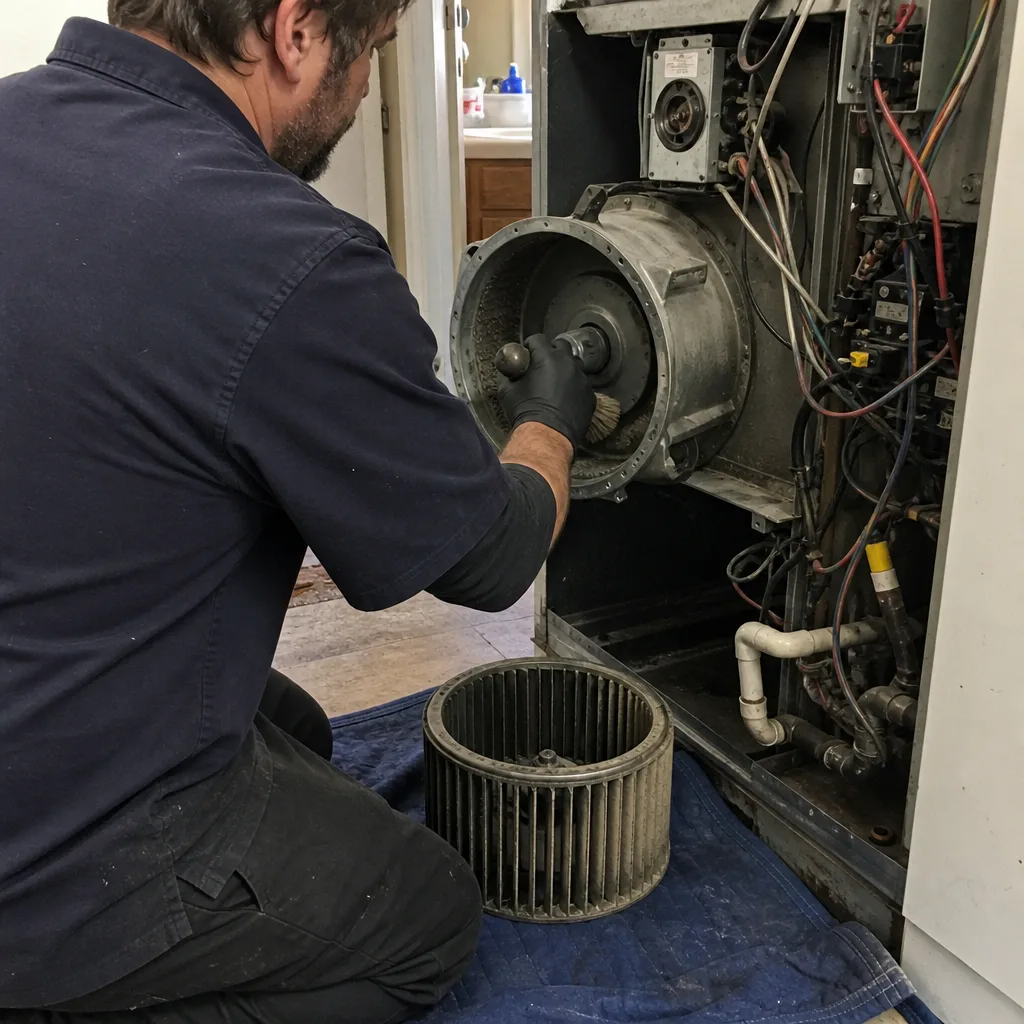
August is when we field the most calls about HVAC Cleaning in Denver specifically, rather than full duct cleaning. Homeowners want the coil, blower, and plenum addressed without necessarily cleaning every branch duct. This is a valid service, and we price it separately with the same written upfront quote. The photo record still applies: we photograph the blower wheel and evaporator before and after, so you can see whether the smoke season left measurable deposits.
One Denver-specific consideration: homes with whole-house humidifiers, common in newer builds across Stapleton, Lowry, and the Tech Center, can show accelerated debris adhesion in August. The humidifier pad adds moisture to the airstream, and when smoke particles meet that moisture, they stick to duct walls more readily than in dry winter air. If your humidifier ran during a smoke event, the combination likely created deposits that a standard filter change won’t address.
September-October: Post-Smoke Deep Cleaning
Early September is the optimal timing for comprehensive air duct cleaning in Denver. Wildfire smoke season has typically peaked, summer construction dust has settled, and the heating season hasn’t yet begun redistributing debris into living spaces. It’s the cleanest possible starting point for the six-month heating cycle ahead.
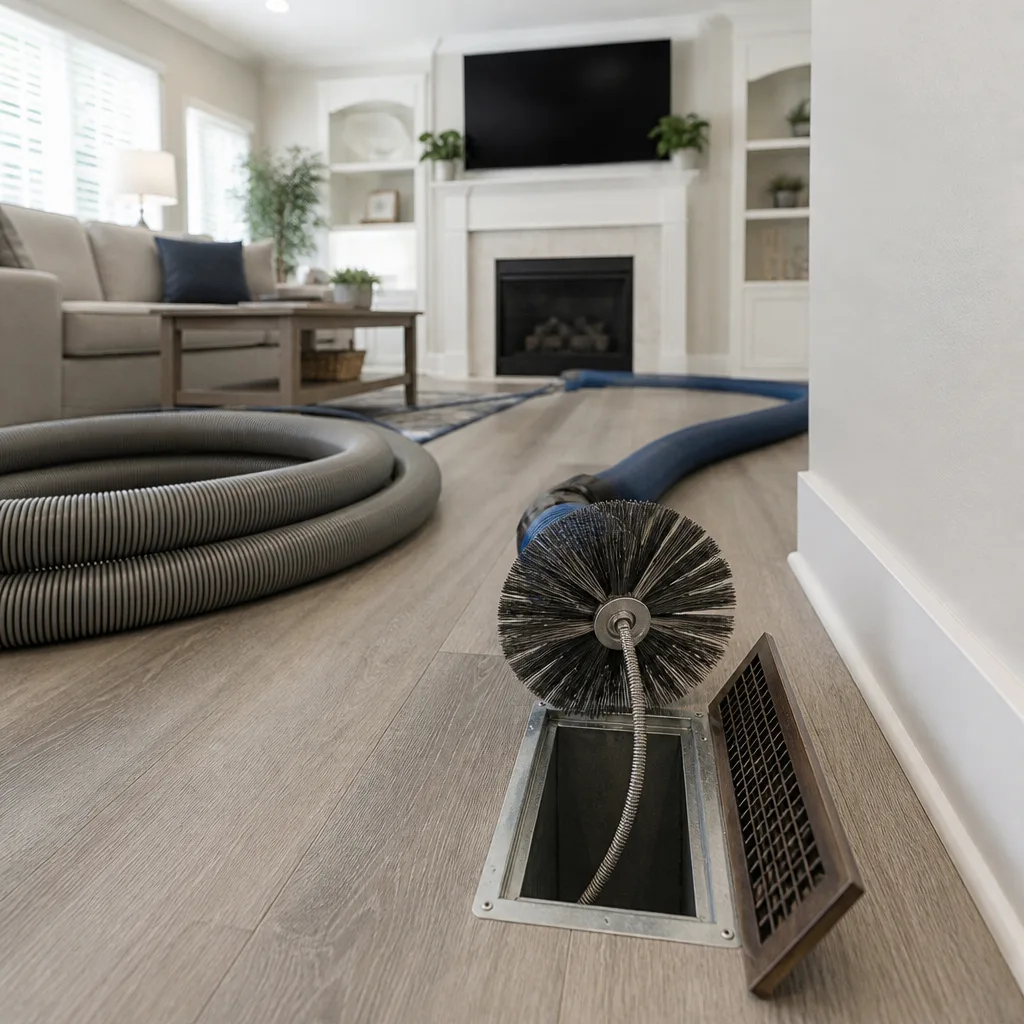
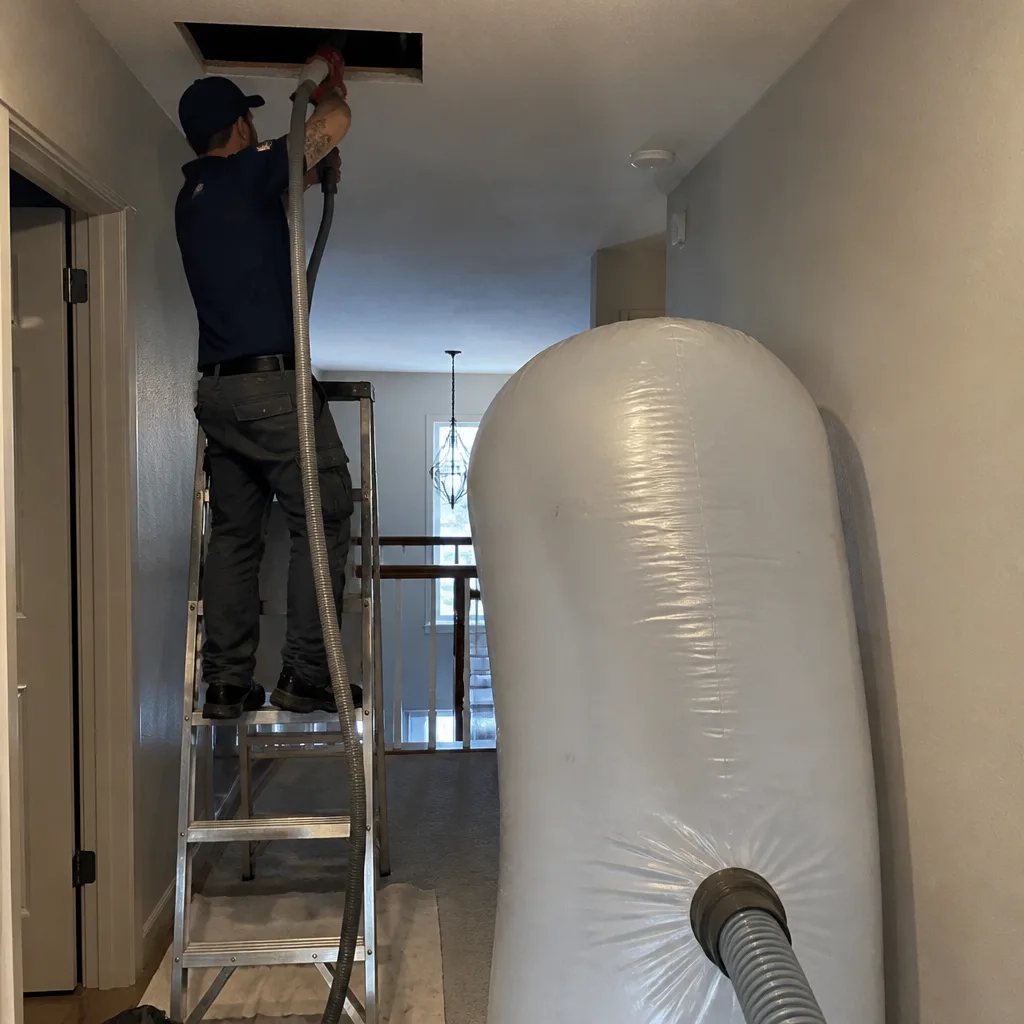
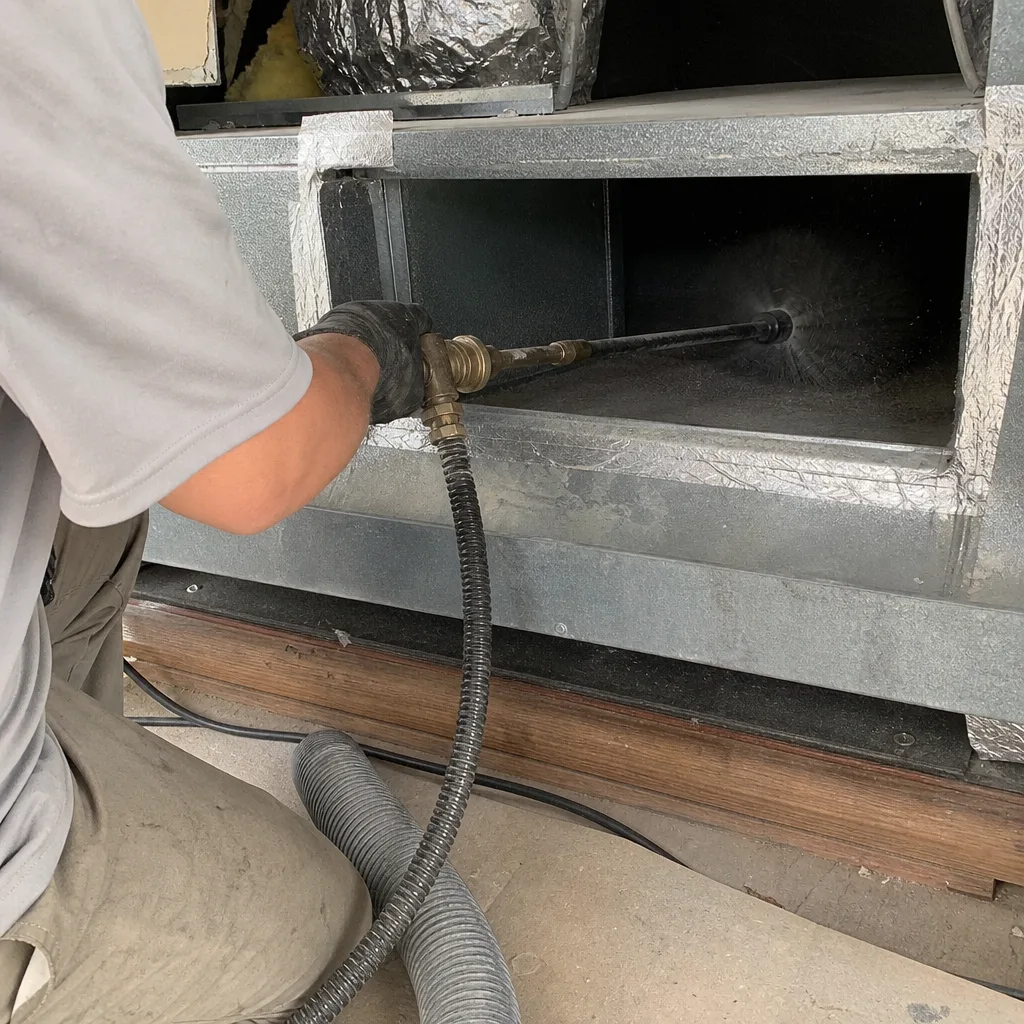
The work itself follows a specific protocol we’ve refined since 2013. Each duct run, both supply and return, is accessed at the register or boot, agitated with mechanical brushes, and extracted under negative pressure. The plenum is cleaned separately with specialized tools. The blower compartment and evaporator coil are inspected and cleaned if indicated. Throughout, a camera documents the interior of every run before work begins and after it concludes.
What distinguishes this from a coupon special:
| Element | Standard CleanRun Protocol | Typical $79 Coupon Service |
|---|---|---|
| Pricing | Written flat price per system, agreed before work starts | Per-vent upsell after arrival |
| Documentation | Photo record of every duct run, delivered to customer | No photos, or selective “after” shots only |
| Equipment | Rotobrush, Nikro, Abatement Technologies HEPA extraction | Shop vacuum or portable unit |
| Scope | Full system: all runs, plenum, blower, coil inspection | Visible registers only |
| Guarantee | 365-Day Done Right Promise, in writing | Verbal assurance only |
The pricing for a complete residential system in Denver typically ranges from $450 to $850 depending on home size, duct configuration, and accessibility. Homes with crawl space ductwork, common in pre-1950s builds in Park Hill, Whittier, and Baker, run toward the higher end due to access difficulty. Two-story homes with zoned systems may require additional time. The written price covers the full scope; there is no per-vent add-on, no “surprise” charge for the plenum, no extra fee for the photo record.
October in Denver brings the first hard freezes and the first furnace cycles. A September cleaning means those cycles start with empty ducts, not six months of accumulated debris. The difference is measurable in particulate counts, though most homeowners notice it first as reduced dust on surfaces and less frequent filter changes.
For homes that experienced significant wildfire smoke exposure, we sometimes recommend an additional air quality assessment using particle counters before and after cleaning. This isn’t standard for every job, but when a homeowner wants quantitative proof of improvement, we can provide it. The data becomes part of the job record, alongside the photo documentation.
November-December: Pre-Heating System Check
November is preparation month. Denver’s first sustained cold typically arrives by mid-November, and your system needs to be ready for continuous operation through April. The focus shifts from cleaning to verification: ensuring that what you cleaned in September hasn’t been compromised, and that the system is sealed and ready for the heating load ahead.
The specific tasks:
- Filter replacement with properly sized media. In Denver’s dry winter, electrostatic filters can perform well, but only if the fit is exact. Measure your filter slot; don’t guess based on the nominal size printed on the old filter, which may have been wrong from the start.
- Register and boot inspection for gaps. The expansion and contraction of heating season can loosen register seals that were tight in September. A smoke pencil or even a lit incense stick held near the register perimeter reveals leaks.
- Thermostat programming check. Denver’s temperature swings, sometimes 40 degrees in a single day, mean your system cycles frequently. Verify that setbacks aren’t so aggressive that the system runs continuously during recovery, which increases debris resuspension.
December is largely reactive: addressing problems that appear once heating is continuous. The most common call we receive is about uneven heating, rooms that won’t reach temperature. Often the cause isn’t the furnace but a disconnected or crushed duct in an unfinished basement or crawl space, where the summer’s humidity changes shifted duct supports. A camera inspection finds it quickly.
In older Denver neighborhoods like Capitol Hill, Congress Park, and the Highlands, we also see boiler-to-furnace conversions from the 1980s and 1990s where ductwork was added hastily. The original returns are often undersized, creating high velocity at the register that pulls debris from the room into the duct system continuously. There’s no cleaning fix for this; the solution is duct modification, which we assess and quote separately if indicated.
The November-December period is also when we remind homeowners about the 365-Day Done Right Promise. If you had work done in September and something doesn’t feel right once heating season is underway, the guarantee is in writing. No manager approval, no runaround. We return, re-inspect with the camera, and make it right. That’s Haven Standard Clause 5: Accountable Work.
Common Mistakes to Avoid
- Cleaning only the registers and calling it done. The visible grille is maybe 5% of your duct system. Real debris accumulates in the plenum, at elbows, and in low-velocity sections of branch ducts where a vacuum hose at the register can’t reach.
- Using the wrong filter MERV rating for your system. A MERV 13 filter in a system designed for MERV 8 restricts airflow, strains the blower, and can cause filter collapse that dumps unfiltered debris directly into the plenum. Check your furnace manual or ask a technician.
- Ignoring the dryer vent until clothes stop drying. By then, you’re at elevated fire risk. May cleaning prevents the August danger window.
- Scheduling duct cleaning during active wildfire smoke. You’re cleaning debris that will be replaced within days. Wait for the smoke season to pass, then assess and clean.
- Accepting per-vent pricing. This model incentivizes the technician to find more vents, not to do better work. A flat price per system, agreed in writing, aligns the company’s interest with thoroughness.
- Skipping the photo documentation. Without before-and-after images, you have no proof of what was done. Demand them as a standard deliverable, not an extra.
- Assuming new construction means clean ducts. We’ve found more construction debris in 2022 builds than in 1950s homes with original ductwork. Builders don’t clean ducts; they install them and move on.
When to Call a Professional
Call for a professional inspection when you notice persistent dust accumulation after cleaning, uneven heating or cooling between rooms, musty or smoky odors at system startup, or visible debris at registers that returns within weeks of surface cleaning. These symptoms indicate duct-level problems that homeowner maintenance won’t resolve.
Also call before you need to: the March plenum inspection and September post-smoke cleaning are preventive appointments, not emergency responses. Scheduling them in advance ensures availability and avoids the rush that follows the first major smoke event or cold snap.
CleanRun Air Duct Cleaning Denver offers free estimates in Denver. Every estimate includes a written price before any work starts, and every completed job includes a documented photo record of every duct run. Call (720) 799-2292 to schedule. Haven Standard Clause 1: Written Price First.
Frequently Asked Questions
A complete residential air duct cleaning in Denver typically costs between $450 and $850 for a single system, with larger homes or complex duct configurations running higher. The price should be a flat rate per system, agreed in writing before work begins, with no per-vent add-ons. Call (720) 799-2292 for an exact quote on your home - estimates are free.
The $79-$99 coupon specials typically cover register vacuuming only, then upsell aggressively once the technician is inside your home. Real duct cleaning requires mechanical agitation, negative-pressure HEPA extraction, and access to the full system including the plenum. The equipment alone - Rotobrush, Nikro, Abatement Technologies - represents a capital investment that coupon operators don’t make. Ask for a written scope of work and photo documentation commitment before comparing prices.
Demand a documented photo record of every duct run, before and after, delivered as part of the standard job record. At CleanRun, this has been non-negotiable since 2013. If a company won’t show you the inside of your ducts, they didn’t clean them thoroughly. The photo is your proof, not their marketing.
Most Denver homes benefit from professional cleaning every 2-3 years, with annual camera inspections of the return air plenum in between. Our Air Duct Cleaning Maintenance Checklist for Denver Homeowners walks through what each visit should cover. Homes in active construction zones, those with significant wildfire smoke exposure, or those with respiratory-sensitive occupants may need more frequent service. The March plenum inspection determines whether full cleaning is warranted that year.
Denver’s low relative humidity, typically 25-35% in winter and 30-40% in summer, makes active mold growth inside properly functioning ductwork unlikely. However, mold can develop in condensate pans, humidifier reservoirs, or where ductwork passes through unconditioned spaces with temperature differentials that cause condensation. The annual inspection catches these isolated situations before they spread.
Air duct cleaning addresses the distribution network: supply and return ducts, registers, boots, and the plenum. HVAC Cleaning in Denver focuses on the mechanical components: blower wheel, evaporator coil, heat exchanger, and condensate system. They overlap at the plenum and can be scheduled together, but they solve different problems. Duct cleaning removes accumulated debris; HVAC cleaning restores component efficiency.
Homeowners can and should replace filters regularly, vacuum register grilles, and inspect visible duct openings for debris. But the interior of duct runs, especially the return plenum where 80% of problems originate, requires professional equipment and access. More importantly, duct systems contain no dangerous components like high-tension springs or gas lines, but improper cleaning technique can damage flex duct or dislodge connections. For the full system, professional service with documented results is the practical choice.
The Bottom Line
Denver’s duct contamination calendar runs on wildfire smoke in late summer, heating season debris from October through March, and spring construction dust that fills the gaps. The homeowners who stay ahead of it schedule three things: a camera plenum inspection in March, comprehensive cleaning in early September, and dryer vent maintenance every May. For year-round guidance, explore our more guides & resources. They verify work with photo documentation, refuse per-vent pricing, and treat duct maintenance as a scheduled system, not a reaction to visible dust. The result is measurable: lower particulate counts, more even temperatures, and the confidence that what’s inside your walls matches what you were promised.
Written by Tomas Reyes, Owner at CleanRun Air Duct Cleaning Denver, serving Denver since 2013.